What Is Brand Activation? The Basics of Event Design in the SNS Era
This article was automatically translated from the Japanese original. Read the original in Japanese
You're likely seeing the word "activation" more often in proposals and internal planning documents. Yet the scope this word refers to shifts depending on who's using it. Some people picture a pop-up store, others picture a launch event or exhibition, and others picture an experiential reception. None of these interpretations is wrong, but if a project moves forward while you and the person you're talking to have different scopes in mind, a mismatch of "this isn't what I expected" tends to surface later.
This article organizes what the term "brand activation" actually refers to, what has changed now that SNS is a given premise, and what conditions produce the outcome of a post for each of the three representative types. Before putting together any specific plan, this is foundational groundwork for aligning on the scope of the term itself.
Brand Activation Is an Initiative That Creates a Space Where a Brand and People Meet Directly
Brand activation is a marketing initiative that, rather than one-way advertising delivery, creates a space or mechanism where a brand and people meet directly, drawing out empathy and action through the experience gained there. The point of emphasis is on "having people experience" rather than "communicating," which is what distinguishes it from ordinary advertising. Pop-up stores, launch events for new products or new business formats, and participatory reception events all take different forms, but they share a common structure: the people who come experience the brand's world firsthand.
While advertising starts from the premise of "being seen," activation starts from the premise of "having people come to the venue." Because it requires people to actually show up, both the amount of information that can be conveyed and the strength of the impression left need to be designed differently than in advertising. The shared idea behind this group of initiatives is to build the plan around what you want people to experience, rather than what you want them to see.
What Changed in the SNS Era Is That the "State of Being Talked About" Became a Result in Itself, Not Just the Quality of the Experience
In the past, the success of an activation was determined almost entirely by how the people who came felt about it. Now, however, how attendees talk about their experience—and how that talk reaches people outside the venue—is also seen as a result of the initiative. How good an experience you were able to provide inside the venue, and whether that experience reached beyond the venue, are two separate axes. Whether or not you treat these two things separately changes how you build the plan. Where exactly this split occurs is covered in detail in The Job of Creating an Experience vs. the Job of Creating a State of Being Talked About.
Given this shift, the questions you need to ask when designing an activation also change. It's not just "how many people can we gather," but whether the experience is something attendees can talk about in their own words—and that needs to be considered from the earliest stage of planning.
This isn't about asking attendees to post. What we're looking at isn't the attendee's side, but the side of the experience we prepare. Is there, built into the experience, a single point that a person can talk about in their own words? If not, what needs fixing isn't who you invite, but the design of the experience itself. This way of thinking applies equally to all three types.
Activation Broadly Falls into Three Types
Within the scope of our practical work, activation can generally be organized into three types.
Pop-Up Store Type — A temporary experiential installation is set up on the street or in a commercial facility, letting passersby or people who happen to stop by experience the brand's world or a new product firsthand. The barrier to participation is low and it can reach a wide range of people, but the time each person spends tends to be short. This suits situations where you want broad awareness of the existence of a new product.
Launch Event / Exhibition Type — This is a format for announcing a new product or new business format to invited guests and media. It becomes a venue for expressing what the brand values and what it intends to change. Participants are limited, but each person takes away a larger amount of information. This suits situations where you want to signal a shift in brand direction or a major milestone to the outside world.
Experiential Event Type — Receptions, workshops, and similar formats deliver deep immersion to a small number of people. Participants can spend extended time engaging with the brand's world, and the density of the experience is the highest of the three types. On the other hand, the effort required for planning and operations is also the greatest. This suits situations where you want to deepen a relationship with a limited group of people rather than end things with a single touchpoint.
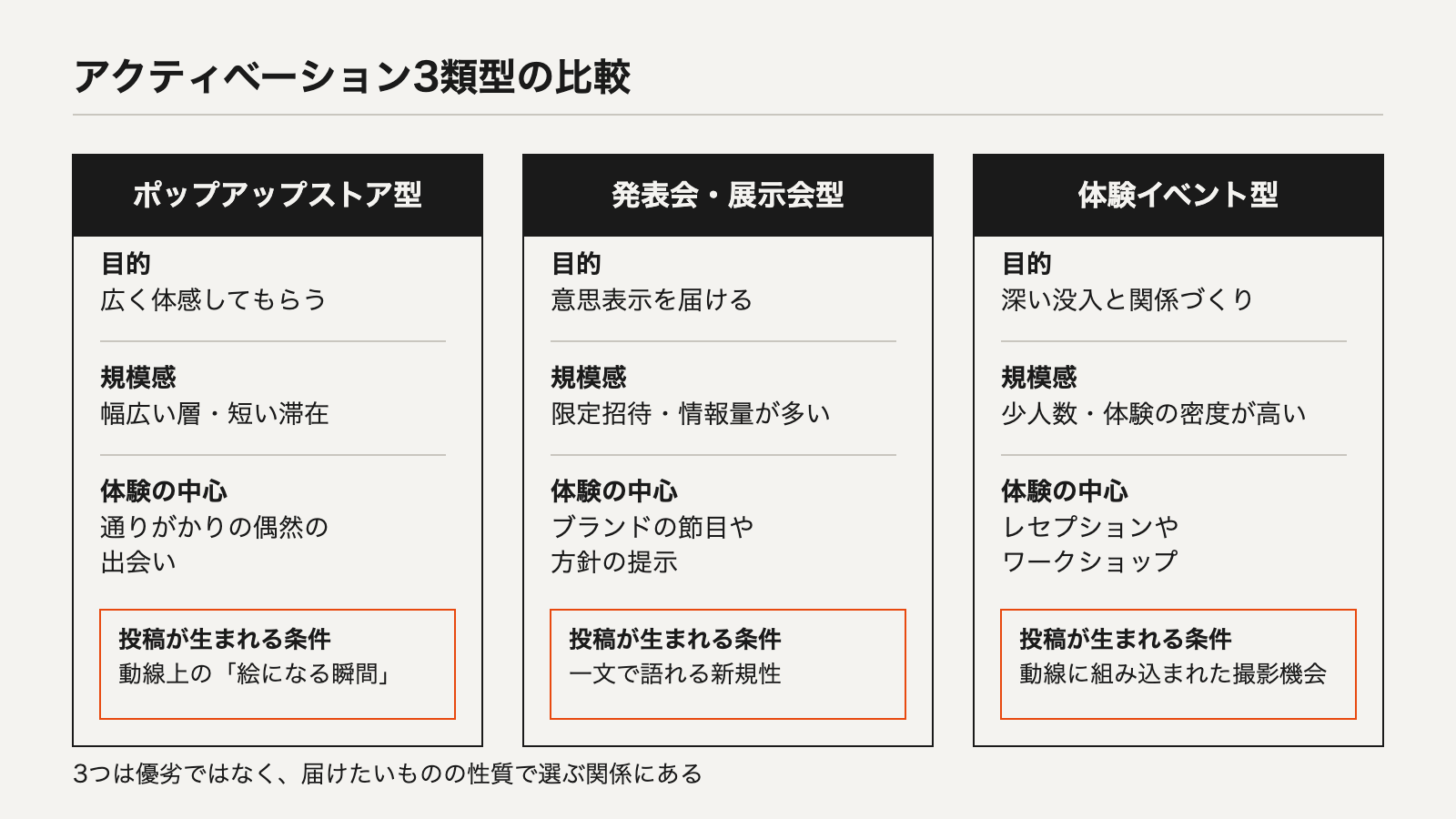
Figure 1: Comparison of the three activation types
The three types are not ranked by superiority. Which one you should choose depends on what you want to deliver. Nor are the three mutually exclusive. It's not unusual for actual plans to combine them—for instance, incorporating a pop-up element into a corner of a launch event venue, or placing an exhibition segment before an experiential event. That said, the more you combine elements, the more important it is to decide in advance which part is the primary objective this time. If you keep adding elements without a clear primary objective, the venue may end up lively, but the plan tends to fail to convey what you want each person to take away.
The Conditions for Generating Posts Differ by Type
The three types differ in how easy it is to participate and in the density of the experience. That's precisely why the conditions under which the outcome of a post is generated also differ by type.
For the pop-up store type, whether a post is generated depends on whether a moment that makes a passerby stop in their tracks and want to take a photo is naturally placed within the flow of the space. Since dwell time is short, whether the entry point of the experience itself is "photogenic" is what matters most.
For the launch event / exhibition type, whether a post is generated depends on whether there's a piece of novelty that a participant can put into a single sentence after they take it home. No matter how polished the venue setup is, if "what was new" isn't condensed into a single phrase, the experience becomes hard to talk about.
For the experiential event type, whether a post is generated depends on whether time and space to calmly experience and photograph are built into the flow of the day in advance. On top of that, if guests are kept waiting at reception, that wait time itself becomes their first impression of the experience. We've compiled how to design the entry point of reception in A Guide to Reception Design for Invitation-Only Events. In our own track record, the posting rate among influencers who attended was 94.6% (37 projects, 390 people). That said, this figure isn't uniform across scale, and we take a strong number as a reflection of careful invitation design and on-the-day flow design upstream. The detailed breakdown is compiled in How Scale Affects the Posting Rate of Event Initiatives.
Which Type to Choose Depends on the Nature of What You Want to Deliver
When choosing a type, we confirm the following three points:
- Do you want a wide range of people to experience it firsthand, or do you want to convey it deeply to a limited group?
- Is what you want to convey the firsthand experience of the new product itself, or a statement of brand intent?
- Do you want it to be complete in a single touchpoint, or are you also looking toward building a relationship through the experience?
The answers to these three points naturally narrow down which type you should choose. Judgment tends to get split between the "launch event / exhibition type" and the "experiential event type." Both are invitation-only and share the trait of limited participants, but whether you want to broadly announce a statement of intent or deepen a relationship with a small group calls for entirely different designs. If you move forward with a plan while this remains ambiguous, the number of invitees and the scale of the venue tend to get decided first, while what you actually want to deliver as an experience gets pushed to the back burner.
For example, if an announcement of a new policy that was originally meant to be conveyed deeply to a small group gets shifted toward a launch-event format simply to prioritize a larger invitee count, the time available per person gets diluted, making it harder to generate the single sentence a participant can take home. Conversely, if a new product that you want widely known is delivered carefully to a small group in the manner of an experiential event, the touchpoints themselves become insufficient. A mismatch of type is something that's hard to recover from no matter how carefully the day-of operations are run. That's precisely why the decision on which type to choose needs to be settled before the venue is decided and before invitations are sent.
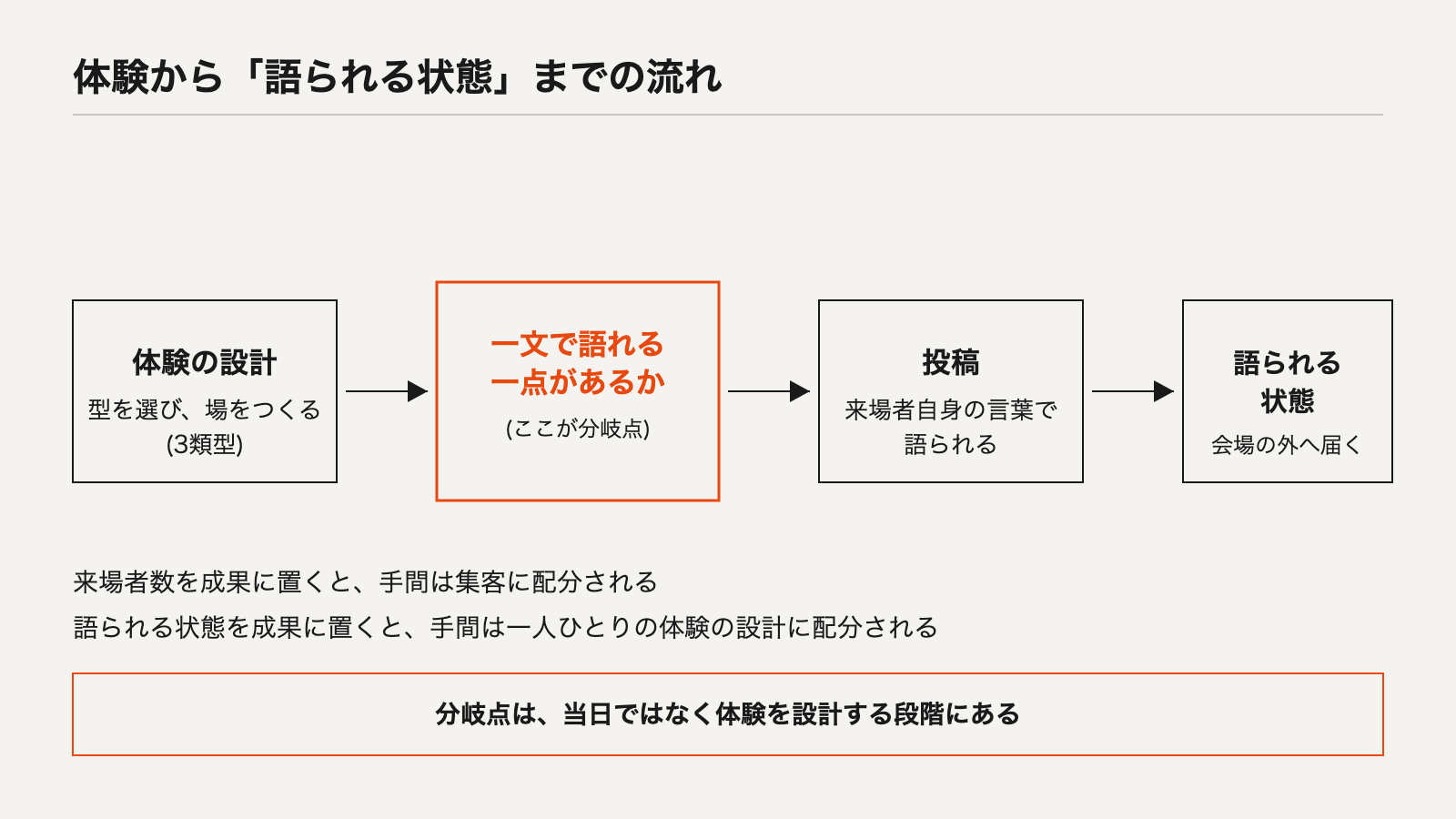
Figure 2: The flow from experience to a "state of being talked about"
The Scope of This Article
This article is a foundational overview of the definition of activation and the three representative types. It does not cover specific topics such as how to design reception and flow on the day of the event, how to read measured posting-rate data, or where experience design branches off into a state of being talked about. Each of these is covered individually in separate articles. This article also falls outside the scope of casting design specifics, such as how to select who to invite, and the concrete progress management of venue and content production. This article is intended to serve as a map for aligning on terminology and types before reading those.
Closing Thoughts
As the word "activation" has come into wider use, it's also become a word whose scope shifts depending on who's speaking. Aligning on the types and choosing based on the nature of what you want to deliver—and then, on top of that, considering how to design the experience through to a state of being talked about. We believe this two-step approach is the surest way to prevent misalignment at the early stage of planning.