What Are KOL and KOC? How They Differ from “Influencers” and How Japan’s Market Uses Them
This article was automatically translated from the Japanese original. Read the original in Japanese

When reviewing proposals or materials from overseas offices for inbound or cross-border projects, you may come across the terms "KOL" and "KOC" side by side. Since these are unfamiliar abbreviations in Japanese, many of you have probably been asked internally, "Is this the same as what we call an 'influencer'?" The short answer is that KOL and KOC split the qualities that the Japanese word "influencer" lumps together into a single term, and point to them along two separate axes instead.
This article will trace where the terms KOL and KOC came from and what they refer to, then examine where they overlap with and diverge from the Japanese term "influencer." By the end, you should have the material you need to judge how to reinterpret the terminology in materials received for cross-border projects, and what to look for when designing casting that emphasizes closeness for domestic campaigns.
As inbound demand recovers and more brands consider overseas-facing communication and cross-border e-commerce, opportunities to encounter this terminology are increasing. Getting a precise grasp of what these terms mean helps you avoid a situation where you move forward with a plan while talking past local agencies or headquarters counterparts.
The Terms KOL and KOC Emerged from Greater China's SNS and E-commerce Culture
KOL (Key Opinion Leader) is a term that first gained widespread use within Greater China's SNS and e-commerce culture. It refers to a creator who influences followers' purchasing decisions through specialized knowledge or authority in a particular field. In an environment where SNS communication and e-commerce (online purchasing) are seamlessly connected, the term took root as a way to describe the relationship of "what this person recommends can be trusted."
KOC (Key Opinion Consumer) is a term that spread later than KOL. Rather than the scale of follower count or a high degree of expertise, it refers to creators who gain support through communication grounded in the lived experience of an ordinary consumer. On the platform side as well, a culture has developed in which not only polished posts by well-known creators, but also candid reviews and shared impressions from ordinary users, are used as reference points for purchasing decisions. The reason these two terms, KOL and KOC, have come to be discussed together stems from the fact that, on platforms where SNS and purchasing are integrated in this way, the quality of influence has been clearly observed to split into two distinct types.
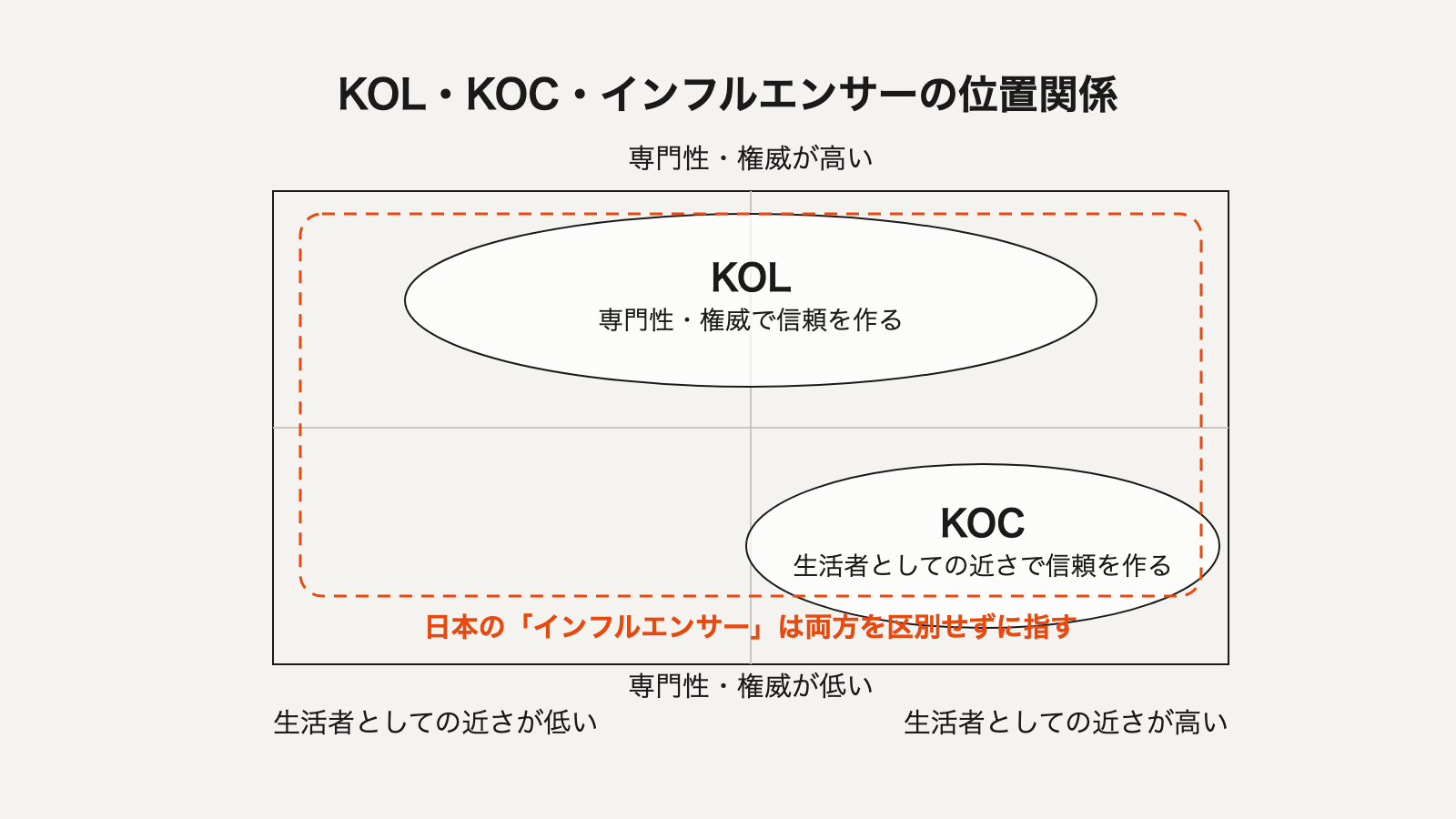
Figure 1: The positioning of KOL, KOC, and influencers (expertise × closeness)
KOL Is a Concept Centered on "Expertise and Authority"
What the term KOL points to is a creator whose statements carry persuasive weight, backed by knowledge or a track record in a specific field. In beauty, this might be someone who can speak knowledgeably about ingredients and how a product feels to use; in travel, someone well-versed in local information. In either case, the basis on which followers feel "I can trust what this person says" resides in that individual's expertise or authority.
The scale of follower count is not a condition that determines whether someone qualifies as a KOL. There are people with large followings who could be called KOLs, but the size of the following itself is not the axis of this concept—expertise and authority are the essential axis instead. The basis for that expertise or authority may take a clear-cut form, such as credentials or professional experience, or it may take the form of an accumulated track record of consistently communicating about a particular field over a long period. When you receive a request in a cross-border project to "cast a KOL," it's worth first confirming whether the conversation is really about scale, or about expertise and authority.
KOC Is a Concept Centered on "Closeness as an Everyday Consumer"
What the term KOC points to is a creator who gains support not as an expert, but by speaking from lived experience as an ordinary consumer. The basis of trust that followers feel lies not in authority, but in the closeness of "how someone in the same position as me actually felt after using this."
This closeness does not mean the same thing as having a small follower count. Some creators maintain communication with this consumer-level closeness even with a large following, while others communicate with a high degree of expertise despite having a small following. What the concept of KOC measures is not scale, but the closeness of distance between the creator and the audience. As we noted in How Much Does Engagement Rate Vary Even Within the Same Follower Tier?, when we review candidates for domestic casting design, we also need to confirm the actual state of engagement, which cannot be seen from follower count alone.
Japan's Term "Influencer" Has Been Used Without Distinguishing These Two Axes
The Japanese term "influencer" is often discussed primarily in terms of the scale of follower count or the platform on which someone posts. The practice of consciously distinguishing between the axis of expertise/authority and the axis of closeness as an everyday consumer has not really taken root until now.
This doesn't mean that influencer initiatives in Japan have been unorganized. In the candidate selection process we outlined in What Is Influencer Casting?, we check not only follower counts but also actual engagement performance and past post content, and at the practical level, both highly specialized creators and creators supported for their closeness as everyday consumers have been treated as candidates for casting. We believe it's closer to the reality to see the terms KOL and KOC as simply giving names to these two qualities that have already been recognized in practice.
The Axis of Reference Shifts Between Inbound Projects and Domestic Campaigns
When you receive a "list of KOLs" from an overseas office or local agency for a cross-border or inbound project, it's worth confirming whether the selection was made along the axis of expertise and authority. Exactly what basis a creator is trusted on, within the local SNS and e-commerce culture, is something that's hard to see from Japan. Rather than judging quality solely by follower count, you need to take a stance that evaluates candidates in light of the local context.
On the other hand, when designing KOC-style casting for a domestic campaign, the starting point is not to begin from the scale of follower count. Closeness as an everyday consumer cannot be seen from a ranking of follower counts. You need a process that identifies candidates by checking the content of their past posts, the sense of distance with their followers, and the tone of their everyday interactions—a process that requires a different perspective from the one used to find creators with a large following.
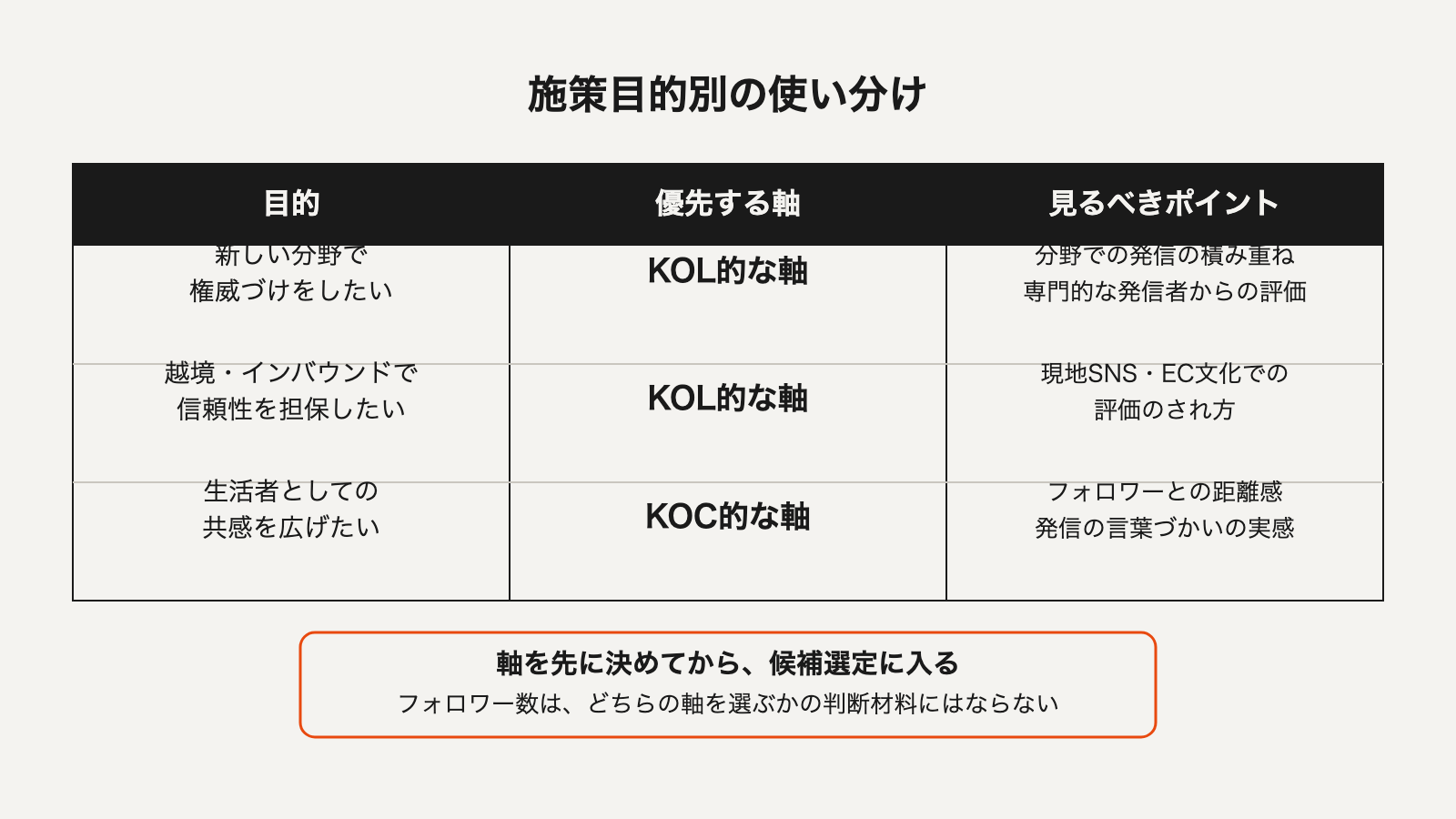
Figure 2: Distinguishing use by campaign objective
Where to Use Each Concept, and Where Judgment Diverges
What tends to cause confusion in practice is when you're running cross-border and domestic projects in parallel, and unconsciously mix the KOL perspective with the KOC perspective. You might re-evaluate a candidate chosen on the axis of expertise/authority against the axis of closeness and feel "this isn't as relatable as I expected," or conversely, expect a high degree of expertise from a candidate chosen on the axis of closeness and feel "this isn't as specialized as I expected." If you compare candidates while it remains unclear which axis you're trying to build trust on, the comparison itself doesn't hold together.
To avoid this kind of confusion, it helps to put into words, early in the casting design process, "which axis are we trying to build trust on this time?" For example, prioritize the KOL-style axis when you want to establish authority for entry into a new field, and prioritize the KOC-style axis when you want to build empathy as everyday consumers within an existing category. Deciding on the axis first, based on your objective, before moving into candidate selection improves the precision of your list.
Even after you've decided on the axis, the information you should reference for candidate selection also differs. When viewing candidates through the KOL-style axis, the deciding factors are information related to the backing of expertise, such as what kind of content the creator has built up in that field and how they are regarded by other specialized creators. When viewing candidates through the KOC-style axis, the deciding factors are information related to closeness, such as the tone of interactions with followers and how closely the creator's language reflects genuine consumer experience. Even though the task of "reviewing candidates" looks the same on the surface, keeping in mind that the points to check actually differ makes it easier to maintain the precision of your list.
Scope of This Article
This article has focused narrowly on the origins of the terms KOL and KOC and their relationship to the Japanese term "influencer." It does not cover the details of specific platform features or terms of service, the specific issues of contracts or disclosure rules in cross-border projects, or considerations around cost. Which axis should be prioritized for a given project varies depending on the brand's situation and the category it's entering, so please read this with the understanding that it needs to be considered on a case-by-case basis.
Closing Thoughts
KOL and KOC are not terms that express superiority or inferiority—they express a difference in the basis on which trust is generated. Do you want to build trust through expertise and authority, or through closeness as an everyday consumer? Being conscious of this axis and putting it into words early in the casting design process is what determines the precision of candidate selection, whether for cross-border projects or domestic campaigns.