How to Time Influencer Engagements Around Fashion Season Changes
This article was automatically translated from the Japanese original. Read the original in Japanese
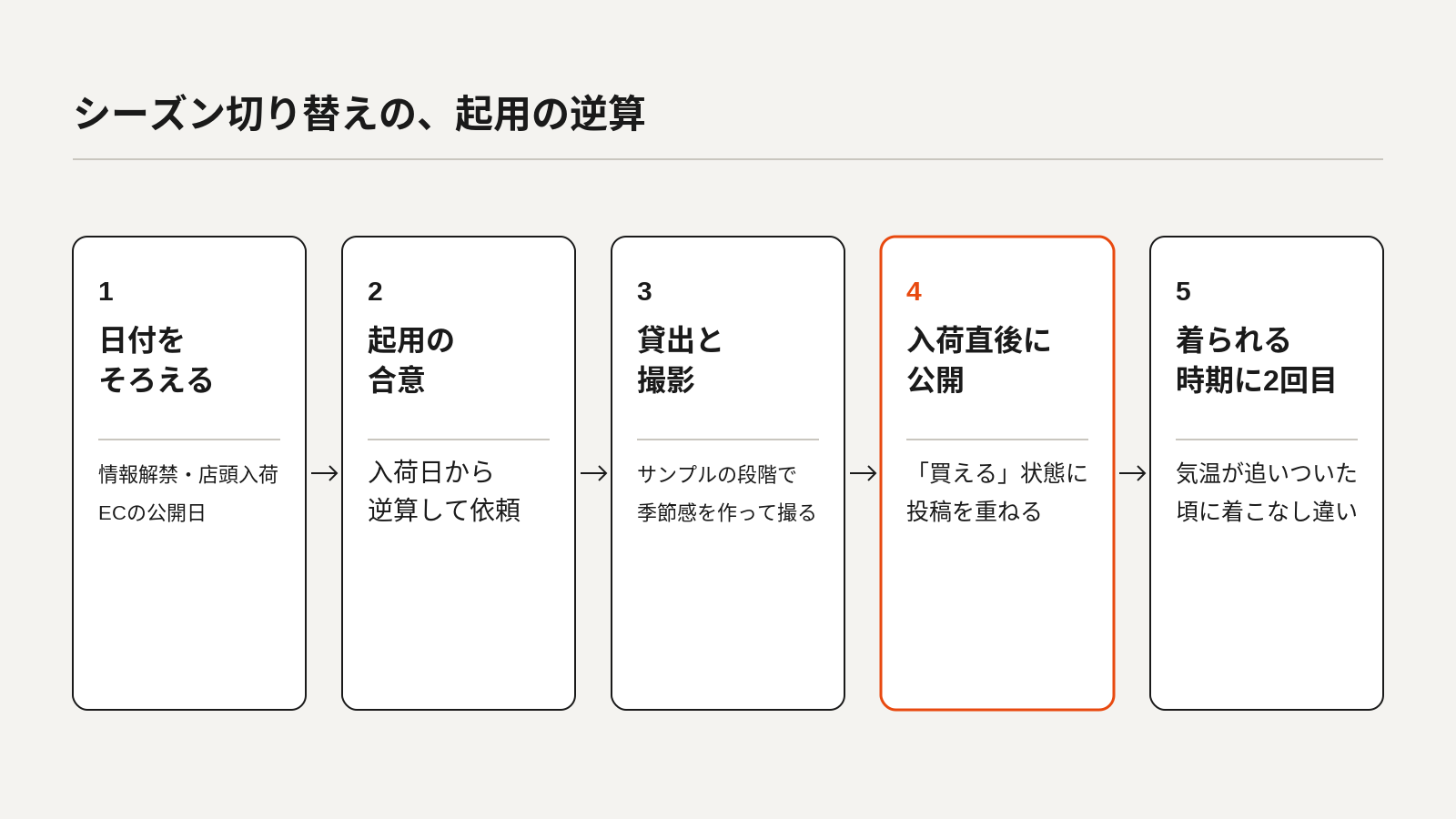
For fashion brands, the key to a season change is to work backward from the day new items go on sale in stores and online. Secure the influencer's agreement and shoot with samples before stock arrives, then publish right after it lands. Adding a second post once the weather is actually warm (or cold) enough to wear the items closes the gap between the day people can buy and the day they can wear. Three dates anchor the plan: the information embargo date, the in-store arrival date, and the e-commerce launch date.
| Fashion-specific constraint | Details | Impact on engagement planning |
|---|---|---|
| Product availability | Before arrival, samples are limited, and colors and sizes are incomplete | Decide the loan order and return dates first |
| Climate mismatch | Items hit stores before temperatures suit them | Create a seasonal feel in the shoot and split publication into two posts |
| Information embargo | Collections and collaborations have embargo dates | Set up a process so nothing is posted before the embargo lifts |
| Stock movement | Popular colors and sizes sell out quickly | Check stock for the item numbers featured in posts |
| Sale period | Late in the season, discount announcements overlap | Finish posts featuring full-price items before the sale starts |
Which campaign formats suit a season change?
Choose a format based on the nature of the product and what you want to convey. Gifting suits staple items you want known quickly and widely. Invitations to exhibitions or new collection presentations suit conveying a worldview or a new theme. Loaned items for shoots suit higher-priced products when only samples exist.
| Campaign format | Best suited for | Not suited for |
|---|---|---|
| Gifting (providing products) | Introducing staple or basic new items quickly and widely | Limited items in small quantities; periods when only samples exist |
| Loaned items for shoots | High-priced items; the pre-arrival sample stage | When you want to show the person wearing the item in daily life |
| Invitations to exhibitions or new collection presentations | Conveying the season's theme or worldview | Before arrival, when viewers can't buy right away |
| In-store events | Creating a reason to visit right after arrival | When stock is low and visitors can't buy |
The basics of each format are covered in What Is Gifting? How It Differs from Sponsored Collaboration and When It Fits. Our overall approach to influencer engagement in fashion and apparel is summarized on this page.
What should you work backward from when timing engagements?
The starting points are the in-store arrival date and the e-commerce launch date. Place publication right after these dates, then work backward through shooting, loans, and securing agreement. The time from request to the person's agreement varies depending on their schedule and confirmation by their agency, so allow some margin. A guide to estimating this is summarized in How Much Lead Time Should You Allow from Casting Request to Agreement?
- Confirm the embargo date, in-store arrival date, and e-commerce launch date, aligned across the brand
- Working backward from the publication date, decide when requests and agreements should be completed
- Check sample quantities, colors, and sizes, decide the loan order and return dates, and shoot
- Publish the first post right after arrival, aligned with the "available now" state
- Once it's cool (or warm) enough to wear the items, publish a second post with a different styling
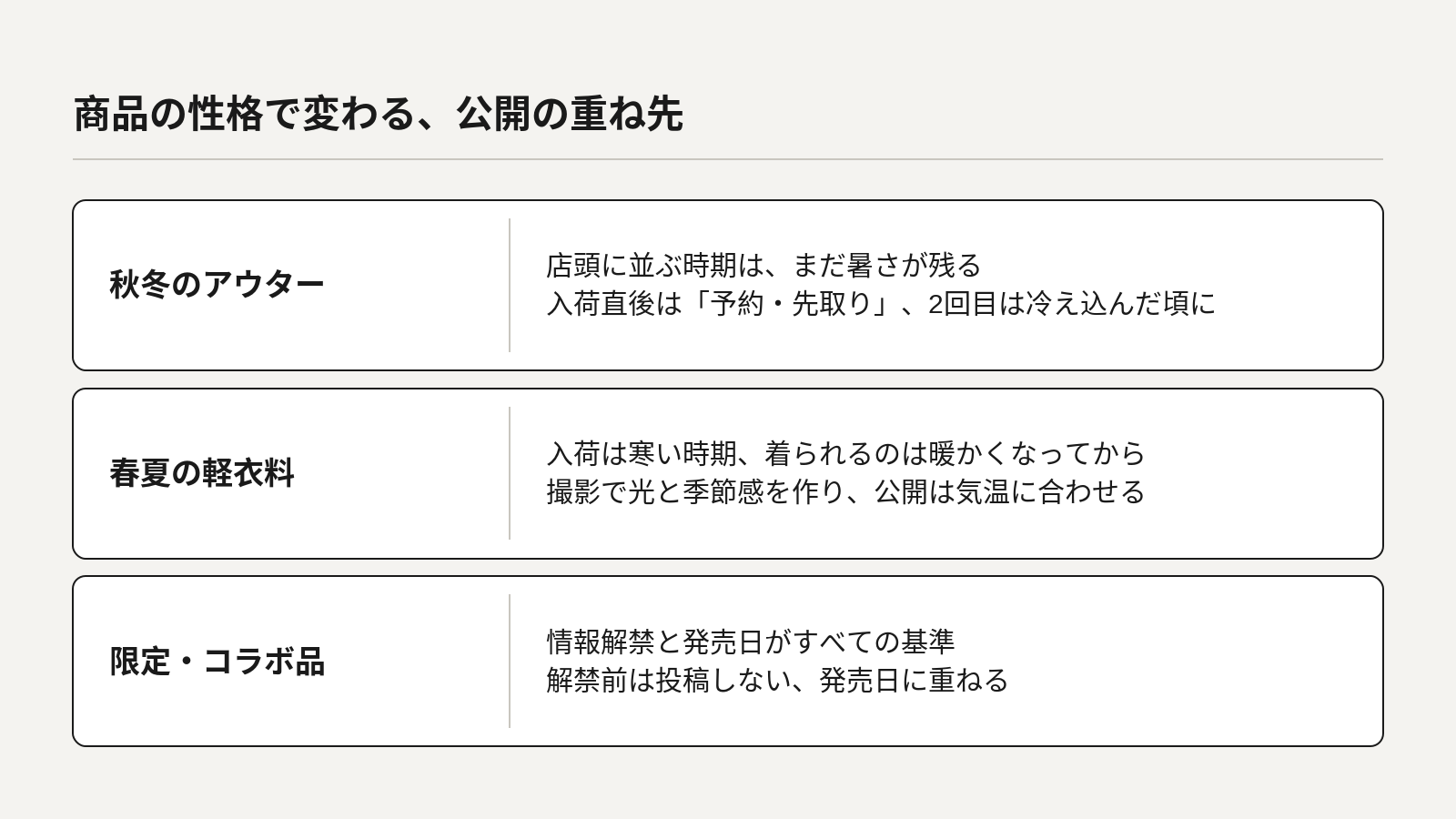
For example, with autumn/winter outerwear, the heat often lingers when items reach stores. In this case, introduce the item in the first post right after arrival in a "sneak peek" or "pre-order" context. Then, in the second post when mornings and evenings turn chilly, show the item actually being worn, making it easier for viewers to picture it in their own lives. Light spring/summer clothing is the reverse: it arrives in the cold season, so create light and a seasonal feel in the shoot, and time publication for when it gets warmer.
How do limited items and collaborations differ?
For limited items and collaborations, the embargo date and release date are the basis for everything. Shooting may be completed before the embargo, but posts must go out after it lifts. At the shooting stage, tell the person clearly the embargo date and the date and time when posting is allowed, and share in writing the scope of what must remain confidential.
For example, when asking several people to post to coincide with the release date, the process differs depending on whether everyone posts together on the morning of release or each may post at a convenient time that day. Decide at the request stage how to balance observing the embargo time with respecting each person's posting habits. Whether to send products before or after a launch is discussed in Should You Send Gifting Products Before or After a New Product Launch?
What fashion-specific points should you watch in disclosure and wording?
Posts introducing provided or loaned products also require a PR label. Because loaned items are returned after the shoot, share expectations at the request stage so the wording doesn't read as if the person bought and loves the item. The basics of labeling are summarized in PR Labeling for Sponsored Posts: Stealth Marketing Rules and Practical Approaches.
Also confirm that descriptions of materials and functions are consistent with the product information the brand provides. Writing material names or functions from vague memory can create an impression that differs from reality. If stock of a featured item number has run out, avoid wording that reads as "available right now" and add information such as the expected restock date.
Scope of this article
This article outlines how to time engagements around season changes. It does not cover specific day-count guidelines, approaches to compensation, or judgments on whether the wording of individual posts complies with laws and regulations. If you have concerns about product labeling, consult a specialist.
Conclusion
How you plan engagements at a season change comes down to how you fill the gap between two dates: the day people can buy and the day they can wear. Aligning the dates first and finishing shooting before stock arrives lays the foundation for posts that land at the start of the season.