SNS Activation Case Studies: Three Online-Born Brands That Turned Their Stores into Places to Try Before You Buy
This article was automatically translated from the Japanese original. Read the original in Japanese
When brands that have sold online open a physical store, the stores people talk about share one trait: they are designed not as places to display inventory and sell, but as places to try and verify products, with purchasing left to apps, delivery, and exploration of the surrounding neighborhood. The three stores opened in Seoul and Hong Kong in October 2026 each devoted most of their space to trying products, then connected the purchase to channels outside the store.
| Country/Region | Industry | What they did | Mechanism that gives people something to talk about on social media | Source |
|---|---|---|---|---|
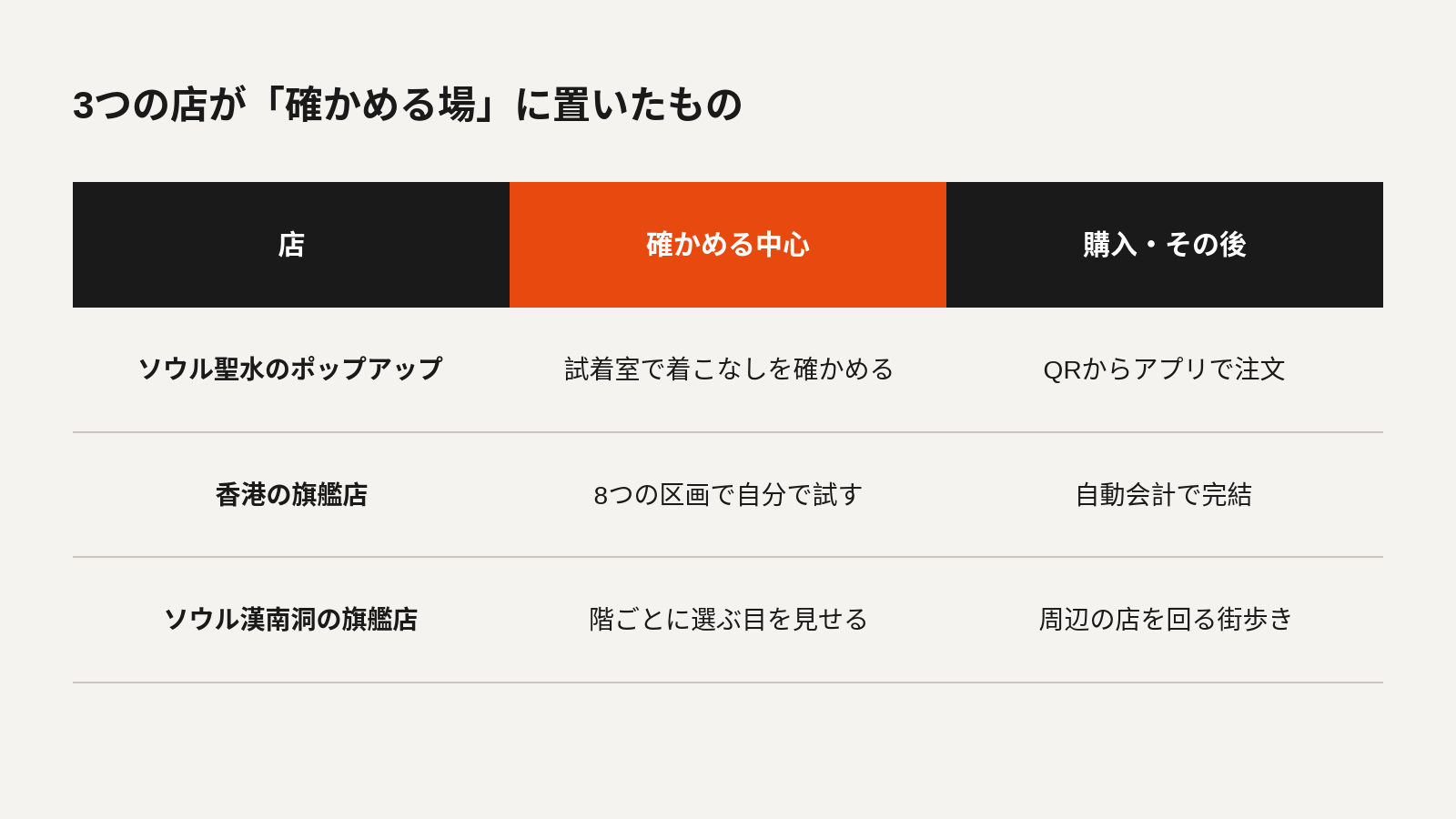
| South Korea, Seoul (Seongsu) | Fashion e-commerce (Zigzag) | Three-day pop-up. Customers ordered the clothes they tried on via a QR code in the app | Outfits styled in the fitting rooms; a purchase flow that lets customers choose how to receive items | News article |
| Hong Kong (Tsim Sha Tsui) | Glasses-style devices (Rokid) | Staff-free flagship store. Visitors try products on their own across 8 zones and buy through automated checkout | The experience of trying at your own pace | News article |
| South Korea, Seoul (Hannam-dong) | Fashion and beauty e-commerce (W Concept) | First standalone flagship store since its founding. A neighborhood walking event with 18 surrounding shops | Touring nearby shops with a map in hand | News article |
SNS activation here means activation designed to include the point where the experience gets talked about on social media. We outline the overall thinking in What Is SNS Activation?.
Why do online brands build stores for trying products?
For people who shop online, what they can't know until the product arrives is how it looks when worn, how the material feels to the touch, and how it feels in use. The three stores used their space to let people verify those "things you can't know until it arrives" in advance. The purchasing process itself stays with the apps and delivery services people already use every day.
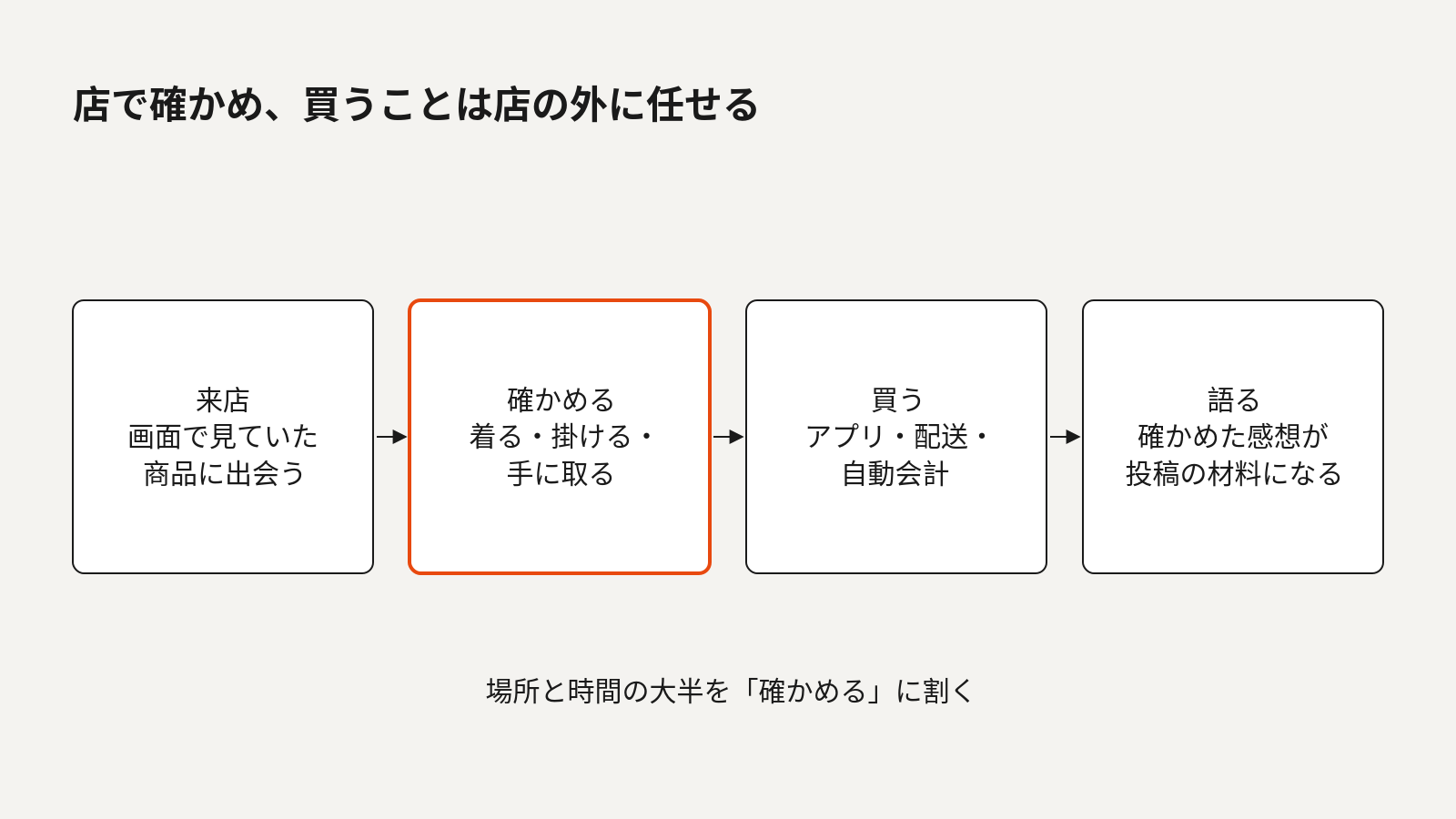
What people verify in the store becomes something they can talk about. Impressions of handling a product they had previously seen only on a screen tend to be more concrete than a purchase announcement, and are likely to be words that are useful to those who see them.
How did the Seongsu pop-up connect trying on to purchasing?
The fashion e-commerce app Zigzag held a pop-up in a building in Seongsu, Seoul, from October 16 to 18. According to reports, the first floor gathered autumn/winter items from the 39 shops on the app and offered 6 fitting rooms. Customers could scan a QR code for items they liked, order through the app, and either take them home on the spot or choose next-day delivery. The second floor brought together 11 shops that sell exclusively on the app, giving visitors a place to check materials and designs by hand.
The fitting room is at the heart of this experience. Trying on clothes usually seen only on a screen and checking them in front of a mirror naturally produces material for outfit posts. The ability to choose how to buy also lets visitors tour the venue without carrying bags, which can be read as a design that doesn't get in the way of the experience.
What did Hong Kong's flagship store let people experience without staff?
Rokid, which makes glasses-style devices, opened a flagship store in a shopping complex in Tsim Sha Tsui, Hong Kong. According to reports, it is a self-service store with no staff, where visitors wear devices across 8 zones and try functions such as translation, navigation, and photography on their own. Purchases are completed through automated checkout.
For glasses-style devices, understanding comes more from how things look when you put them on than from hearing an explanation. Without staff, visitors can take their time trying things without hesitation. This is an example of the store's very form encouraging an experience people want to tell others about.
How did the Hannam-dong flagship extend the experience beyond the store?
W Concept, an online select shop for fashion and beauty, opened its first standalone flagship store since its founding in Hannam-dong, Seoul. According to reports, across four floors from the first basement level to the third floor, it presents beauty and fragrance, fashion by Korean designers, and lifestyle goods, floor by floor. Through the end of the month, it also ran a program with 18 surrounding shops: visitors took a map received at the store, visited nearby shops, and had their visits confirmed to receive a gift. The company says it also plans to hold livestream shoots in the store.
In this case, the "eye for selection" the brand honed online is shown through the store's composition, and the experience is then extended into a walk through the neighborhood outside. By not keeping everything within a single store and creating a route through the area, the design increases the number of moments visitors can talk about.
What should you decide when applying this in Japan?
- Narrow down to one thing you want visitors to verify in the store (the shape when worn, the feel in use, selection criteria, etc.)
- Devote most of your space and time to that verification, and decide the sales floor area afterward
- Decide where outside the store the purchase process will be handled (app, delivery, a later visit)
- Decide how many talkable moments to place inside and outside the store (fitting rooms, experience zones, nearby shops)
- Tell invited guests in advance what you would like them to verify
We also cover venue design for pop-ups in How to Spread a Pop-Up on Social Media: Which Parts of the Venue Should You Design?. If you would like to consult on everything from experience design to day-of operations, see our SNS activation service page.
Scope of This Article
This article interprets the design of the three stores based solely on what is written in each source's reporting. Visitor numbers, sales, and the actual number of posts cannot be confirmed from the reports and are therefore not covered. It does not aim to compare the merits of each brand's initiatives.
Conclusion
When an online brand opens a store, whether it devotes space to trying or to selling changes the words visitors take home. Placing the experience of verifying at the center of the store is the starting point for making it a place people talk about.