Product Launch Case Studies: Three Initiatives That Turned Feature Explanations into Felt Experiences
This article was automatically translated from the Japanese original. Read the original in Japanese
The common pattern among launch events that become talked-about experiences is this: instead of explaining a product's features in words, they translate those features into a space that people can understand with their bodies. This article examines three published cases of launch venues from the perspective of SNS activation, meaning activation designed to include the point where the experience gets talked about on social media.
| Country/Region | Industry | What they did | The mechanism that gave people something to talk about | Source |
|---|---|---|---|---|
| Japan | Functional apparel | Workman recreated four environments on the runway at its new product launch: extreme cold, snow, a warm winter, and heavy rain | Rain and wind that reached the audience seats, and the chill of a freezer: "harshness you can see at a glance" | AdverTimes |
| Japan | Fashion | Maison Margiela held pop-ups at two locations in Tokyo to coincide with the release of its fall/winter collection, recreating the atmosphere of the show | Walls, floors, and furniture unified in a pattern reminiscent of the final look in the show | FASHIONSNAP |
| North America (US) | Premium home appliances | LG Signature announced its new campaign at a gala held in a New York art museum | Choosing a museum as the venue to present appliances as "an expression of design" | Luxury Daily |
What Made Workman's Launch Event an Experience?
On October 7, 2026, Workman held its fall/winter new product launch in an indoor plaza in Nishi-Shinjuku, Tokyo, and staged a "Harsh Conditions Fashion Show" as part of the event. On the runway, it set up four areas: extreme cold using a large freezer, snow, a warm winter, and heavy rain. Lighting colors changed as well, recreating temperature swings and sudden downpours. Reports say that during the heavy rain scene, the staging was intense enough that rain and wind reached the audience seats.
What becomes the experience here is the performance itself: insulation and waterproofing. Explanations of materials and figures are hard for listeners to remember, but the sight of a model who keeps walking while being pelted by rain is something viewers can describe in their own words. The company also held a show in April themed around extreme heat, so continuing the format of "recreating the environment" season after season can be read as a way of keeping the way people talk about it consistent.
Source: AdverTimes article
What Could Visitors Take Home from Maison Margiela's Pop-Up?
To mark the release of its 2026 fall/winter collection, Maison Margiela opened pop-ups at two select shops, in Ginza and Roppongi. According to reports, both venues unified the space with tapestry-pattern wallpaper and carpet reminiscent of the final look in the show, and featured furniture patchworked in the same pattern. One of the venues also offered items exclusive to that shop.
Only invited guests can see the show, but anyone who visits the shop can enter this space. Rather than playing footage of the show, the venues wrap visitors in pattern and texture, so people can take home the experience of having "stood inside the show," along with photos. It is a design that delivers the atmosphere of the launch again to people who could not attend it.
Source: FASHIONSNAP article
What Did LG Signature's Gala Communicate Through Its Choice of Venue?
On October 8, 2026, premium appliance brand LG Signature announced its new campaign at a gala held in a New York art museum. Reports say celebrities, influencers, members of the media, and the company's executives gathered at the venue, where three collections were presented.
Appliances are a category where listing more features makes it harder to convey what sets one product apart from another. Instead of explaining functions, this brand chose as its venue a museum whose architecture is itself known as a work of art. The photos visitors take at the venue capture the context of the place together with the product. It is an example of communicating the claim that "this appliance is something you choose for its design" through place rather than words.
Source: Luxury Daily article
What Design Thinking Do the Three Cases Share?
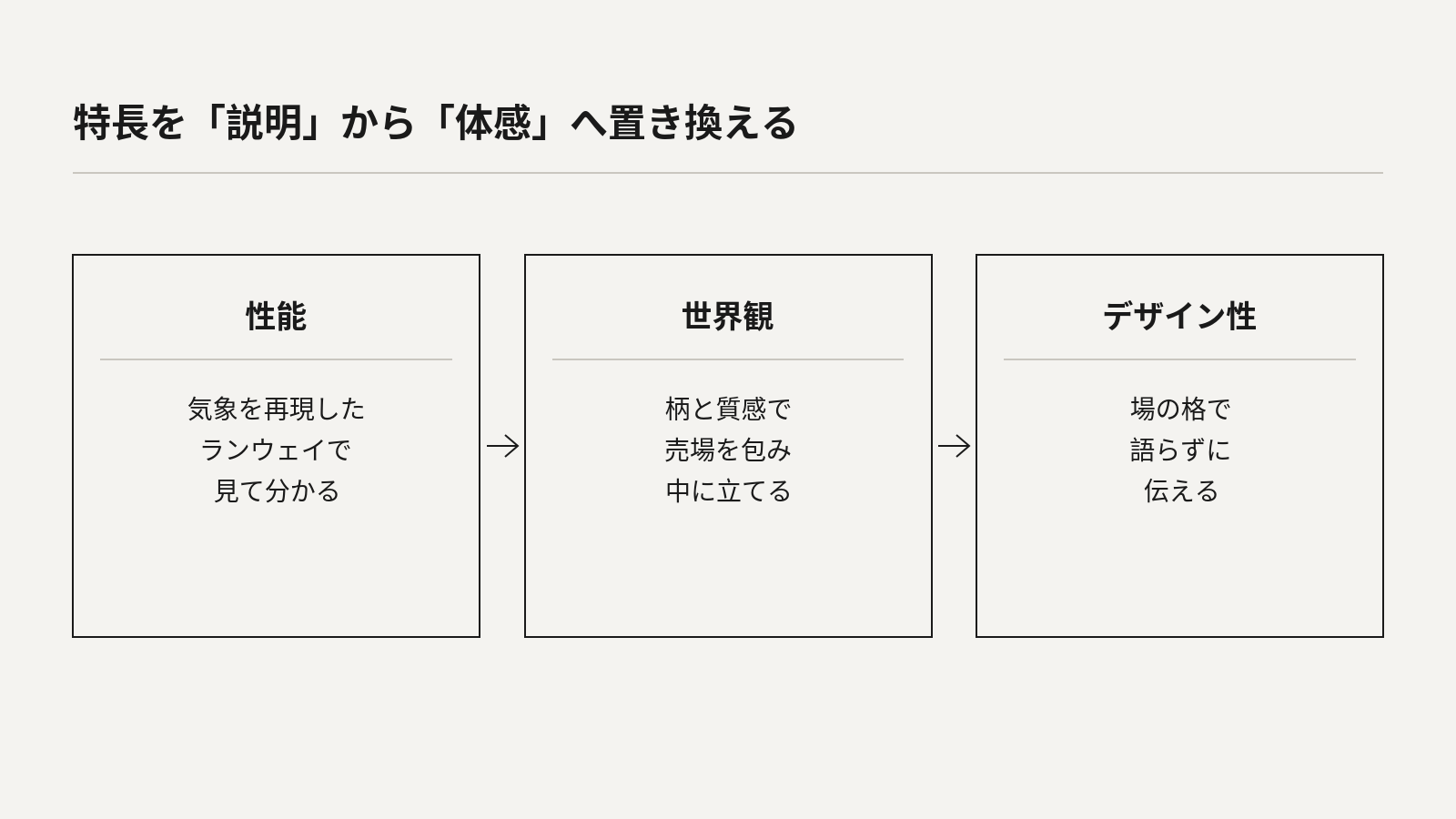
What they share is that each narrows the feature to be conveyed down to one and translates it into space. Workman turned performance into weather, Maison Margiela turned the collection's worldview into pattern and texture, and LG Signature turned design quality into the prestige of the venue. Visitors don't go home remembering an explanation; they can talk about what they experienced as it was.
The idea of building a launch event as a place that gets talked about is covered in more detail in How Does Designing a Product Launch Event as SNS Activation Change Things? The definition of the term is summarized in What Is SNS Activation?
What to Decide When Applying This in Japan
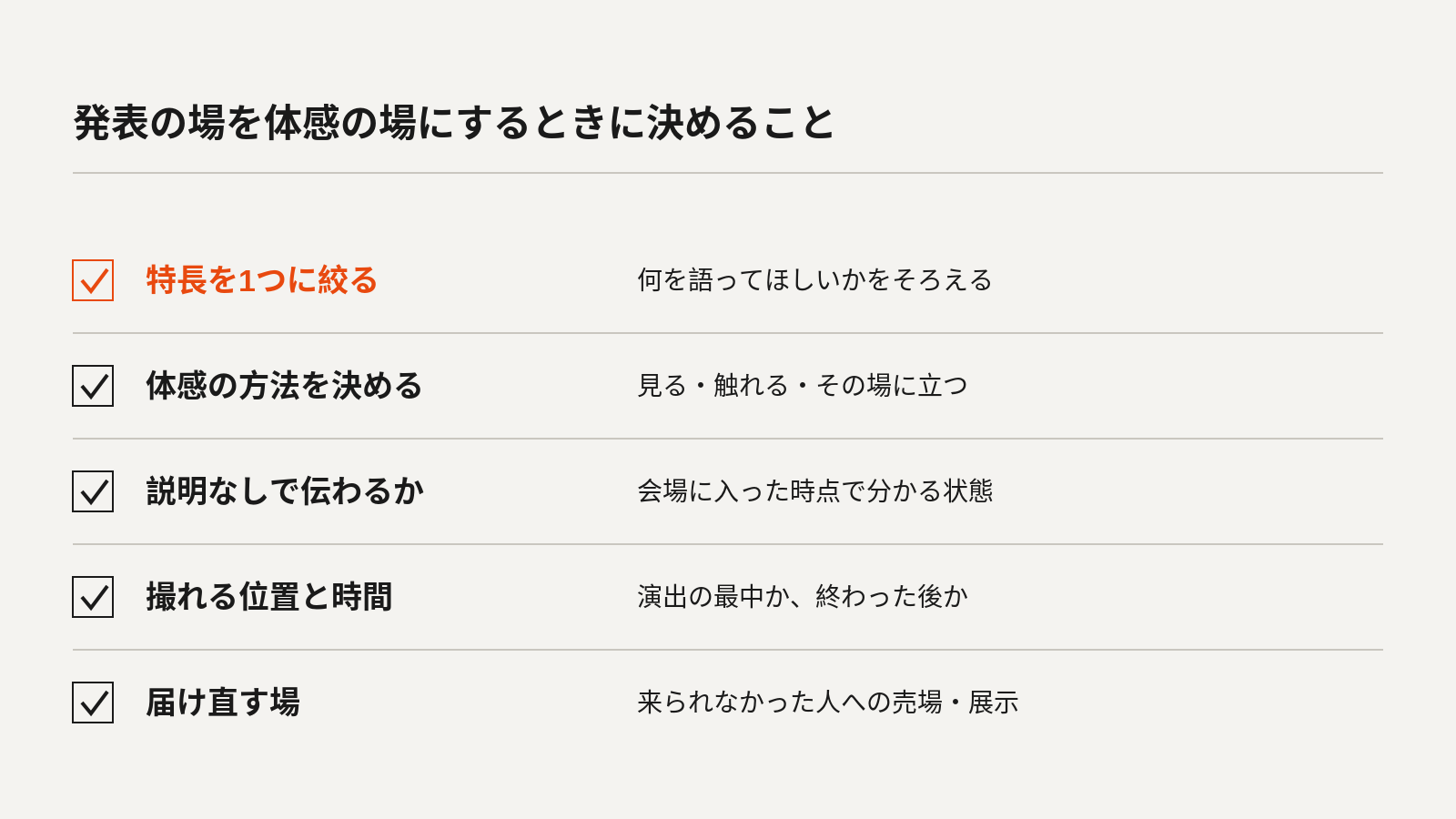
- Narrow the feature you want to convey down to one. If you turn several features into space at once, visitors won't know what they should talk about.
- Decide whether people will understand that feature by seeing it, touching it, or standing in it.
- Check that it comes across without explanation. Aim for a state where the feature is clear the moment someone enters the venue, even without hearing the presenter speak.
- Provide positions and times at which visitors can take photos. Decide in advance whether they can shoot during the staged performance or whether you will set up a place to shoot afterward.
- Think about a place to deliver the experience again to people who can't come to the launch. One option is to open a sales floor or exhibition with the same worldview after the launch event.
For example, at a launch for a skincare product whose key feature is moisturizing power, rather than spending time explaining ingredients, you could structure the event so that visitors move between a dry room and a moisturized room and feel the difference on their skin. Visitors could then put the experience into words as it was. For a cooking appliance launch, rather than handing out a list of specifications, arranging the space so that the sound and aroma of cooking reach the venue entrance would create material for people to talk about.
An approach that considers everything from experience design to spread on social media as one continuous process is introduced on the SNS activation page.
Scope of This Article
This article examines the design of launch venues based on published news reports. The results of each initiative and the volume of posts are not mentioned in the reports and have not been verified. For the LG Signature case, we have written only what could be confirmed in the publicly available portion of the source article. This article does not compare the relative merits of the initiatives, and it does not cover production setups.
Conclusion
The three cases differ in industry and scale, but they move in the same direction: less explanation, more experience. When planning a launch event, deciding what people who walk into the venue will feel, before deciding what to say, leaves you with material that gets talked about.