Who Is Subject to Stealth Marketing Regulations, and Can Brands Be Held Responsible?
This article was automatically translated from the Japanese original. Read the original in Japanese

The subject of stealth marketing regulations is the business supplying the product or service — in other words, the brand. It is not the individual influencer but the commissioning company that can be held liable for violating the Act against Unjustifiable Premiums and Misleading Representations.
Why Are Brands the Ones Subject to Regulation?
Since October 1, 2023 (Reiwa 5), the Consumer Affairs Agency has designated stealth marketing as a category of unjustifiable representation under the Act against Unjustifiable Premiums and Misleading Representations. The scope of regulation covers "representations made by a business operator regarding transactions of products or services it supplies," and the entity subject to regulation is defined as the business operator supplying the product or service (Q&A on Stealth Marketing | Consumer Affairs Agency). Influencers are positioned as parties who post content upon request from a company, and are not themselves the subject of regulation.
Why Can an Influencer's Post Still Become Subject to Regulation?
When a brand directs the content of what it asks an influencer to post, that post can be regarded as the brand's own representation and may become subject to regulation. As touched on in What Is PR Labeling for Sponsored Collaboration Posts? The Basics of Stealth Marketing Regulation and Practical Approaches, what matters is not the content of the post itself, but whether the average consumer can tell that it is an advertisement. A post lacking PR labeling that appears as though the individual is voluntarily sharing their own recommendation is especially prone to falling into this category of being difficult to distinguish as an ad.
What Should Brands Confirm in Advance?
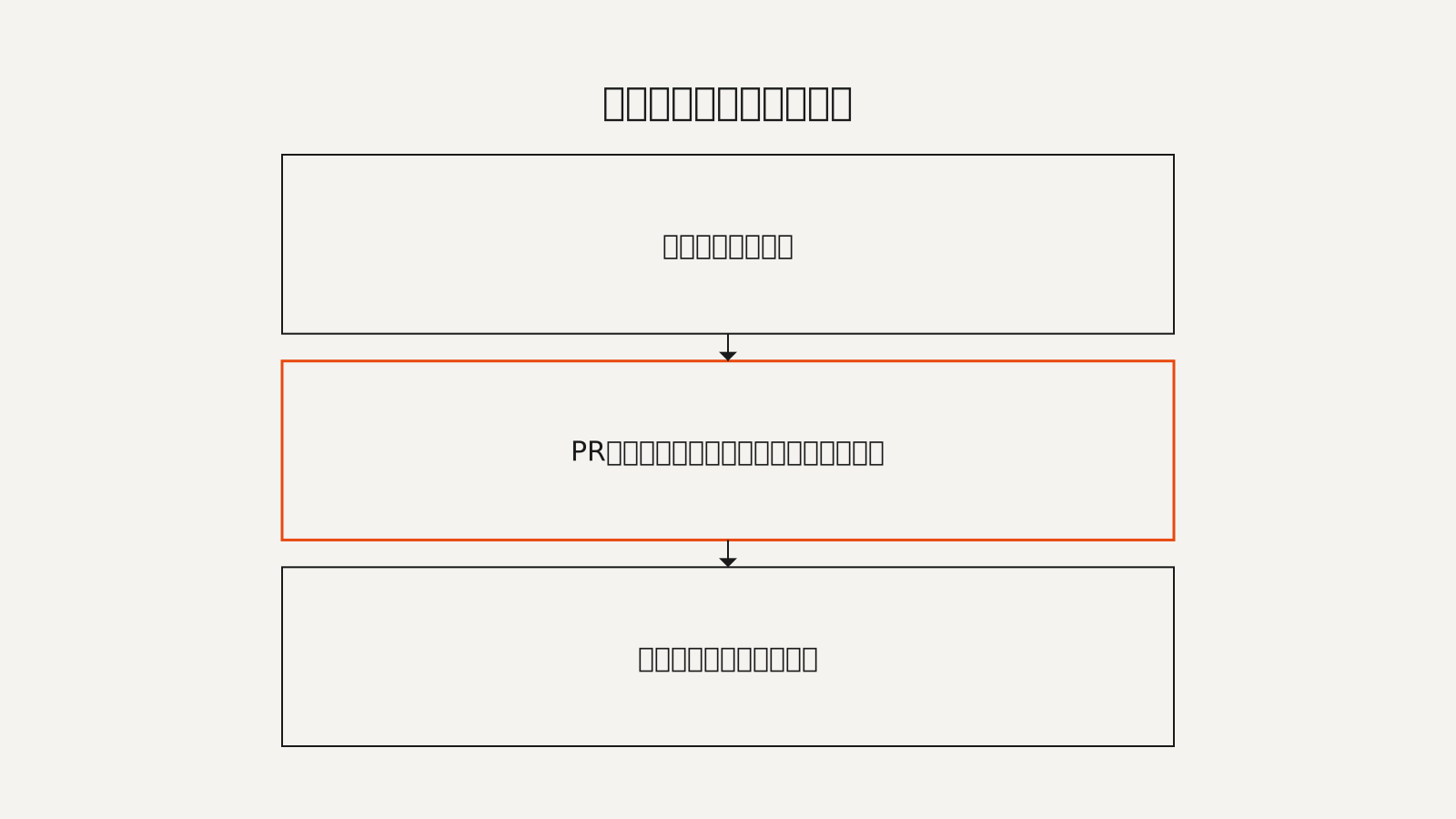
Since brands are the ones subject to regulation, the responsibility for confirming whether PR labeling is present and whether the wording is appropriate also falls on the brand beforehand. Rather than having to take the kind of after-the-fact response discussed in What to Do If a Sponsored Collaboration Post Goes Live Without PR Labeling, the practical solution is to establish a pre-publication review process.
Scope of This Article
This article addresses the legal positioning of who is subject to stealth marketing regulations. It does not cover the specific criteria for judging whether an individual post qualifies as stealth marketing.
Closing Thoughts
Stealth marketing regulations are structured to hold brands, not individual influencers, accountable. We believe understanding this positioning is the starting point for establishing a solid pre-publication review process.