What Are Sampling and Pop-Ups? The Basics and Best Use Cases for Experiential PR
This article was automatically translated from the Japanese original. Read the original in Japanese
Initiatives lumped together under the term "experiential PR" actually mix together three formats with quite different characters. A request to "do a pop-up" and a request to "arrange sampling" may sound like a continuous spectrum in a marketer's mind, but they differ in starting point of design, required preparation, and the results they produce.
This article compares three formats—street/in-store sampling, limited-time pop-ups, and invitation-only launch/experience events—across four axes: reach, depth of experience, likelihood of generating posts, and preparation burden. By the end, you should be able to judge which format best suits your project, and understand what changes when you combine it with influencers.
Experiential PR splits into three formats with different objectives
Experiential PR is an umbrella term for initiatives that create opportunities for people to actually engage with a product or brand—rather than one-way advertising—and use that engagement to build purchase intent or generate word-of-mouth. The three formats covered in this article can be organized as follows:
- Street/in-store sampling — An initiative in which passersby on the street or visitors to a store are given the chance to try a product firsthand
- Limited-time pop-ups — An initiative in which a special space is set up for a set period, allowing visitors to experience the product or the brand's world
- Invitation-only launch/experience events — An initiative offering a relatively deep experience, limited to invited guests only
Note that while invitation-only launch/experience events are treated as a single format here, in practice the on-the-day design branches further depending on whether the emphasis is on a "launch" (centered on conveying information about a new product) or an "experience session" (centered on giving guests time to engage deeply). In this article, we focus on the shared trait of delivering a rich experience to a narrow, targeted audience, and treat both as one combined format.
All three share the common starting point of "letting people try it for themselves," but the design decisions—who to reach, how deep an experience to offer, and at what scale—are entirely different from one another. If you don't understand this distinction and simply start from the format itself—"let's just do a pop-up"—your preparations can move forward even as the objective and the initiative drift apart.
Street/in-store sampling is a format built to maximize reach
The strength of street/in-store sampling lies in its breadth of reach. Anyone who happens to pass through a given location or visit a store can become part of the experience, allowing you to reach a large base of people.
On the other hand, the time available per person is short, and the depth of experience inevitably stays shallow. Most people receive the product and move on, which makes this format poorly suited to carefully conveying a brand's world. The likelihood of generating posts is also lower than with the other two formats, because the act of simply receiving a sample offers little that people feel compelled to talk about.
In terms of preparation burden, this is the lightest of the three formats. There is little need for heavy processes like building out a venue or managing invitations, and the time from kickoff to execution can be kept short. It's a format suited to situations where you want to expand your reach first, or need to move within a short preparation window.
Limited-time pop-ups balance depth of experience with a strong likelihood of generating posts
What distinguishes limited-time pop-ups from street/in-store sampling is that attendance requires a somewhat higher level of self-initiative than simply visiting a store. The fact that someone has deliberately traveled to the location means the people who gather already have a certain degree of interest.
This makes it easier to design a deeper experience. Because the space itself can be built out to embody the brand's world, it's easy to incorporate touches like a photogenic corner or a designed flow through the experience—making the likelihood of generating posts higher than with street/in-store sampling.
However, this comes at the cost of a heavier preparation burden. Processes that don't exist with street/in-store sampling pile up: the operational structure needed to maintain the space throughout the event period, the production of fixtures and decorations, and promotional efforts to draw visitors. Reach is broader than with invitation-only launch/experience events, but narrower than with street/in-store sampling. This format suits situations where you want to raise the quality of the experience while still reaching a reasonably broad audience.
Invitation-only launch/experience events trade a heavier preparation burden for depth
Invitation-only launch/experience events narrow the audience in exchange for the ability to design a per-person experience that goes deeper than either of the other two formats. Because you can know the number of participants in advance, it becomes easier to build individual experiences into the design, and the likelihood of generating posts is the highest of the three formats.
In our own performance records, the posting rate among attendees has consistently run higher than with the other two formats. That said, we've also found that this level isn't uniform as scale increases—the larger the number of attendees, the more the per-person experience design tends to get diluted. A detailed breakdown is covered in How Scale Affects Posting Rates in Event-Based Initiatives (which documents an attendee posting rate of 94.6%).
This format falls short of the other two in terms of reach. There's an inherent cap on the number of people you can invite, so it isn't suited to initiatives that require breadth. Preparation burden is also the heaviest of the three. The process runs long—from designing invitations, to on-the-day reception and guest flow, to providing materials after the event. Even something as simple as reception requires careful design to avoid a line forming the moment doors open. We cover this process alone in A Guide to Reception Design for Invitation-Only Events. This format suits situations where you want to pursue a rich experience and strong word-of-mouth, even at the cost of a narrower audience.
Lining up the three formats across four axes makes their strengths and weaknesses clear
Lining up the three formats against the four axes produces the following picture:
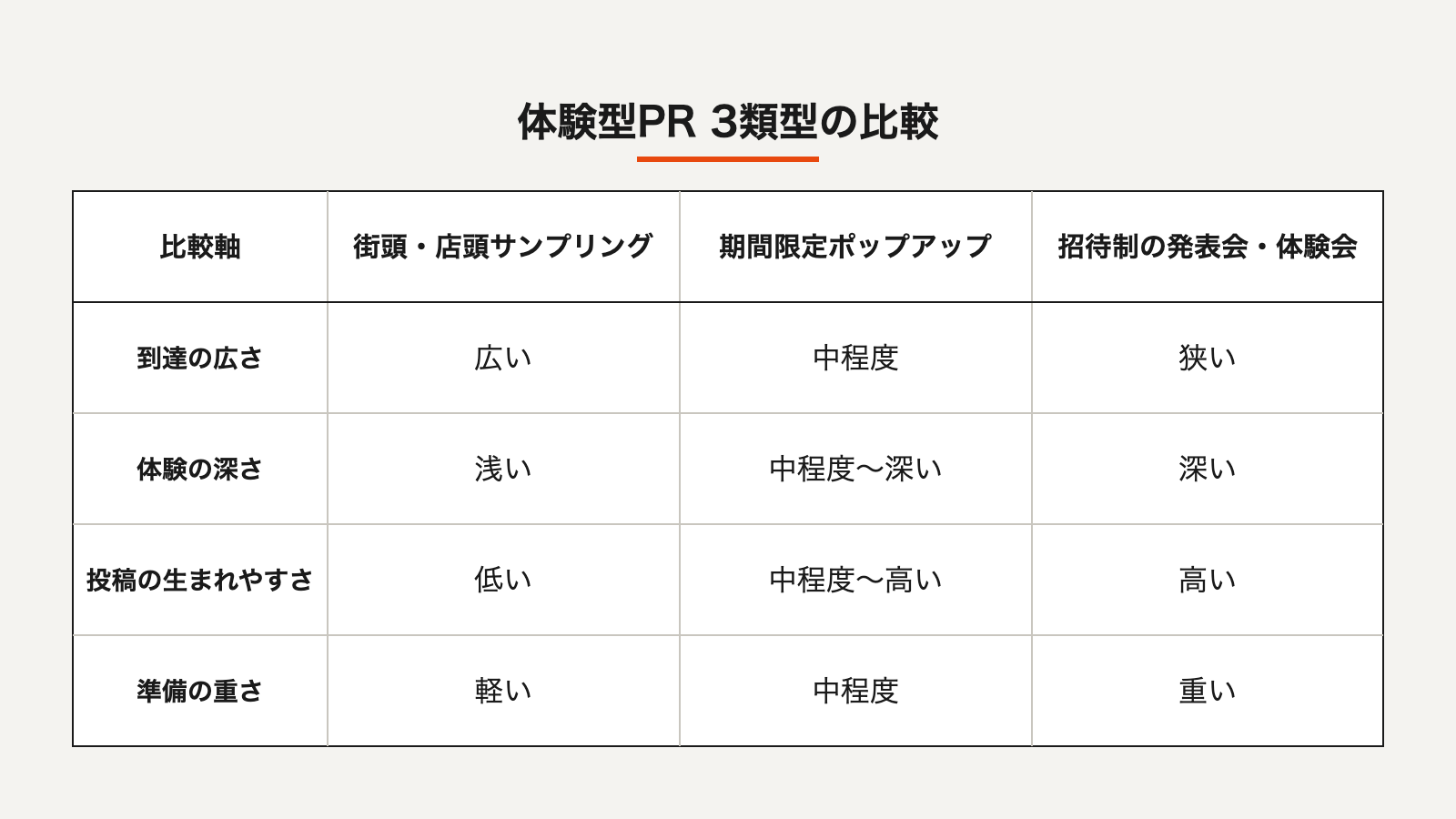
Figure 1: Comparison table of the 3 formats × 4 axes
| Axis | Street/In-Store Sampling | Limited-Time Pop-Ups | Invitation-Only Launch/Experience Events |
|---|---|---|---|
| Reach | Broad | Moderate | Narrow |
| Depth of experience | Shallow | Moderate to deep | Deep |
| Likelihood of generating posts | Low | Moderate to high | High |
| Preparation burden | Light | Moderate | Heavy |
What this table shows is a clean trade-off across the four axes. Optimizing for reach tends to sacrifice depth and posting potential, while optimizing for depth and posting potential increases the preparation burden. If you choose a format by looking at only one axis, strain will show up on the others.
However, these correspondences are only guidelines—they don't mean the numbers are fixed once you pick a format. Even within the same limited-time pop-up format, choosing a high-foot-traffic location can push reach closer to that of street sampling, while narrowing the experience route can lighten the preparation burden. It's closer to real-world practice to think of this in two stages: the format sets the general tendency of strengths and weaknesses, and the actual design decides where within that range to land.
Combining influencers shifts the deciding factor to casting and guest flow
Influencer casting can be combined with any of the three formats. However, the moment you combine it, the elements that determine success shift away from the format of the initiative itself and toward two other points: who you ask to take part, and how they're guided to move through the experience on the day.
With street/in-store sampling, since you're asking a specific person to attend among a crowd of passersby, what matters is whether this experience fits naturally into the context of that person's usual content. With limited-time pop-ups, the timing of when during the event period you invite them, and where in the experience flow you guide them, shapes the content of what gets posted. With invitation-only launch/experience events, because the number of invitees is limited, the precision of each individual's experience design and guest flow feeds directly into the results.
Creating a place for experience and creating conditions under which that experience gets talked about may look like a single continuous task, but they're actually separate jobs. We go into detail on where this split occurs in The Job of Creating an Experience vs. the Job of Creating Conditions for It to Be Talked About. The work isn't finished the moment you decide who to cast—only once the on-the-day guest flow is designed as well does it translate into results in the form of posts.
Which format to choose depends on your objective and the team you can prepare
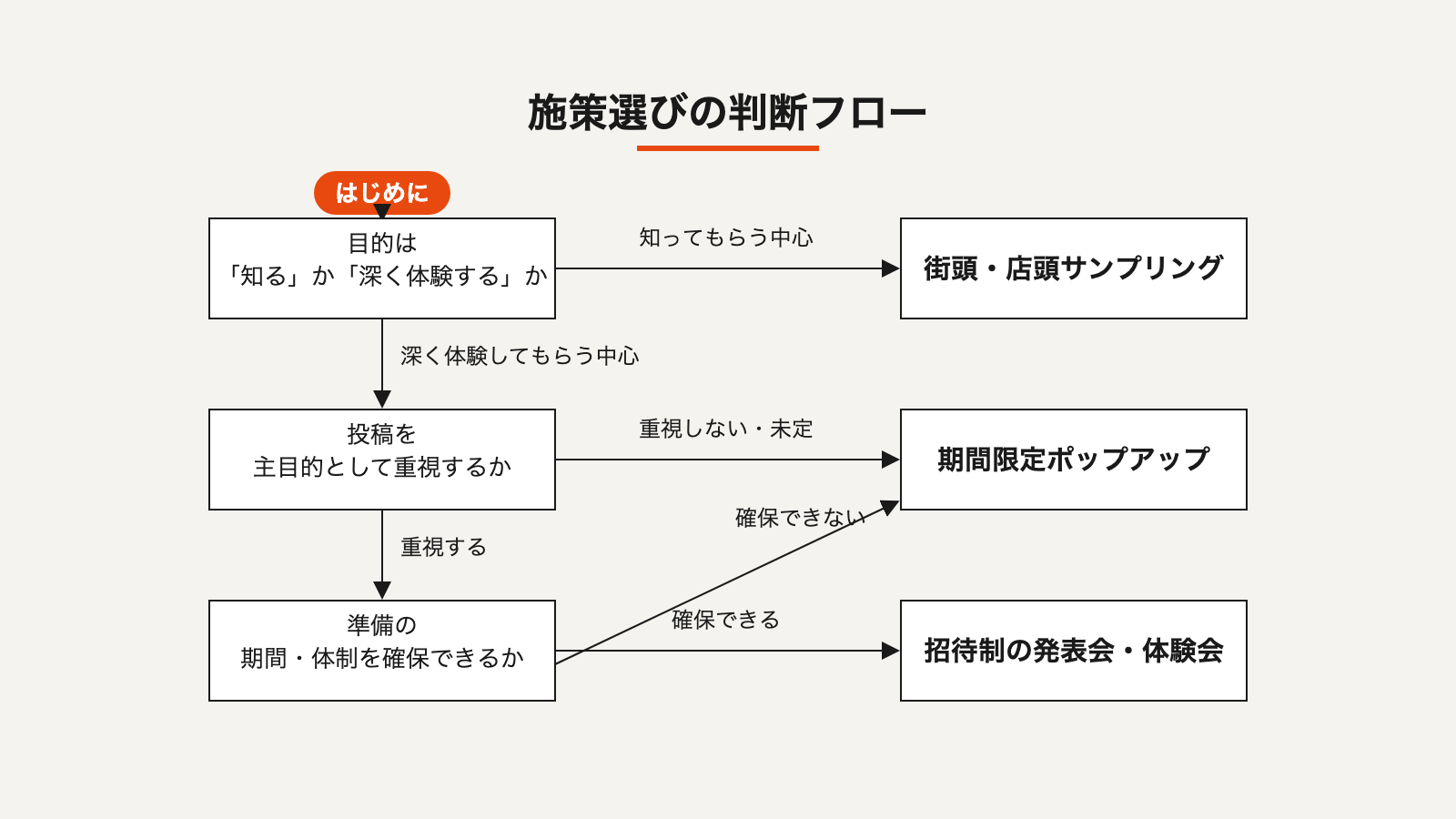
Figure 2: Decision flow for selecting an initiative
It helps to think through the choice of format in the following order.
First, confirm whether your objective is "awareness" or "deep engagement." If it leans toward the former, street/in-store sampling is the candidate; if it leans toward the latter, either a limited-time pop-up or an invitation-only launch/experience event becomes a candidate.
Next, confirm whether generating posts is one of your primary objectives. If it is, you'll want to choose a limited-time pop-up or an invitation-only launch/experience event, since both make it easier to design a deep experience.
Finally, confirm how much time and team capacity you can devote to preparation. Even with the same goal of "deep engagement," if you can't secure sufficient lead time, a limited-time pop-up—which is easier to get up and running—becomes the better choice over an invitation-only launch/experience event. Conversely, if you have ample team capacity and lead time, an invitation-only launch/experience event lets you design an even richer experience.
Scope of this article
This article compared the three formats across four axes—reach, depth of experience, likelihood of generating posts, and preparation burden—and organized a way of thinking about how to choose between them. It does not cover the specific criteria for selecting venues and fixtures for each format, the design of invitation copy, or how to build an on-the-day operational team. It also does not cover hybrid initiatives that combine multiple formats (for example, reproducing the content of a launch event later as a pop-up).
In closing
There is no hierarchy of superiority among the three formats—only differences in suitability depending on your objective and your team's capacity. Whichever format you choose, we believe the surest way to keep your design from drifting is to decide in advance which of the four axes to prioritize and which to let go.