What Is the Right of Publicity, and Why Does It Matter in Influencer Casting?
This article was automatically translated from the Japanese original. Read the original in Japanese
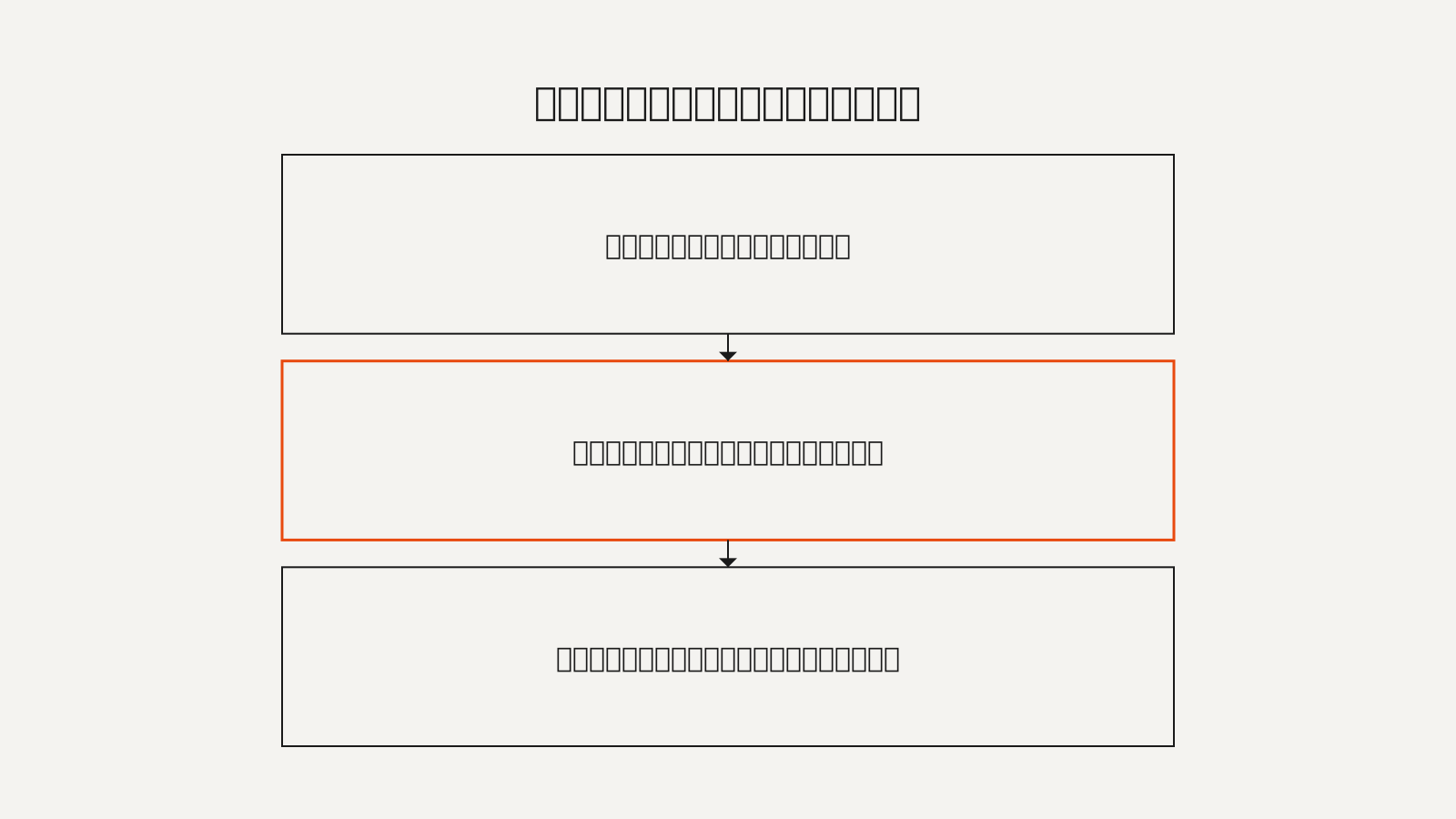
The right of publicity is the right that protects an individual's appearance from being photographed, published, or used without proper consent. In influencer casting, agreeing to the scope of what will be published as a post is a separate matter from granting permission for secondary use, such as repurposing the material for advertising. Both must be addressed individually, with due respect for the right of publicity in each case.
| Item | What is being agreed upon | Points of caution |
|---|---|---|
| Agreement on the post | The content, duration, and platform for the published post | Does not extend to uses outside the agreed scope |
| Permission for secondary use | Repurposing for advertising, other campaigns, or uses beyond the original post | Must be obtained separately from the agreement made at the time of posting |
| Respect for the right of publicity | The individual's own right not to have their appearance used without consent | Being a public figure does not remove the need for this consideration |
What Kind of Right Is the Right of Publicity?
The right of publicity originates from the personal interest an individual holds in their own appearance. The Grand Bench of the Supreme Court of Japan has held that individuals possess a legally protected personal interest in not having their appearance photographed without proper justification (Supreme Court Grand Bench decision, December 24, 1969, confirmed via the courts' case search system as of October 2026), and the right not to have one's name or likeness used without consent is understood to derive from personal rights (jinkakuken). This personal interest is not diminished simply because the individual is well-known or regularly engages in public-facing activities. All parties involved need to share the premise that being an influencer does not make this right any less deserving of consideration.
How Do the Right of Publicity and Permission for Secondary Use Differ?
The right of publicity itself belongs to the individual, whereas permission for secondary use is a separate procedure—built on top of that right—through which the brand, agency, and influencer individually agree on "how far the material may be used." Although these are distinct matters, they tend to be treated as a single issue in practice, and it is easy to mistakenly assume that obtaining agreement for the post alone also covers respect for the right of publicity. Agreeing to the content that will be published as a post and agreeing that the material may be used for another purpose should be understood as two separate agreements, both legally and practically.
In What Situations Can Agreement on the Post Alone Not Be Enough?
For example, if photos taken for a sponsored collaboration post are later intended for reuse in a web advertising creative, the agreement made at the time of posting is not sufficient on its own. As discussed in What Is Secondary Use of Post Material? Basics and Cautions for Repurposing in Advertising, repurposing for advertising constitutes a different scope of use than the original post, and separate permission must be obtained. The same applies when a brand wants to use a past post's photos in SNS advertising for a different campaign after the contract has already ended. Because the agreement made at the time of posting also loses its effect once the contract ends, a renewed permission process is required, following the approach discussed in Is It Acceptable to Request Additional Permission for Secondary Use After the Fact?. A common pitfall in both situations is that staff members tend to assume "we already have an agreement, so this should be fine."
What Should Be Done to Ensure Proper Consideration Is Not Overlooked?
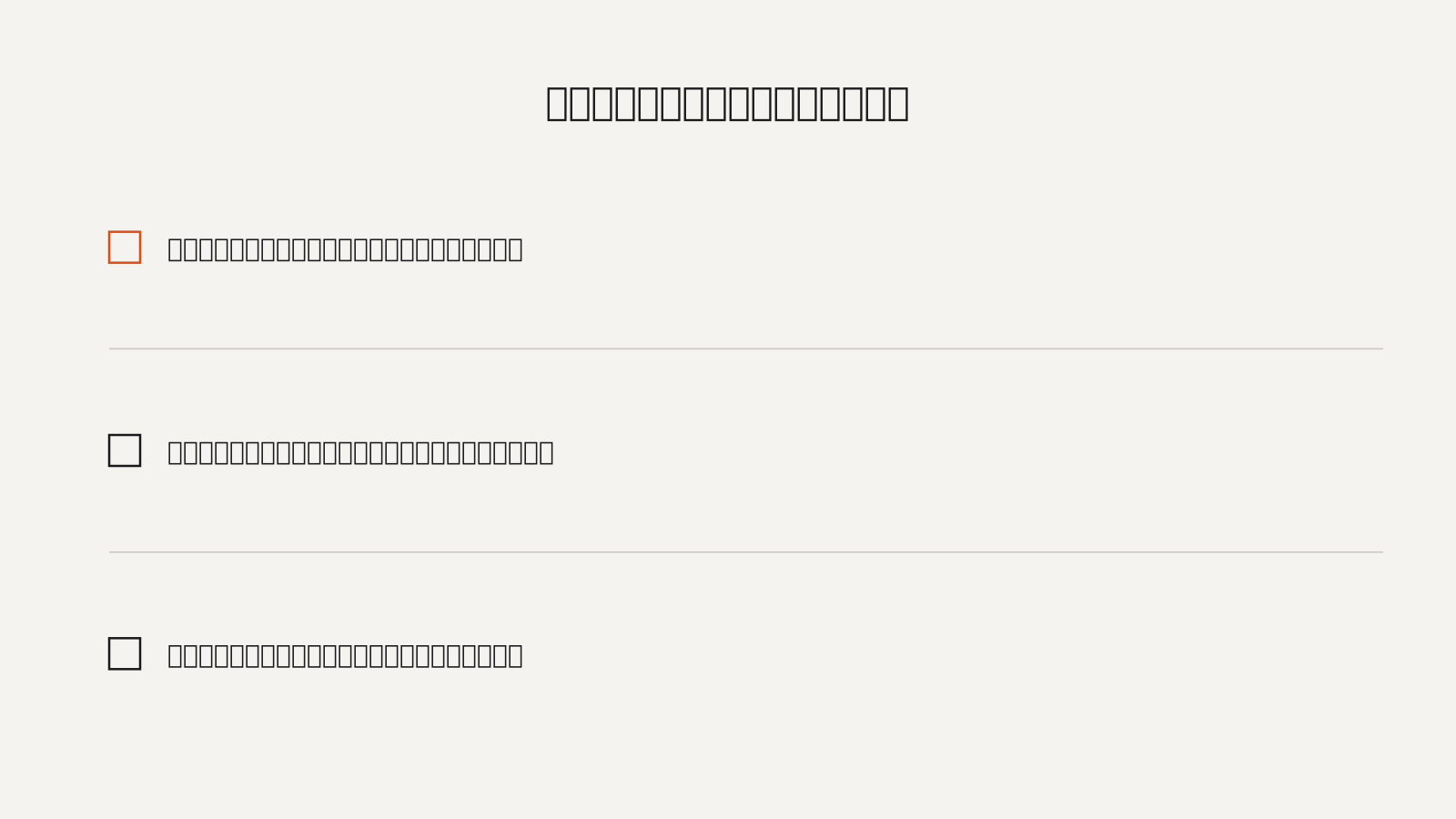
To proceed without neglecting respect for the right of publicity, confirm the following in order:
- The brand representative clearly defines the scope of the post to be published (content, duration, and platform) at the time of contracting
- At an early stage, and including the agency, identify whether any uses beyond the post itself are anticipated (such as repurposing for advertising or use in other campaigns)
- For each anticipated use, obtain separate permission from the influencer individually, distinct from the agreement for the post
- If a use arises later that was not anticipated at the time of contracting, obtain renewed permission each time
Following this order helps avoid situations where it later becomes unclear "how far the agreement actually extended."
What Are the Minimum Items That Should Be Included in an Influencer Contract? discusses how to reflect these kinds of scope-of-use arrangements in a contract.
Scope of This Article
This article addresses the basic nature of the right of publicity and its relationship to agreement on posts and permission for secondary use. It does not assess whether any specific post or use constitutes an infringement of the right of publicity. It also does not cover the specific wording of permission documents or how compensation should be set for each scope of use.
Closing Thoughts
The right of publicity derives from an individual's personal interest and is not diminished simply because an influencer is active in the public eye. Treating agreement on the post and permission for secondary use as separate matters, and arranging each individually, is, in our view, the starting point for respecting this right.