What Is Instagram's Paid Partnership Tag (Branded Content Tool)?
This article was automatically translated from the Japanese original. Read the original in Japanese

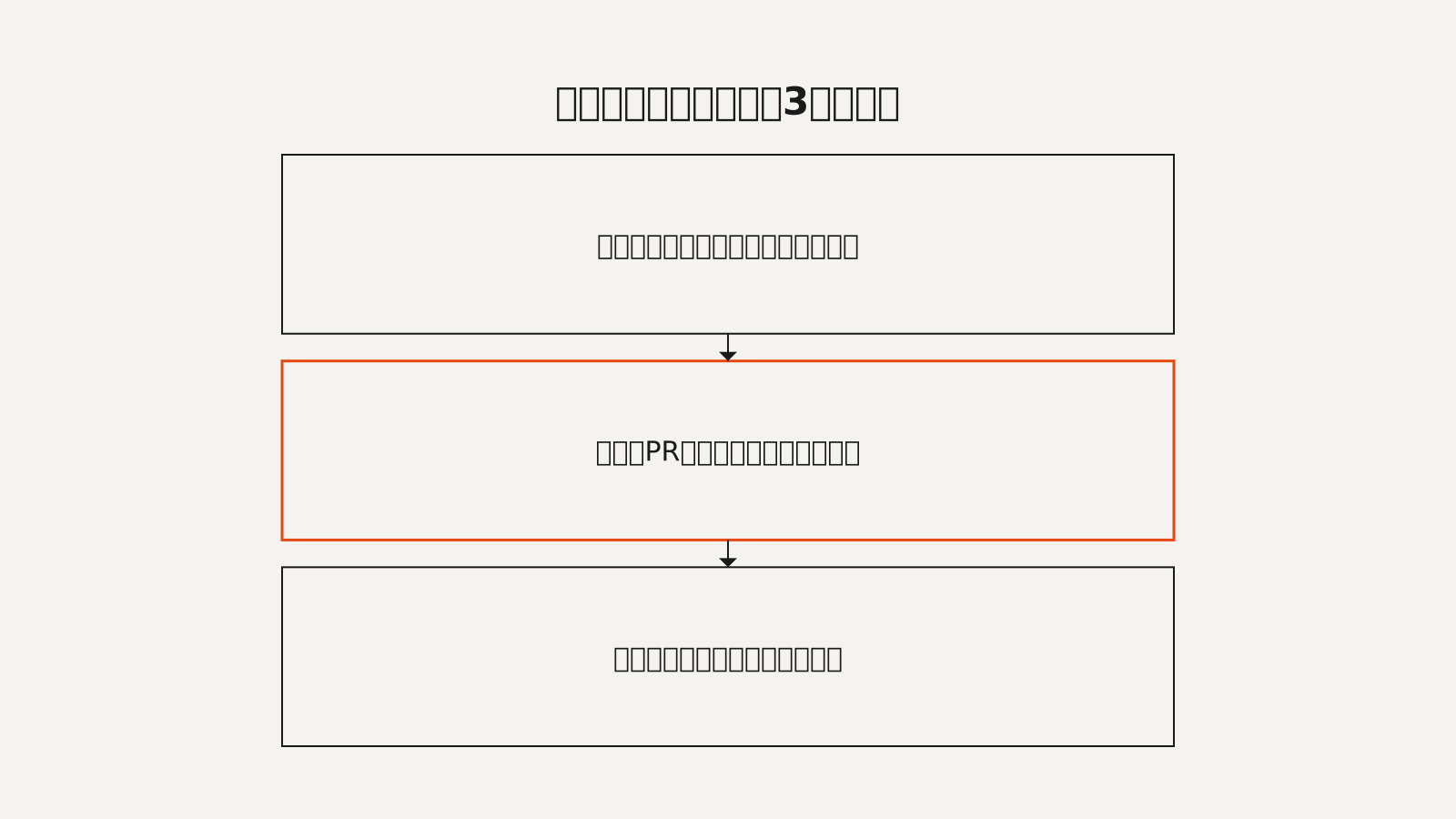
The branded content tool is Instagram's official feature that displays a brand name on sponsored collaboration posts. A "Paid partnership" label along with the brand account name is automatically added at the top of the post, but this display alone does not complete the disclosure requirement—it must be combined with PR labeling in the caption text or hashtags.
| Item | Where it appears | Role as PR labeling |
|---|---|---|
| Tag display | Top of the post (automatic) | Forms the foundation of disclosure, but is insufficient on its own |
| PR labeling in caption | Caption body | A clear statement aimed at people reading the post content |
| Hashtags | End of caption, etc. | Supplementary indication. Cannot substitute for the tag display or caption text |
What Does the Branded Content Tool Actually Do?
When an influencer creates a post and tags the partner brand's account using the branded content tool, the brand name automatically appears at the top of the post as a "Paid partnership with." Instagram's Help Center states that all branded content must be disclosed using the paid partnership label (Instagram Help Center, "Branded Content Policies," accessed October 2026). This mechanism lets viewers instantly recognize that the post was created in connection with a specific brand. At the sponsored collaboration planning stage, brand representatives and agencies need to design the post structure with the assumption that this feature will be used.
Why Doesn't the Tag Display Alone Complete the Disclosure?
Because the tag display is confined to a limited location at the top of the post screen, this is not a reason to skip explicit disclosure in the caption or hashtags. As discussed in What Is PR Labeling for Sponsored Collaboration Posts? The Basics of Stealth Marketing Regulations and Practical Approaches, the purpose of PR labeling is to make it clear to viewers that a post is an advertisement, and the tag display only covers part of that responsibility. For example, if a feed post only includes the tag with no mention in the caption text, people who scroll past without noticing the tag display will miss the disclosure entirely. Similarly, even if a Stories post is tagged, disclosure remains insufficient without accompanying text overlay.
Can It Be Used the Same Way Across All Post Formats?
The branded content tool can be used not only on feed posts but also on Reels and Stories. However, as discussed in Instagram Reels, Feed, or Stories: Which Format Suits Sponsored Collaborations?, the characteristics of each format remain unchanged, so the choice of format should be made based on objectives, independent of whether tagging is used. As also noted in Who Is Subject to Stealth Marketing Regulations, and Can Brands Be Held Responsible Too?, it's important to remember that brands themselves are held accountable for whether disclosure is present.
How Should the Process Proceed from Setup to Publication?
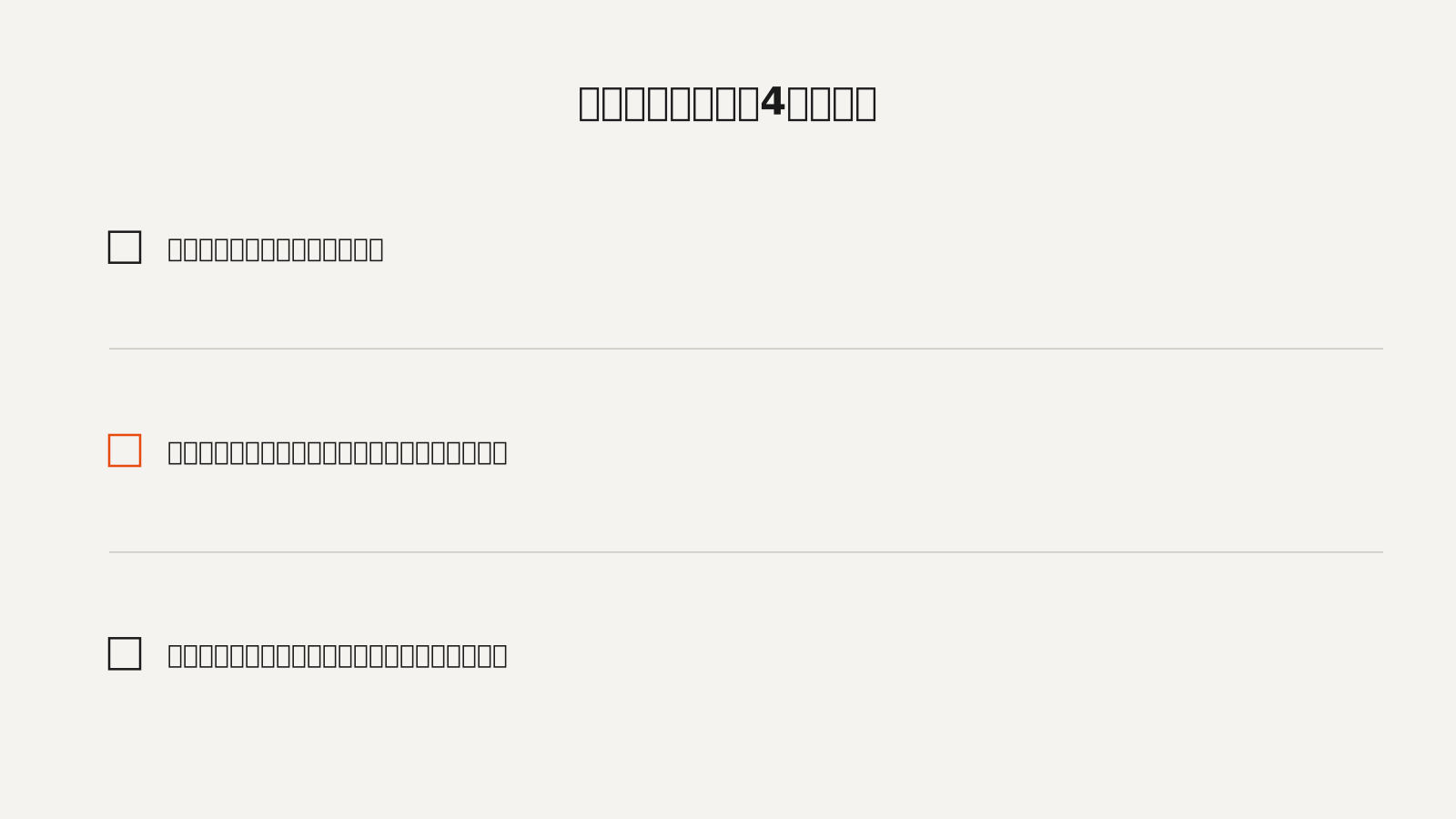
To properly carry out both the tag display and PR labeling, follow this sequence:
- Before publishing, confirm who will be tagged using the branded content tool
- Near the beginning of the caption text, include a sentence that clearly indicates it is a sponsored collaboration
- Add supplementary hashtags as needed
- After publishing, verify that both the tag display and the caption text have actually been applied correctly
These four steps can be used not only by the influencer carrying out the work, but also as a checklist for brand representatives and agencies to review before publication.
Scope of This Article
This article covers the role of the branded content tool as a feature and its relationship to PR labeling. It does not cover specific setup instructions or comparisons with similar features on other platforms.
Closing Thoughts
The branded content tool is a useful feature for making sponsored collaboration relationships visible, but it cannot replace PR labeling. We believe it's important to share the premise that both should be used together with all stakeholders from the earliest stages of planning a campaign.