What to Decide Before Requesting an SNS Activation
This article was automatically translated from the Japanese original. Read the original in Japanese
Before requesting an SNS activation, organizing these six points internally—objective, target audience, timing, venue conditions, disclosure/approval flow, and how to measure results—helps move the consultation forward concretely once the request is made.
| Step | What to decide | Who is mainly involved |
|---|---|---|
| Put the objective into words | Whether you want to expand awareness or deepen brand understanding | Internal decision-makers |
| Define the target audience | Which age group or interest segment you want to reach | Marketing staff |
| Decide the timing | Launch date, season, relationship to venue availability | PR/communications staff |
| Decide venue conditions | Expected number of attendees, location, overlap with other events in the same period | Facility/venue staff |
| Decide the disclosure and approval flow | Assumptions for PR labeling, internal approval flow and timeline | Legal/compliance staff |
| Decide how to measure results | Whether to track posting rate, spread of mentions, or branded search | Analytics staff |
Why Do These Six Points Need to Be Organized Before Requesting?
SNS activation (an activation designed to include not just the experience itself but also how that experience gets talked about on SNS) is an initiative that builds the venue experience design and the posting design at the same time. As covered in What Is SNS Activation?, if you decide on the experience design alone first, you end up having to add posting mechanisms afterward, and both tend to end up half-baked. If these six points are already decided by the time of the request, the conversation can move straight into concrete design discussions from the first consultation. If any of the six points remain undecided when starting the consultation, time ends up being spent confirming the objective, and the first consultation can end without ever reaching the experience design or venue candidate discussions that should actually be the focus. Conversely, if you proceed with a vague objective or target audience, discussions tend to backtrack once you get to deciding on venue candidates or experience content, putting pressure on the preparation schedule. For example, if you're considering a pop-up that doubles as a new product launch, the venue design and approach to invitation numbers will differ depending on whether the objective is "an experience that serves as a launch event" or "spreading attendee posts." In the former case, you'd prioritize time for media interviews and explanations; in the latter, you'd need a layout that prioritizes ease of photography and posting—so the decisions differ even for the same venue. Similarly, even if you have experience running an event for the same brand in the past, if this time's objective differs from last time, the same venue conditions or invitation approach from before won't necessarily be a good fit. Putting the objective into words first makes it easier to distinguish which parts of past track records are relevant as reference and which are not.
Where Do Teams Tend to Get Stuck at Each Step?
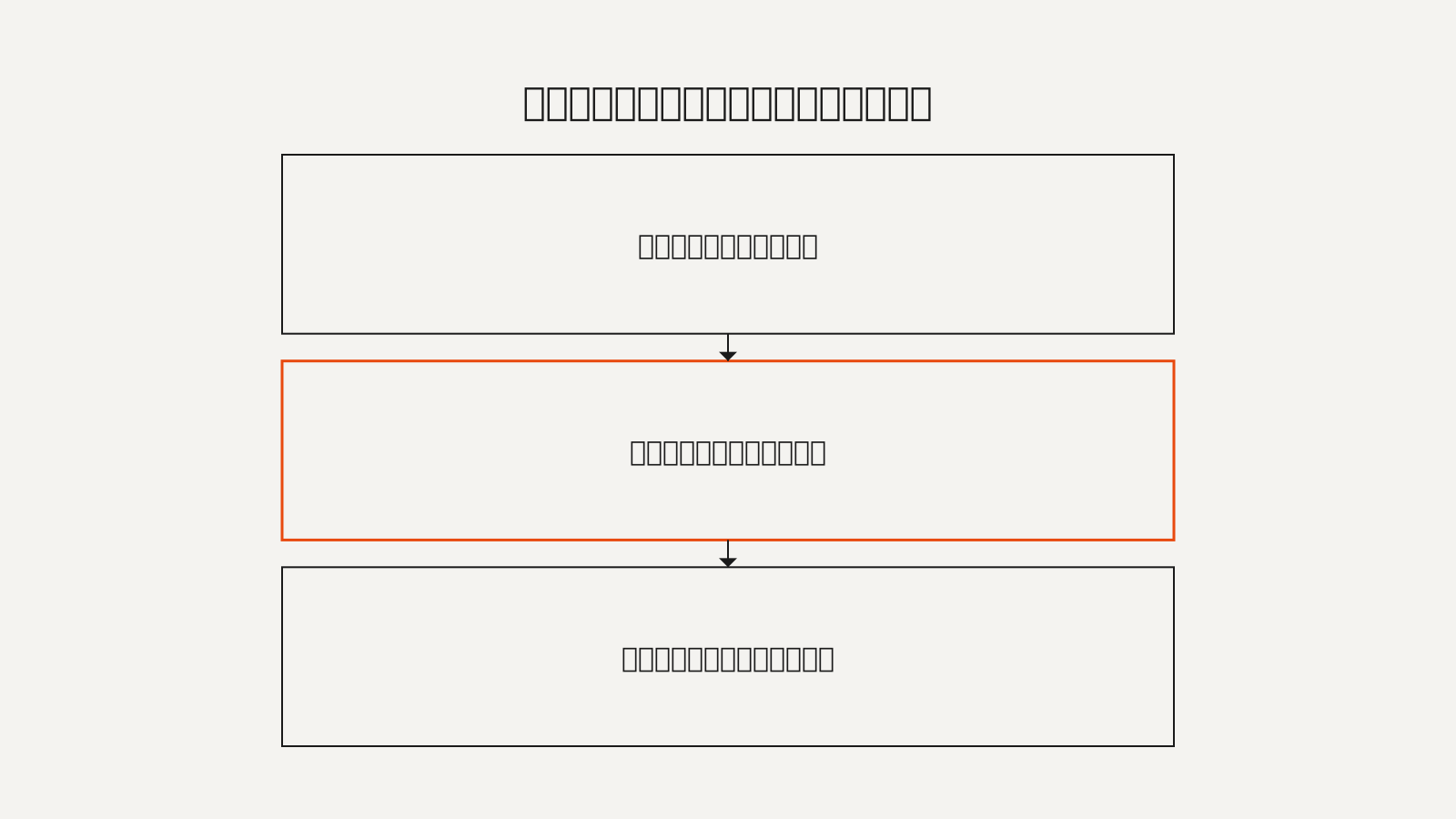
In the step of putting the objective into words, it's common to proceed with a vague objective like "we just want people talking about it," which later makes it hard to settle on evaluation criteria. In the step of deciding venue conditions, teams sometimes decide only the expected number of attendees first, then have to go back and check whether the size and layout actually suit the content of the experience. In the step of deciding the disclosure and approval flow, teams sometimes fail to account for the time needed for internal legal review, leaving the posting timeline cramped right before the event. The step of deciding how to measure results is often discussed only after the request has been made, but since what you choose to measure affects venue design and invitation approach, putting it into words once before the request makes subsequent discussions align more smoothly. In the step of defining the target audience, if you skip specifying age group or interest segment and instead say "as broad as possible," you end up unable to narrow down either who to invite or what the experience content should be, often resulting in a design that doesn't resonate deeply with anyone. Deciding venue conditions and deciding the disclosure/approval flow is a combination where getting the order wrong tends to create rework. If you provisionally secure a venue first and then send it for internal approval, you may find that approval reveals constraints on the disclosure method, forcing you to change the venue design itself.
What Should Be Decided First?
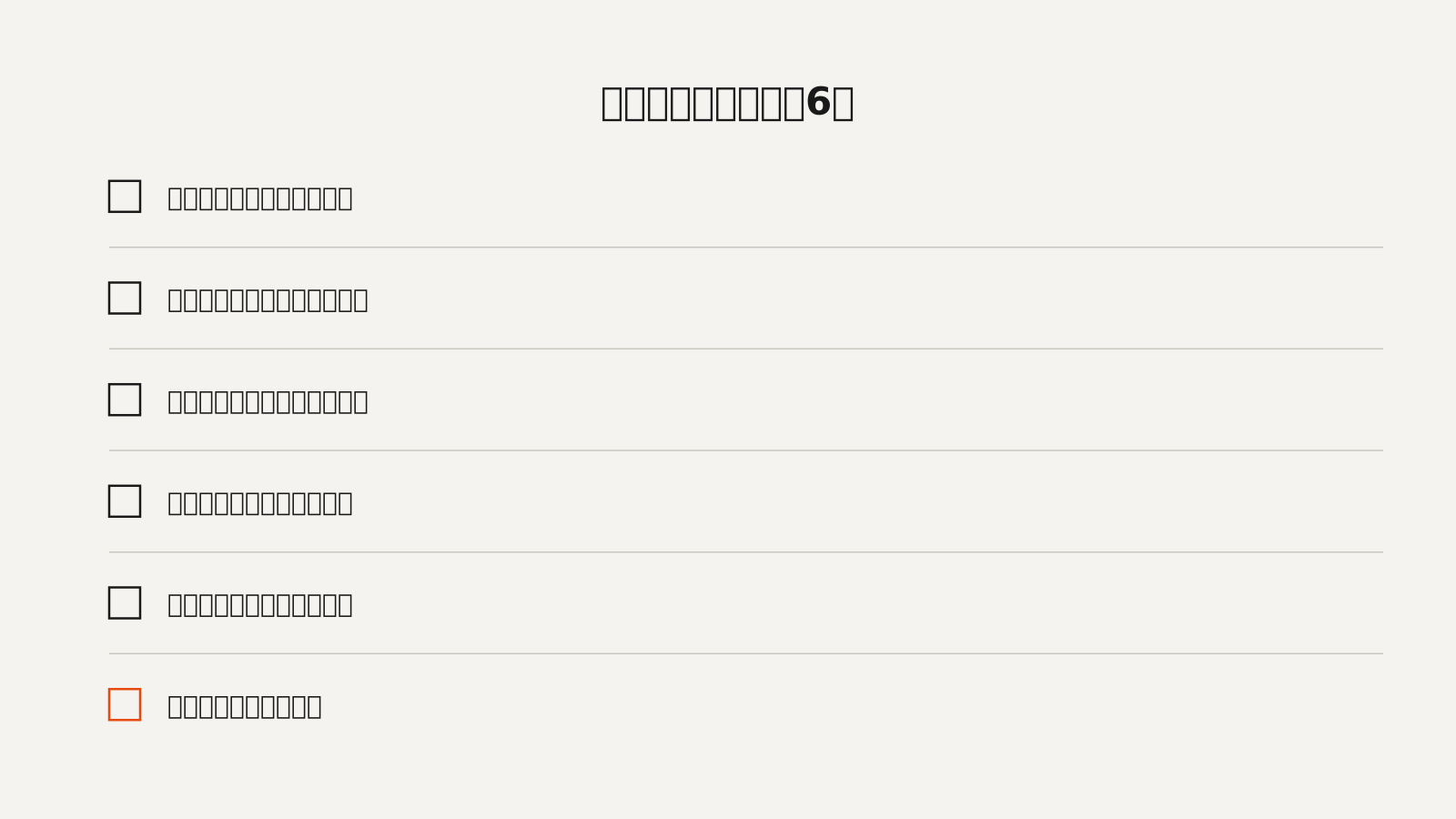
- Be able to state the objective (expanding awareness or deepening brand understanding) in a single sentence
- Put the target audience's age group and interest segment into words
- Organize your preferred timing and any non-negotiable conditions (launch date, season, etc.)
- Decide the expected number of attendees and the priority order for venue requirements
- Get a rough sense of how long internal approval and disclosure review will take
- Decide on at least one metric you want to see as a result (posting rate, mentions, branded search, etc.)
Consultations covering everything from experience design to measurement are handled on the SNS Activation service page.
Scope of This Article
This article covers the six points worth organizing internally before requesting an SNS activation, along with where teams tend to get stuck at each step. It does not make judgments about how to choose a venue or partner, or how to put together a specific budget. Starting a consultation without having all six points decided is not inherently a problem; the key idea covered here is that it's important to communicate upfront which parts are decided and which are not.
Closing Thoughts
Putting these six points into words before making a request is preparation that keeps the consultation time from being wasted. When the objective and target audience are clear, discussions about the venue and experience content can also proceed concretely. You don't need to have everything perfectly decided before consulting, but simply putting into words and sharing among team members which of the six points are decided and which are not makes it much easier to see where to start during the first consultation.