What Is an SNS Activation Planner? Role, Daily Flow, and Who It Suits
This article was automatically translated from the Japanese original. Read the original in Japanese
An SNS Activation Planner is a role in which one person handles an experiential campaign from start to finish, without dividing the work among specialists: planning, influencer selection and negotiation, day-of operations, post direction, and results reporting. This is a full-time position, open to applicants with no prior industry experience, and we are currently hiring two additional people.
| Task | What you do | Who you mainly work with |
|---|---|---|
| Planning | Define the campaign's objective and the direction of the experience | Client |
| Casting | Choose who to engage from a candidate list (our in-house tool is used to generate candidates, but the final selection is made by a person) | Internal team / influencers |
| Negotiation and coordination | Finalize terms and align on the schedule through to the day of the event | Influencers |
| On-site operations | Manage the day's schedule and attend shoots | Influencers / on-site staff |
| Post direction | Review post content and disclosures | Influencers |
| Results reporting | Compile results and share them with the client | Client |
How Does a Single Project Progress?
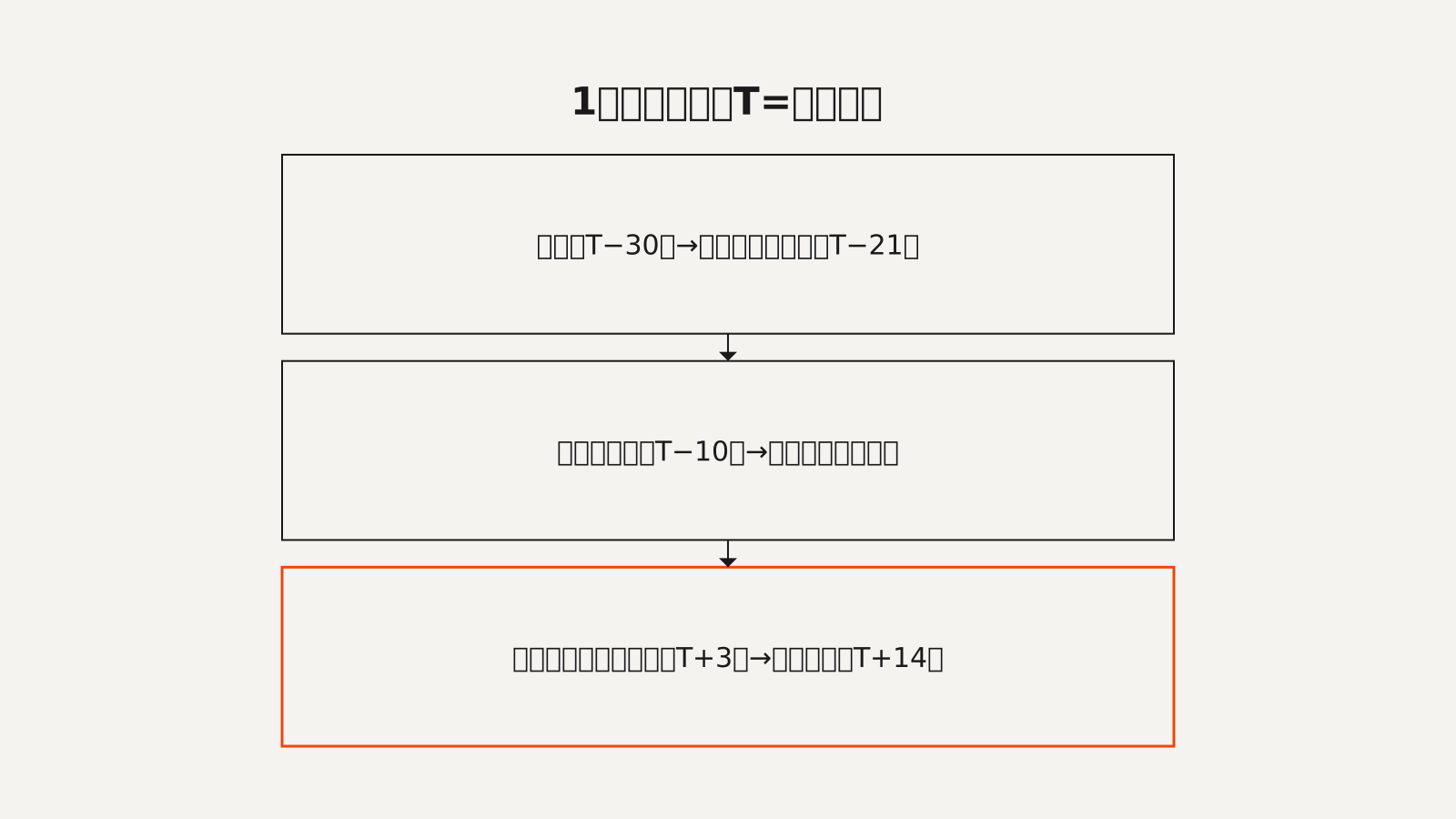
If the event day is T, the sequence is: planning (T−30) → casting (T−21) → negotiation and coordination (T−10) → on-site operations (day of) → post direction (T+3) → results reporting (T+14). Each project has one person in charge, but execution is carried out by teams of two. For example, in a week with several event days overlapping, you may handle on-site operations for one project while moving negotiation and coordination forward on another. As another example, if a disclosure needs correcting during the final check just before posting, you will need to finish the exchange with the influencer on the same day during the T+3 post direction stage. Casting is the core of the role, and as you gain experience, your scope expands to event production, video production, and SNS PR planning. The candidate list itself is created with our in-house tool, but the decision of who to actually engage is ultimately made by a person. This is because we look at factors a tool alone cannot measure, such as how well an influencer's world view fits the brand and how well they match the follower base. The weight placed on this judgment is why we call casting the core of the role.
What Does a Day Look Like?
In regular periods, the day starts at 10:30 with checking messages and setting priorities. Mornings are set aside for drafting proposals and selecting candidates. At 13:00, there are regular client meetings and term negotiations with influencers. At 15:00, you review post creatives and prepare for shoots and events. The standard end of the workday is 19:30. Workload increases before deadlines, before events, and just before posts go live, and on shoot or event days you work according to the on-site schedule. The only fixed elements are the morning work block and the afternoon framework for regular meetings and coordination; what actually fills the day changes with the progress of the projects you are handling. When you are carrying multiple projects at once, it becomes routine to run on-site operations for one project while advancing negotiation and coordination for another.
Who Is This Role Suited To, and Who Is It Not?
The role suits people who research on their own and will ask for help when needed. Because there is no training program, work is slow to move forward if you wait for instructions. It also suits people who find joy in making others happy and who can work backward from where they want their career to be in two to three years. It does not suit people whose motivation is to publicly list the projects they have worked on. We have confidentiality obligations, and it is not possible to publish work under an individual's name. People who want to handle only fixed duties, who expect systematic training, or who mainly imagine glamorous scenes are also unlikely to match the reality of this job. For example, if you join picturing only the glamorous event day, you may feel a gap when you find that most of your time goes to preparation and coordination, such as drafting proposals and negotiating terms. As another example, if you strongly want your scope fixed to a single task, this will not fit a way of working in which you cross over into event production and video production as you gain experience.
What Should You Know Before Joining?
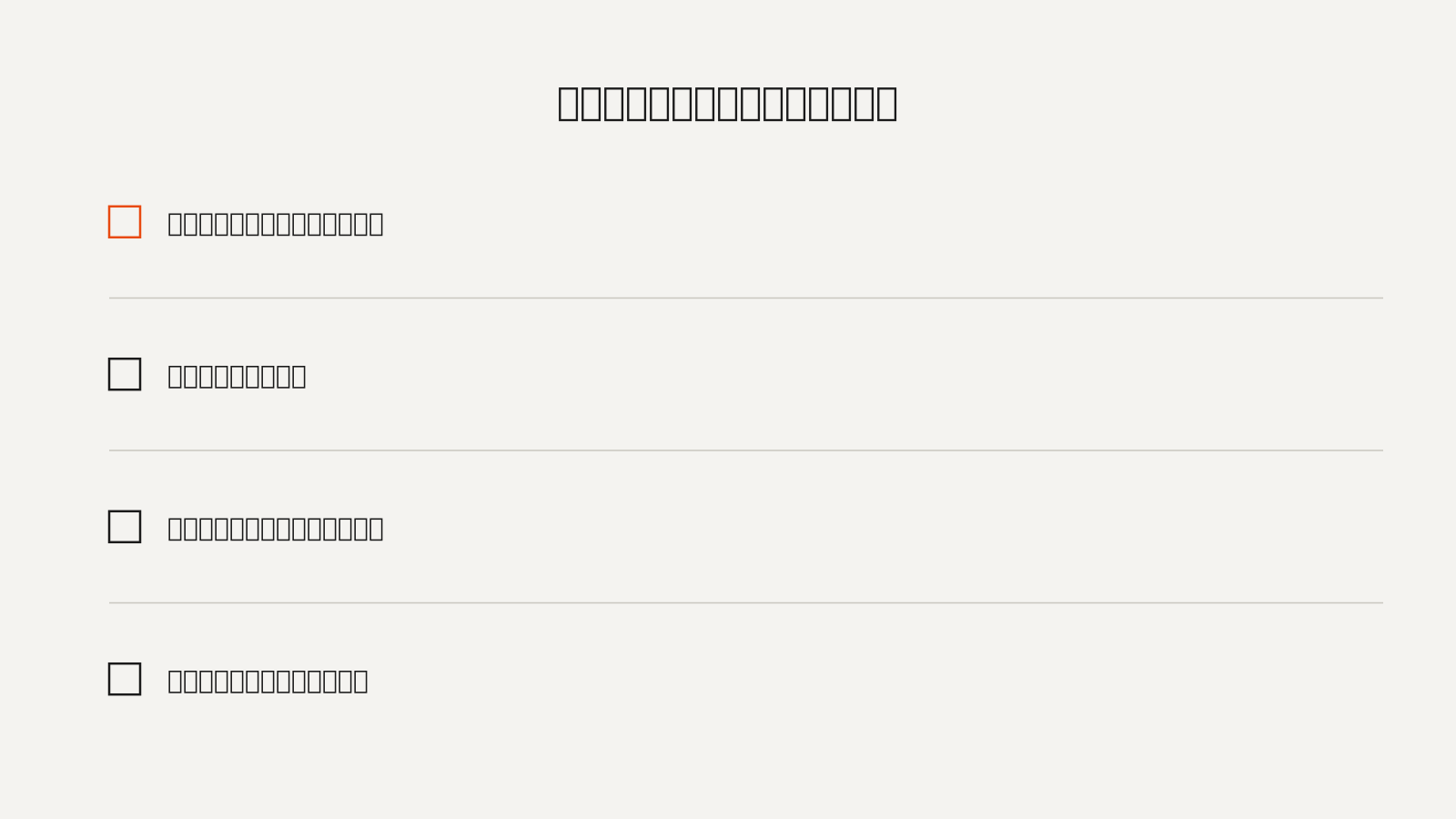
There is no training program; after a one-month onboarding, you learn on real projects. Workload comes in waves, and how you use your time during quieter periods is left to each person. Projects you work on cannot be made public, and confidentiality obligations apply. Everyone, including leaders, has their own sales target. We want to tell you these points honestly before you apply, so that you are not left confused later by having heard only the good sides. Because there is no training, your willingness to proactively ask about what you don't understand determines how quickly you get up to speed. Detailed job requirements are compiled on our recruitment page.
Scope of This Article
This article covers the duties, daily flow, fit, and points to know before joining that appear on the recruitment page. It does not cover salary or benefit amounts, or the specifics of the selection process. It also makes no judgment on individual placement decisions, such as which projects you would be assigned after joining or in what order your scope would expand.
Conclusion
The SNS Activation Planner is a role in which preparation and coordination make up most of the work, rather than glamorous scenes. Because one person handles everything from planning to reporting without dividing the work, the scope is not fixed and, we believe, grows with experience. For people who take the initiative rather than wait for training, we believe it is also an environment where they can expand their scope that much faster.