Experience Conveys the Brand World: What Do Pop-Ups and Retail Experiences Have in Common?
This article was automatically translated from the Japanese original. Read the original in Japanese
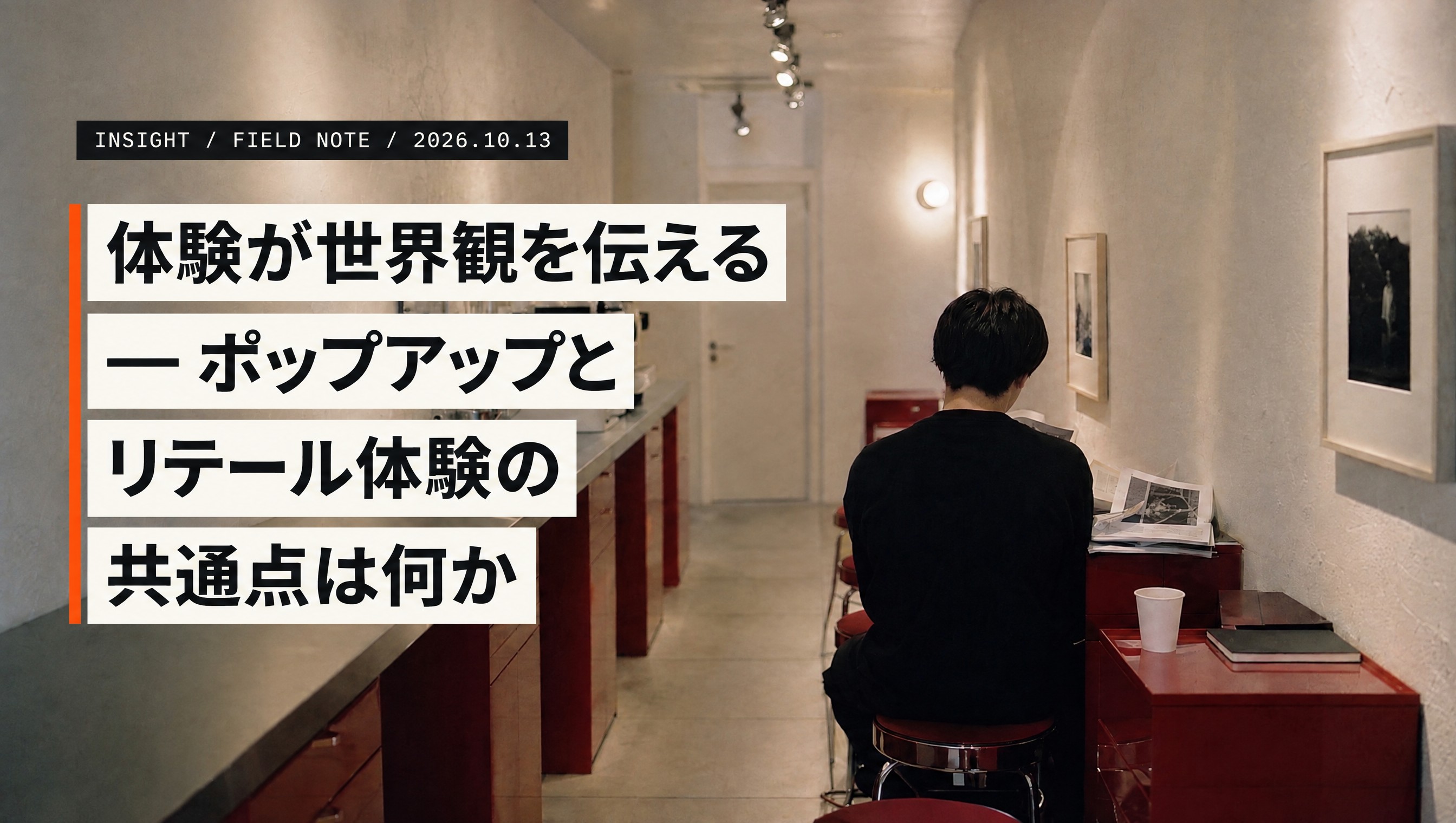
The common pattern in pop-up and retail experiences that convey a brand world is not a carefully crafted photo spot. It is a design that gives visitors a tangible sense of having "stepped into the world," one they can enter with all five senses.
| Country/Region | Industry | What they did | What drove social conversation | Source |
|---|---|---|---|---|
| Europe (UK) | Character IP | A Chiikawa pop-up store opened in a high-end London department store | The unexpected pairing with a prestigious venue: a high-end department store overseas | AdverTimes |
| Japan | Beverage (tea) | Suntory Oolong Tea held a "journey abroad" experience event in Shibuya | Immersion triggered by putting your phone in airplane mode to enter | AdverTimes |
What Did People Talk About at Chiikawa's London Pop-Up?
A pop-up store for the manga Chiikawa opened on October 1, 2026, at Selfridges, a long-established luxury department store in London. The immersive space let visitors take photos with the characters and experience the world of the series, and UK-exclusive collaboration products were on sale, with fans lining up to buy them. What people talked about was not just the product lineup but "the substance of the work behind the cute appearance" itself. Some media coverage analyzed the setting, in which the characters are sent off to take exams and carry out harsh tasks, as a reflection of social anxiety specific to Japan. The unexpected combination of a prestigious venue, a high-end department store overseas, with characters that pair a friendly look with a work of real weight became a factor that spread the buzz.
What Did People Talk About at Suntory Oolong Tea's Shibuya Experience?
To celebrate the 45th anniversary of Suntory Oolong Tea, Suntory Beverage & Food held an experience event called "Oolong Kiko" (Oolong Journey) in Shibuya, Tokyo, from October 9 to 12, 2026. Visitors put their phones in airplane mode at the entrance, received oolong tea and a travel notebook, and then walked into a back-alley space where Japanese isn't spoken and Chinese fills the air. The event offered experiences that went beyond looking: visitors could buy steamed meat buns and interact at a street market. The organizers' intent was also discussed: they deliberately created no photo spot and built the entire alley as a town, so the "feeling of travel" itself became the reason people posted.
What Design Approach Do the Two Cases Share?
Both cases prioritize a path that lets visitors feel for themselves that they have "entered that world," rather than explaining the character or product on the spot. In the Chiikawa case, the pairing with a prestigious venue became part of the brand world. In the oolong tea case, the small instruction to switch to airplane mode heightened the feeling of setting off on a trip. More than whether a photo spot exists, what shapes the content of posts is whether the whole experience, from entry to exit, stays connected by the brand world without a break.
Why Isn't a Well-Crafted Photo Spot Enough?
In designing experiential events, providing an attractive photo spot tends to take priority. But the two cases show that the consistency of the entire experience matters more than whether a photo spot exists. For example, if the guidance at entry is purely administrative and unrelated to the brand world, and a lavish photo spot is the only thing placed inside the venue, visitors come away with the impression that "only the photo spot is special," making it harder for them to talk about the whole experience as a single world. As in the oolong tea case, the decision to forgo a photo spot and carry the same world through from a small action at entry to the exit paradoxically makes the whole experience easier to talk about.
What to Decide When Applying This in Japan
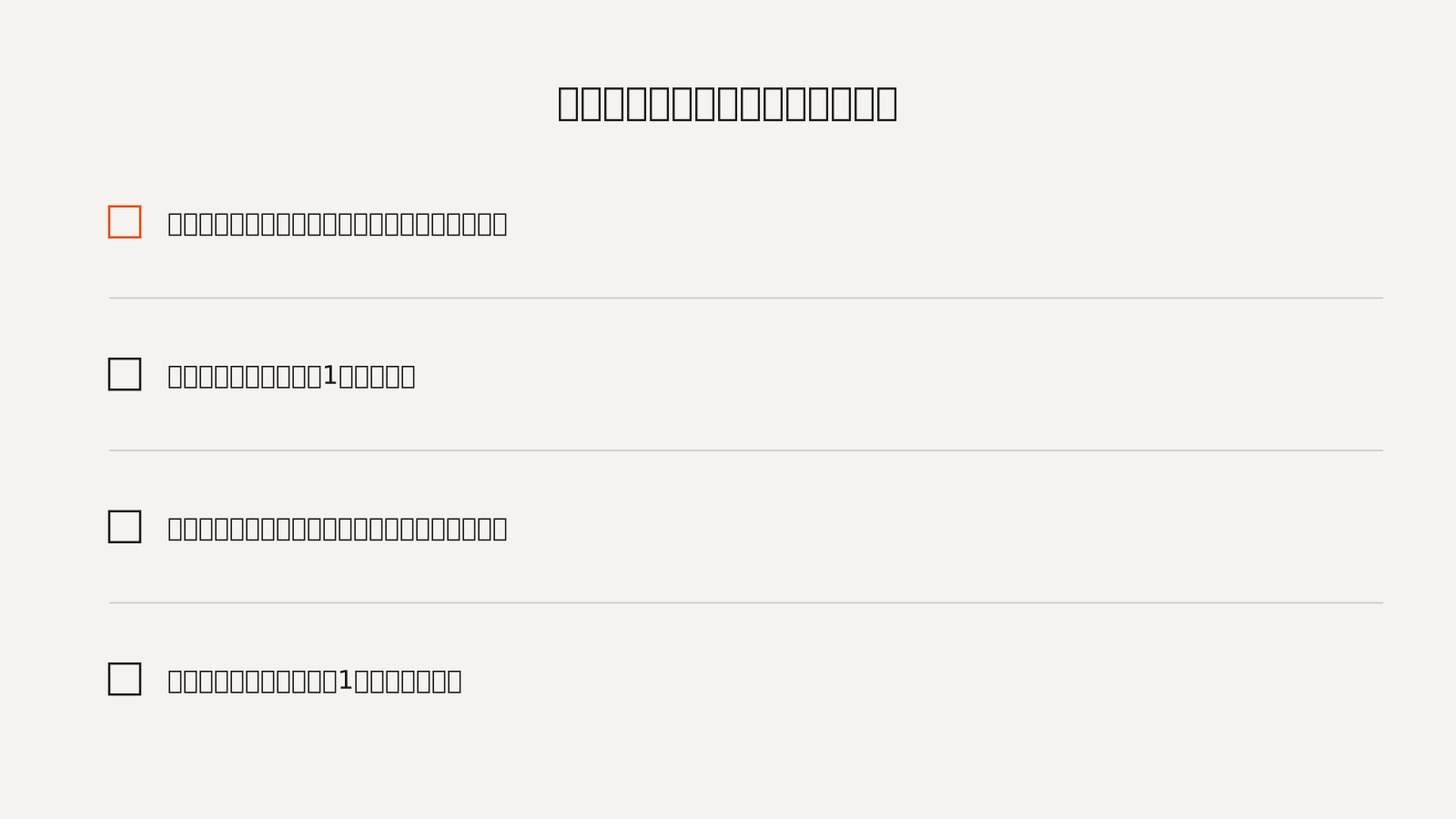
- Before crafting a photo spot, check whether the experience from entry to exit is connected by the brand world without a break
- Give visitors one small action to perform (such as switching to airplane mode or receiving a travel notebook) to create the feeling of entering the world
- Consider whether you can use the unexpectedness of the venue or location itself (for example, placing something approachable in a prestigious setting)
- Provide at least one experience that goes beyond looking and lets visitors take real action (purchasing, interacting, and so on)
This kind of experience design is precisely SNS activation, meaning activation designed to include the point where the experience gets talked about on social media. We offer consultation on everything from experience design to the mechanisms that lead to posts on our service page.
Regardless of venue size or budget scale, the idea of not breaking the brand world anywhere from entry to exit can also be applied to small-scale experience design. What matters is not the number of elements but whether visitors can remain in the same world from start to finish.
Scope of This Article
This article covers the experience design pattern common to the two cases. It does not make any judgment on the effects on visitor numbers or sales, or on comparisons with other initiatives by the brands featured.
Conclusion
Pop-ups that convey a brand world through experience prioritize keeping the entire experience from entry to exit unbroken by the brand world, rather than perfecting a photo spot. We believe that giving visitors a small action to perform and making use of the unexpectedness of the location itself are also part of the design that shapes what gets talked about in posts.