Why Do Participatory Experience Events Get Talked About on Social Media? — Two Case Studies from Japan
This article was automatically translated from the Japanese original. Read the original in Japanese
Participatory experience events become easier for attendees to describe in their own words on social media when an ordinary, everyday act is recontextualized and "gamified" or "ritualized" in a way that departs from the norm. This is a pattern common to two case studies from Japan.
| Country/Region | Industry | What they did | What drove social media discussion | Source |
|---|---|---|---|---|
| Japan | Food | At a paid food festival, employees, influencers, and consumers jointly planned five experiential content pieces | A mechanism where the rules themselves became the talking point (e.g., a "no-disclosure restaurant"), and same-day sellout of pre-sale tickets | AdverTimes article |
| Japan | Household goods (bedding) | Held a participatory event measuring the depth, quality, and stability of 90-minute sleep sessions using measurement devices | The gap of "gamifying sleep," plus the scarcity created by large prize money and a high application-to-winner ratio | AdverTimes article |
What Pattern Do These Two Cases Have in Common?
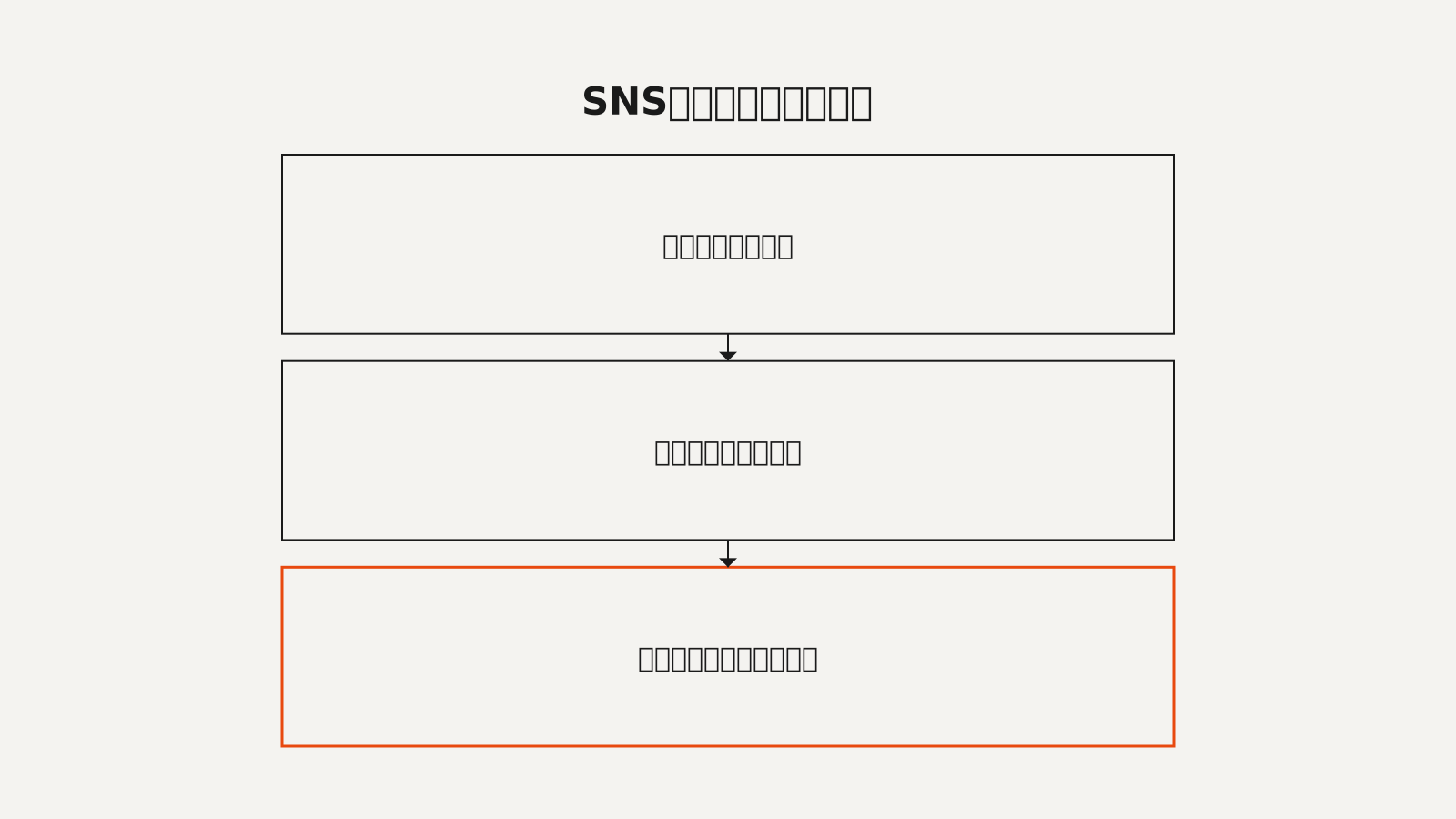
In both cases, attendees aren't simply describing "what they experienced" — rather, they're able to talk about the very structure of having "performed an act they don't normally do, within a rule-bound, gamified setting." At the food festival, the constraint of "no disclosure" itself became a conversation starter, while at the mattress race, the contradictory combination of "prize money just for sleeping" became something people wanted to talk about. In both cases, rather than foregrounding product explanations, it's the unusual nature of the experience's structure itself that motivates people to post. Both cases also share the feature of limiting the number of participants and building scarcity into the design through lotteries or limited availability. This two-stage mode of spread — where people who couldn't participate learn about the event through social media posts — appears to function precisely because the structure itself is unusual.
Case 1: Why Did Ajinomoto's Paid Food Festival Become a Talking Point?
In October 2026, Ajinomoto held its first paid food festival, "AJINOMOTO Mikakunin Food Court," in Minami-Aoyama, Tokyo. Its distinguishing features included the fact that employees, influencers, and consumers jointly planned the event, and that it offered multiple rules and devices not found in ordinary food events — such as a "no-disclosure restaurant" where visitors signed a pledge and listened to behind-the-scenes development stories through headphones. The 300 pre-sale tickets sold out within 24 hours of going on sale. It's thought that what made attendees want to talk about the event wasn't the product explanations or tastings themselves, but the structure of the experience — "there are rules" and "you can hear things normally left unsaid." In addition to the "no-disclosure restaurant," the venue featured multiple concepts that wouldn't work at a typical restaurant, such as "Chobun Hanten" (a restaurant where you order by reading aloud a long description of the menu's craftsmanship) and a "soup bar with a bartender" where employees proposed soups tailored to individual preferences. More than 50 employees took part in serving customers on the day, and the fact that the company itself stepped forward as the "maker" of the experience likely contributed to the novelty that made attendees want to share it in photos and words.
Case 2: Why Did Koala Japan's "Mat Race" Become a Talking Point?
In October 2026, Koala Japan held "Mat Race by Koala" in Minami-Aoyama, Tokyo. It was a participatory event in which 22 beds were lined up, and the depth, quality, and stability of participants' sleep were measured by devices over a 90-minute period to determine rankings. Against a grand prize of 2.22 million yen, the event received approximately 46,000 applications from Japan and abroad, resulting in a competition ratio of over 800 to 1. The core concept was the gap of "turning sleep — something normally done quietly and alone — into a public competition," and overseas media in the UK, Taiwan, India, and elsewhere reported on it in advance. It's thought that not just the size of the prize, but the combination itself of the act of "just sleeping" with the structure of "competing" generated media coverage and social media mentions. Participants also drew lots in advance to choose their "sleep companion" — earplugs, an eye mask, a body pillow, and so on — a mechanism that made the outcome dependent on both luck and skill. On the day of the event, media from multiple countries including France, the UAE, and Germany came to cover it, attracting a level of interest that can't be explained by the prize money alone.
What to Decide When Applying This in Japan
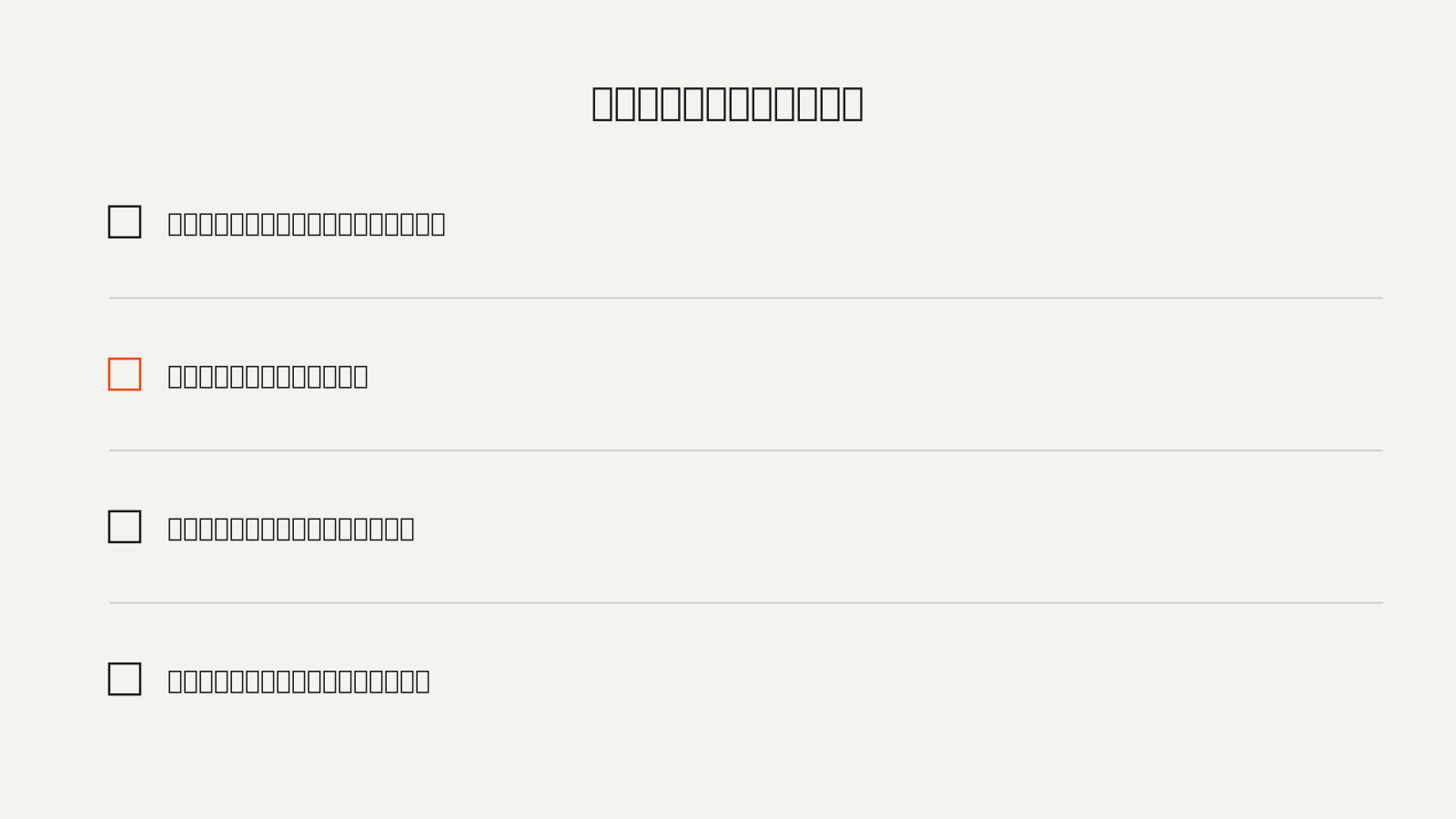
- Decide first which everyday act can be "gamified" or "ritualized" (don't start from the product's functional features)
- Confirm that the structure of the experience itself has a novelty that would make attendees want to tell others about it
- Limit the number of participants and build scarcity (lotteries, limited quantities, etc.) into the design
- Prepare a name and visual presentation that convey the structure even without attendees needing to explain the experience
This kind of experience design is itself the concept behind SNS activation (activation design that includes designing all the way through to attendees talking about the experience on social media). This terminology is organized in What Is SNS Activation? — A Method for Designing Experiences All the Way to Social Media Discussion. By centering the novelty of the structure, there's a higher likelihood of generating buzz without relying on product explanations. If planning starts from the product's specifications in the early stages, the experience tends to become overly explanatory, so it's worth considering deciding on "the novelty of the act itself" first, and then incorporating the product afterward.
Scope of This Article
This article covers a common pattern in how participatory experience events get talked about on social media, drawing from two Japanese case studies reported in October 2026. It does not make judgments regarding overseas case studies or the long-term durability of such effects. It also does not assess the success or failure of individual initiatives, nor their impact on sales.
Conclusion
Whether a participatory experience event gets talked about on social media appears to depend not on the volume of product explanation, but on whether the structure of the experience itself has novelty. The perspective of gamifying or ritualizing everyday acts is a pattern that can be applied across industries.