Designing Experiential Events When Inviting Influencers for Outdoor Brands
This article was automatically translated from the Japanese original. Read the original in Japanese
Requests to invite influencers to experience-based events like running, hiking, and camping are often approached with the same mindset as post-quota sponsored collaborations: list candidates, align on the number of posts and content requirements, and finish with directed filming on the day. This process itself isn't wrong. But with experience-based events, the underlying assumption behind this process—that "post quality is determined by direction"—breaks down.
What determines the quality of posts from experience-based events isn't how precisely instructions were given on the day, but how natural the experience itself felt to that person. Looking at event initiatives broadly, we've confirmed in How Scale Affects Post Rates in Event Initiatives that post rates tied to attendance vary depending on the scale of the initiative. But this article isn't about scale—it's about how the design of the experience itself affects post quality. We'll organize what changes between post-quota and experience-based formats, how the axis for talent selection shifts, and what needs to be protected in the on-site design.
Post-Quota and Experience-Based Formats Start from Different Premises
Post-quota sponsored collaborations involve preparing a product or venue and contractually agreeing on the content and timing of posts. Filming material can be controlled to a certain degree, and factors like weather or physical condition have limited influence. That's precisely why, by refining the requirements definition and briefing, post quality can be designed to a considerable extent.
Experience-based events differ here. For running, it's the distance and course; for hiking, it's the weather and physical stamina; for camping, it's how time is spent from setup through nightfall—these elements themselves constitute the experience, and what the brand wants to convey isn't how the product looks, but the quality of the experience. Posts emerge from the impressions that remain with the person after the experience ends. The idea that creating an experience and creating a state in which that experience gets talked about require fundamentally different designs is also discussed in The Work of Creating Experiences vs. the Work of Creating Talked-About Moments, but experience-based events are where this divide becomes especially clear.
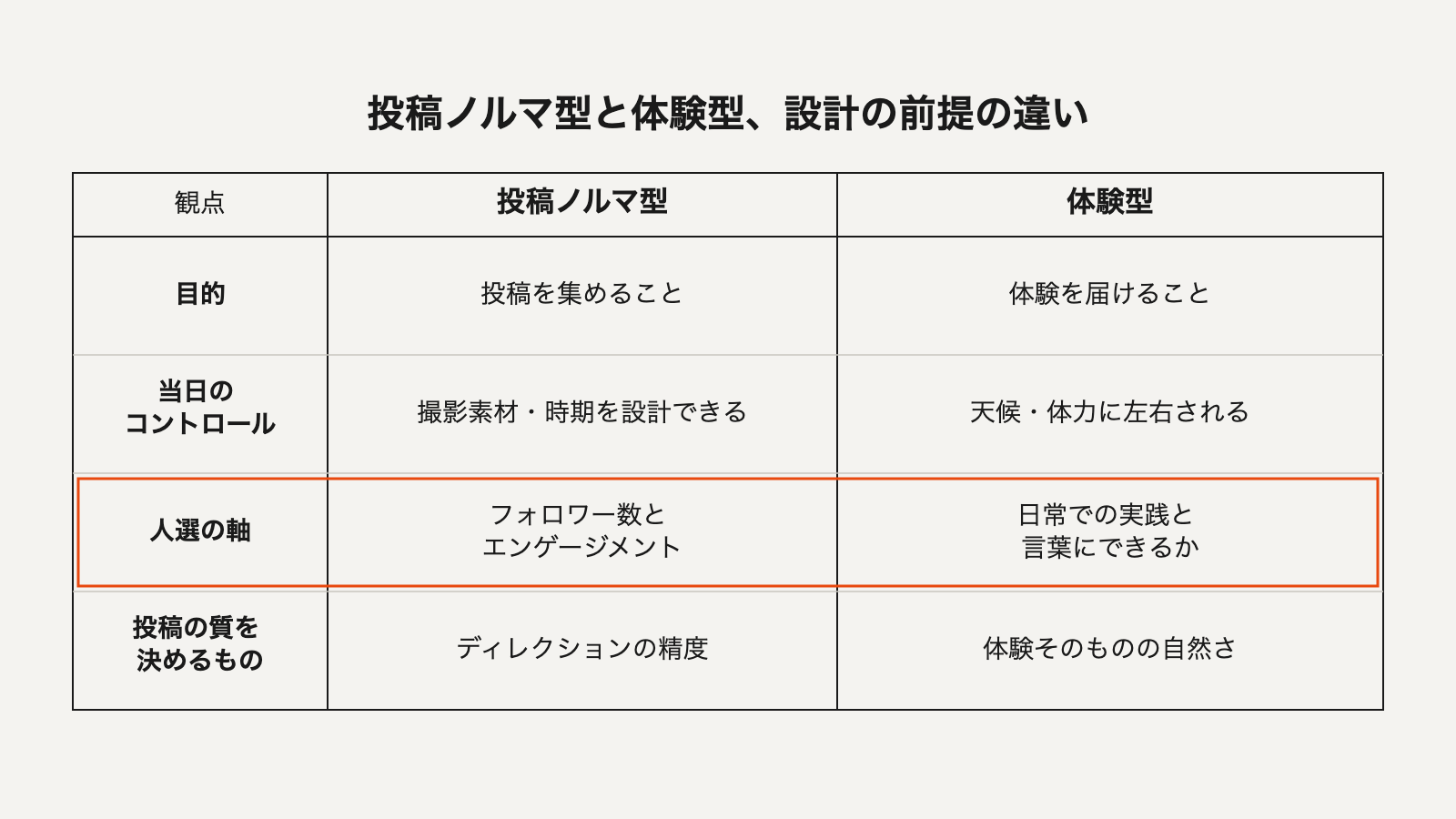
Figure 1: Differences in design premises between post-quota and experience-based formats
Experience-Based Formats Introduce Variables That Don't Exist in Post-Quota Formats
What makes designing experience-based events difficult is the number of elements that remain uncontrollable until the day itself.
Weather is the variable with the greatest impact. For hiking and camping, weather can change the entire itinerary, shifting which times and scenes are suitable for filming. Movement is another factor: unlike initiatives that begin and end at a gathering point, experience-based events involve movement itself as a physically demanding process, and fatigue from that movement shows up in expressions and remarks later in the day. Safety constraints also can't be ignored. On uneven hiking trails or unstable footing, changing position for the sake of filming can be difficult from a safety standpoint. Differences in physical stamina among participants are another variable that barely mattered in post-quota formats. On the same course, someone who can walk with room to spare and someone who's struggling just to keep up will experience the event very differently. And as a result of all this, many moments arise that simply aren't easy to film—out of breath, visibly sweaty or dirty, dark, or shaky footage. If you assume the polished visuals typical of post-quota formats, many moments in an experience-based event become "unfilmable."
These aren't operational shortcomings—they're inherent characteristics of experience-based events. Design needs to start from this premise.
The Axis for Talent Selection Shifts from Follower Count to "Are They Actually Doing This?"
In post-quota formats, follower count and actual engagement levels determine the precision of the candidate list. In experience-based events, one more decisively important axis is added: whether the person actually engages in that activity as part of their real life.
For a running event, we prioritize people who run regularly; for hiking, people who continue to hike; for camping, people who regularly go camping. The reason is that the closer the experience is to that person's everyday life, the more natural the resulting post becomes. Someone suddenly invited to an unfamiliar activity ends up using all their physical energy on the activity itself, leaving no capacity to put the experience into words. Conversely, someone who regularly engages in that activity can articulate what was good about the experience in their own words, and can turn even the difficult moments into a natural post that includes them.
Another important axis is whether the person can put the experience into words. Even with a high follower count, someone who hasn't built a habit of sharing their genuine impressions makes for a difficult request when it comes to experience-based events. Conversely, someone with a relatively modest follower count who regularly shares thoughtful posts about their own activities is a much better fit for experience-based events.
When we evaluate candidates along this axis, what we check isn't follower count or engagement rate, but how they've talked about that activity in past posts. Someone who has shared their own words about choosing gear, course preferences, and even days that didn't go well is more likely to be able to speak just as naturally about the experience they're invited to.This means the information worth checking at the candidate-selection stage is different from what matters in post-quota formats.
This isn't about screening or filtering participants. If anything, it's the opposite: it's about designing the experience itself around what the person actually does in their everyday life. We've also touched on how getting the selection axis wrong tends to produce mismatched results no matter how carefully post instructions are given, in When Sponsored Collaboration Results Don't Add Up, but in experience-based events this mismatch tends to surface more visibly, in the form of unnatural posts.
On-Site Design Means Balancing Creating Filmable Moments with Not Pushing People Too Hard
Even with the right talent selected, the experience is compromised if the on-site design doesn't follow through. There are three things we focus on when designing the day-of experience for these events.
First, deliberately creating filmable moments. Since not every part of the itinerary lends itself to filming, we build in advance moments where filming comes naturally—rest breaks, points with open views, or quiet time after setup is complete. Rather than asking someone to "take a photo" on the spot, we prepare in advance for moments where the conditions for filming naturally align.
Second, not pushing people too hard. We build the itinerary assuming differences in stamina, and we don't demand a pace that leaves no room to breathe. The value of an experience-based event lies in the person genuinely feeling it was a good experience. A post taken while exhausted from overexertion, no matter how polished it looks on the surface, tends to diverge from the person's actual feelings, resulting in something that comes across as unnatural.
Third, not compromising the experience itself. Stopping the itinerary to prioritize filming, or repeatedly reshooting the same scene, breaks the flow of the experience. The main focus of an experience-based event is the experience, not the post—posts should emerge naturally as a result of that experience. Maintaining this order in on-site operations is essential.
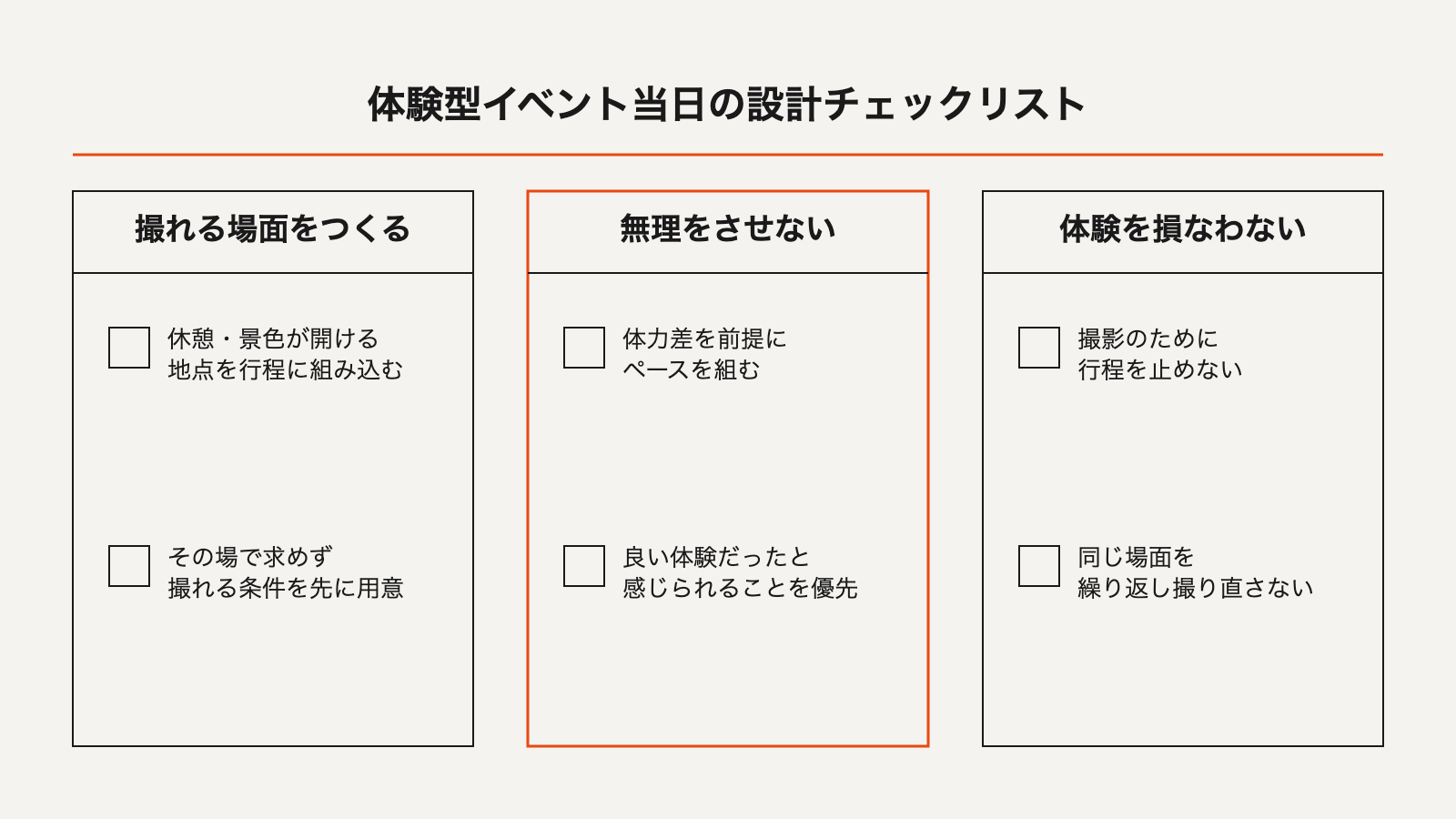
Figure 2: Checklist for on-site design of experience-based events
Whether to Choose an Experience-Based Format Depends on What the Brand Wants to Convey
Not every sponsored collaboration needs to be experience-based. If the goal is to showcase the product itself or gather a certain volume of posts within a fixed period, a post-quota format is often easier to design. Experience-based formats work best when the brand wants to build, as a lasting asset, a connection between how the product is used and the activity itself, or when the goal is to convey the brand's worldview through the experience.
Where judgment calls come in is how far to push an experience-based design for activities that depend heavily on physical stamina or weather. The higher that dependence, the more the success of the posts hinges on preparing for on-the-day variables and being careful with talent selection—so it's necessary to determine how far to go with the experience-based format based on the time available for preparation and the on-site operational setup.
There are also designs that combine both elements: securing sufficient time for the experience while still aligning to some degree on the content and timing of posts. Even in this case, maintaining the order of experience first, post conditions layered on top, is what preserves the quality of an experience-based approach.
Scope of This Article
This article covered the thinking behind talent selection criteria and on-site design for experience-based events. It did not cover the specifics of building alternative itineraries for sudden weather changes, the details of safety management systems required for each type of activity, or operational matters like insurance and accompanying staff arrangements. These are highly specific to the type of activity and venue conditions, and are areas that need to be worked out on a case-by-case basis in consultation with the on-site team.
In Closing
Posts from experience-based events aren't created through on-the-day instructions—they emerge from the quality of the experience itself. Assess how closely a person's everyday life overlaps with the activity during the selection stage, then prepare filmable moments on the day without pushing anyone too hard. Maintaining this order is precisely why these events require a different design approach than post-quota sponsored collaborations.