What's the Difference Between Mandatory-Post Gifting and Optional-Post Gifting?
This article was automatically translated from the Japanese original. Read the original in Japanese

Mandatory-post gifting and optional-post gifting are distinguished by whether compensation is tied to the post itself. Mandatory-post gifting is close to an actual sponsored collaboration involving a fee or contract, while optional-post gifting is a goodwill-based initiative whose goal is simply to get the product into the recipient's hands. Because the purpose and cost assumptions differ, the wording of the request and how the process is designed need to be tailored to each case.
What Determines the Line Between Mandatory and Optional Posting?
| Item | Mandatory Posting | Optional Posting |
|---|---|---|
| Nature of compensation | Reward/contract tied to the post | Product provision only |
| Positioning | Effectively a sponsored collaboration | Pure gifting |
| Treatment of the post | Contractual obligation | At the recipient's discretion |
| Request wording | Conditions stated at contract-document level | Written without assuming a post will happen |
This line is drawn based on whether you are promising something in exchange for a post. As discussed in What Is Gifting? Its Differences from Sponsored Collaborations and When It's a Good Fit, gifting is originally premised on not requiring a post at all. The moment you build a posting obligation or reward into it, it requires the same operational management as a sponsored collaboration in practice. Conversely, sorting out "what exactly am I giving in exchange" before deciding whether posting is mandatory lets you avoid conflating the two.
Why Should Request Wording Differ Between Mandatory and Optional Posting?
For mandatory-post requests, conditions such as the number of posts, posting timing, and the number of revision rounds need to be spelled out at the same level of detail as a contract. Omitting them tends to lead to later disputes along the lines of "I never heard those conditions." Whatever conditions were decided at the planning stage should all be reflected in the very first offer message.
For optional-post requests, on the other hand, spelling out conditions in detail risks being read as pressure to "please post." As discussed in If a Post Doesn't Happen Under Gifting With No Posting Obligation, Is It OK to Send a Reminder?, the premise that posting is not an obligation needs to be maintained consistently from the request-writing stage onward. You should choose wording that makes clear posting is not a condition of the offer.
What Should the Choice Between the Two Be Worked Back From?
The deciding factor is how much you want whether a post happens to be built into the outcome of the initiative. If you're structuring the plan and process around the assumption that a post will happen, choose mandatory posting (a sponsored collaboration); if the goal is simply to build awareness of, or affection for, the product, choose optional posting (gifting). As discussed in Gifting or a Sponsored Collaboration — A Framework for Choosing Based on Your Purpose, the purpose comes first, and the format—whether posting is mandatory or optional—is decided afterward.
Even if you later decide you want to switch to mandatory posting, you cannot impose an obligation retroactively on someone you originally approached under an optional-post arrangement. If you want to switch, the standard approach is to make a fresh request as a new initiative.

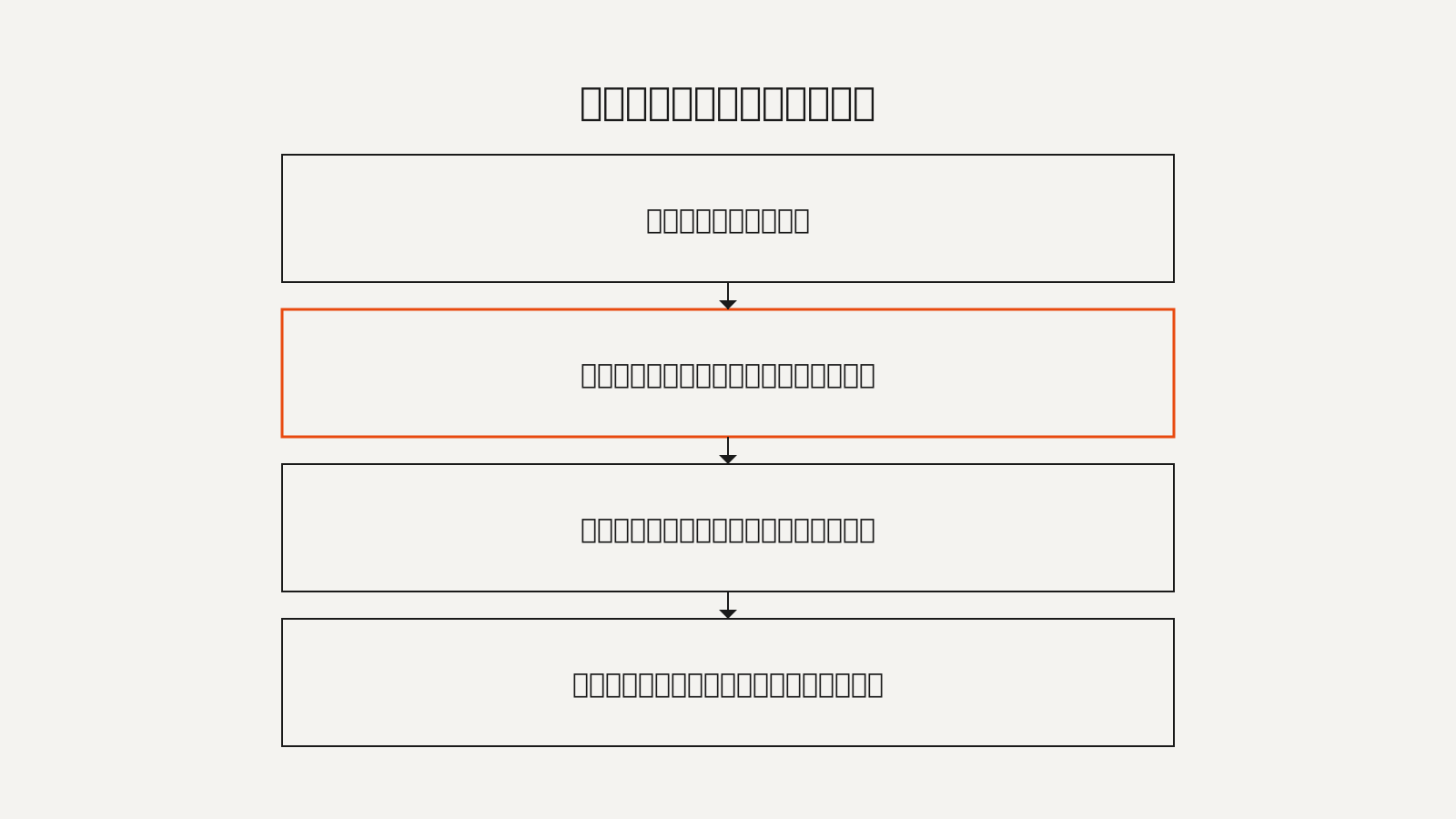
Scope of This Article
This article covers the distinction between mandatory and optional posting and how to choose between them. It does not cover how to draft individual contract clauses or how to design reward levels for mandatory-post cases.
Closing Thoughts
Whether to require posting or make it optional isn't a question of which is "better"—it's a design decision that should match the purpose of the initiative. We believe that clarifying which premise you're operating under at the request stage is the single best way to prevent misunderstandings later on.