Why Luxury Brand SNS PR Is So Difficult — Balancing Brand World and Reach
This article was automatically translated from the Japanese original. Read the original in Japanese

When a team is handed a luxury brand project, one of the first things they run into is a nagging sense that something is off. The SNS PR playbook that works for other categories simply doesn't translate. Reaching out broadly to influencers with large followings and stacking up post volume to maximize reach—this approach can actually end up damaging a luxury brand.
Why is that? The reason lies in the very nature of the luxury category itself. The fact that instincts honed in other categories don't apply here isn't a matter of inexperience—it's that the structure of the luxury category is fundamentally at odds with conventional SNS PR thinking. In this article, we break down why luxury SNS PR feels so difficult into three structural contradictions, and share the approaches we take on the ground to work with them.
The luxury category treats inaccessibility itself as a source of value
In SNS PR for typical consumer products, increasing the number of people who become aware of a brand directly benefits it. The wider the awareness, the larger the pool of potential buyers.
Luxury operates on a different premise. Being widely known and being widely attainable are deliberately kept separate. The very sense of being hard to obtain—of only select people having access—is itself part of the value the brand offers. This is precisely why, the moment you simplify the goal of SNS PR to "reach as many people as possible," your strategy starts to diverge from what the brand actually values.
This divergence isn't a matter of the team's skill. It reflects a mismatch between the structure of the luxury category and the inherent nature of "spreading" content. We see this mismatch as manifesting in three specific contradictions.
The more something spreads, the more it erodes the very scarcity it's meant to protect
The first is the contradiction between scarcity and reach.
Most SNS PR methods measure success by increasing the number of posts and the number of viewers. But for luxury brands, a post spreading without limit doesn't necessarily signal a good outcome. If something meant to be hard to obtain starts looking like something everyone knows and sees everywhere, it dilutes the very sense of scarcity the brand has worked to build.
Because of this contradiction, when working on luxury projects, we prioritize deciding who should experience the brand and in what setting, rather than focusing on getting as many posts as possible. Before chasing volume, we need to work with the brand to determine just how far it's appropriate for something to spread.
The more tightly you control the brand world, the more a post loses its authenticity
The second is the contradiction between controlling the brand world and preserving authenticity.
Luxury brands spend a long time building a distinctive world—down to the colors, the language, the composition of every image. It's natural to want to protect this world by specifying post content in detail. But the more detailed the instructions become, the more the creator's own voice and style disappear, until the post becomes indistinguishable from a brand advertisement.
Viewers notice something is off. They sense that this one post stands apart from the world the creator normally shares. Here lies a paradox: the very control meant to protect the brand world ends up undermining how that world comes across.
We don't try to resolve this contradiction by tightening control. Instead, we focus on narrowing our requests to creators whose everyday content already overlaps with the brand's world—so that the brand world is preserved naturally, without the need for detailed specifications. Layering detailed instructions on top of a mismatch in worldview only creates strain. We go into more detail on how this kind of mismatch leads to failure in When Sponsored Collaboration Results Don't Add Up: The Failure Science of Casting Design.
The more you chase immediate reactions, the more likely you are to misjudge long-term brand decisions
The third is the contradiction between short-term numbers and long-term brand value.
The size of the reaction to any single post is a visible, easily comparable metric. That's exactly why it's tempting to judge the success of an initiative based solely on immediate reaction. But the value of a luxury brand accumulates on a timescale that can't be fully captured by the reaction to one post. Sometimes, even if a given post's reaction is small, building a relationship with that creator over time allows the brand's world to come across more fully in the long run. Conversely, even if a post gets a big immediate reaction, if it doesn't align with the brand's world, it can end up eroding value over the long term.
If you judge success by short-term numbers alone, you risk missing the gap between what looks like the right choice in the moment and what's actually the right choice for the brand.
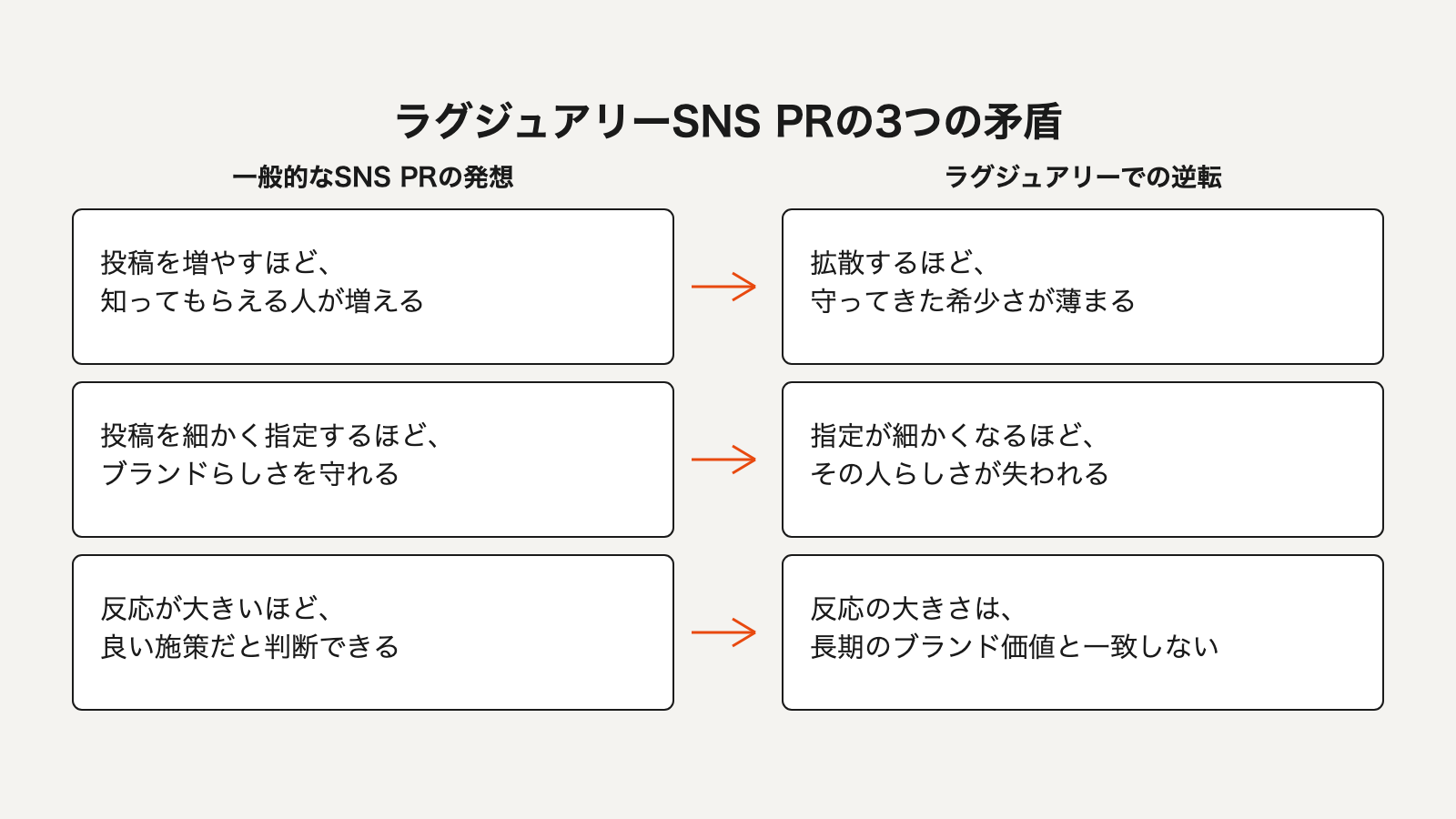
Figure 1: Three structural contradictions in luxury SNS PR
The four approaches we take in practice
These three contradictions can't be eliminated. They're rooted in the very nature of the luxury category itself. What we do on the ground isn't to resolve the contradictions, but to design an approach that works with them.
The first is centering initiatives around small-scale, invite-only events. Rather than gathering posts broadly, we create settings where a limited number of people can experience the brand directly—allowing us to design the scope of reach together with the brand. Our data shows that people who attend invite-only events post about the experience at a high rate, even without any commitment to do so (for more detail, see What Event Scale Reveals About Post Rates). In other words, a great experience tends to be shared naturally, without needing to be asked for.
The second is building ongoing relationships with creators who share the brand's world, rather than working with them on a one-off basis. By cultivating an ongoing collaborative relationship instead of ending things after a single request, the brand world stays intact without the need for detailed instructions. The longer the relationship continues, the better the brand comes to understand that creator's style and strengths, which in turn improves the precision of future requests.
The third is changing how we look at the numbers. Rather than focusing solely on the size of the reaction to any single post, we also track longer-term indicators—how long a relationship with a creator has continued, and how closely their content overlaps with the brand's world. Short-term reaction is one input among several, not the whole picture.
The fourth is reframing casting standards—not as strictness in selecting people, but as strictness in designing the experience being offered. When people hear "strict casting standards," it can sound like a process of ranking and filtering creators. But what we actually design with rigor is the content of the experience we ask each creator to have. Does every element—the venue, the flow of the event, the guidance provided on the day—genuinely embody the brand's world? If this design is weak, then no matter how well-matched the creator is to the brand, the experience itself won't be able to convey that world. We also address the fact that creating an experience and creating the conditions for that experience to be talked about are two separate design decisions in The Work of Creating an Experience vs. The Work of Creating a Story: Where Activation Design Diverges.
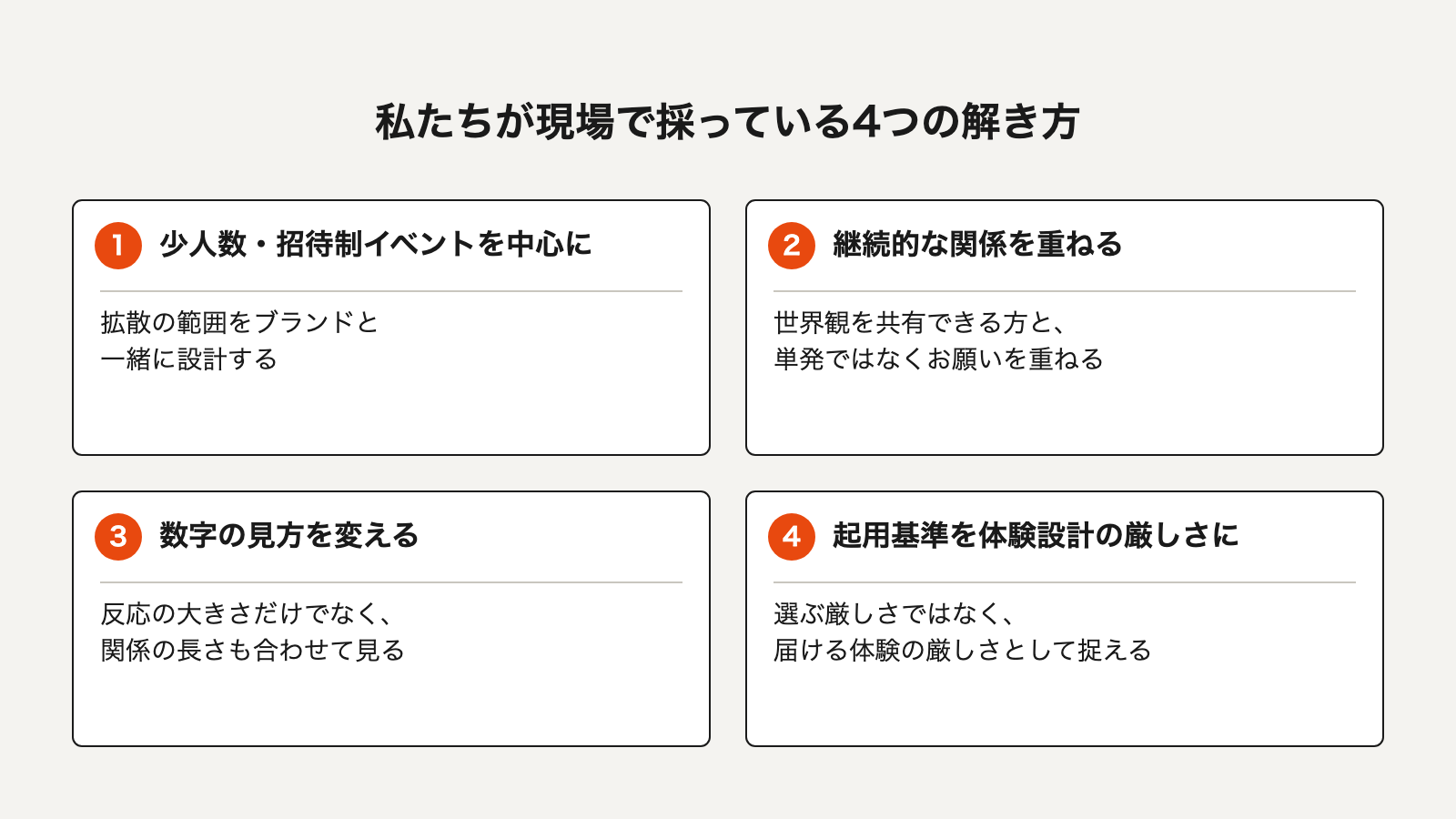
Figure 2: The four approaches we take in practice
Where to apply this, and where judgment diverges
These four approaches don't apply in the same proportion to every project. How the emphasis shifts depends on the strength of the brand world already built and the history of the brand's content to date. If the brand world hasn't yet been firmly established, there's relatively more room to expand the scope of reach. Conversely, if the brand world is already well established and inaccessibility itself is part of the value, then it makes more sense to weight things toward small-scale, invite-only settings and invest time in building relationships—this tends to serve long-term brand value better.
The key point where judgment diverges is a single question: is the goal of the initiative in front of you to expand awareness, or to deepen relationships with people who already know the brand? If this remains unclear while only numeric targets are set, it becomes impossible to judge whether to prioritize reach-focused tactics or world-protecting tactics.
This is also the first thing we ask brands at the outset: is the goal of this initiative to grow awareness or to grow relationships? If this isn't decided before moving forward with candidate selection or venue design, the direction tends to waver midway, and the result ends up falling short on both fronts.
Scope of this article
This article covers the structural reasons why luxury SNS PR feels difficult, along with the thinking behind the approaches we take in practice. It does not cover the specific practical steps of casting or candidate selection. It also does not address the difficulties of SNS PR in categories other than luxury, or the differences between categories.
In closing
The difficulty of luxury SNS PR isn't a matter of a team's lack of skill—it's a structural issue rooted in the nature of the category itself. Rather than trying to eliminate the contradictions, we see our job as designing how to work with them.