What to Do in the First Three Months When a Korean Cosmetics Brand Launches Influencer Initiatives in Japan
This article was automatically translated from the Japanese original. Read the original in Japanese
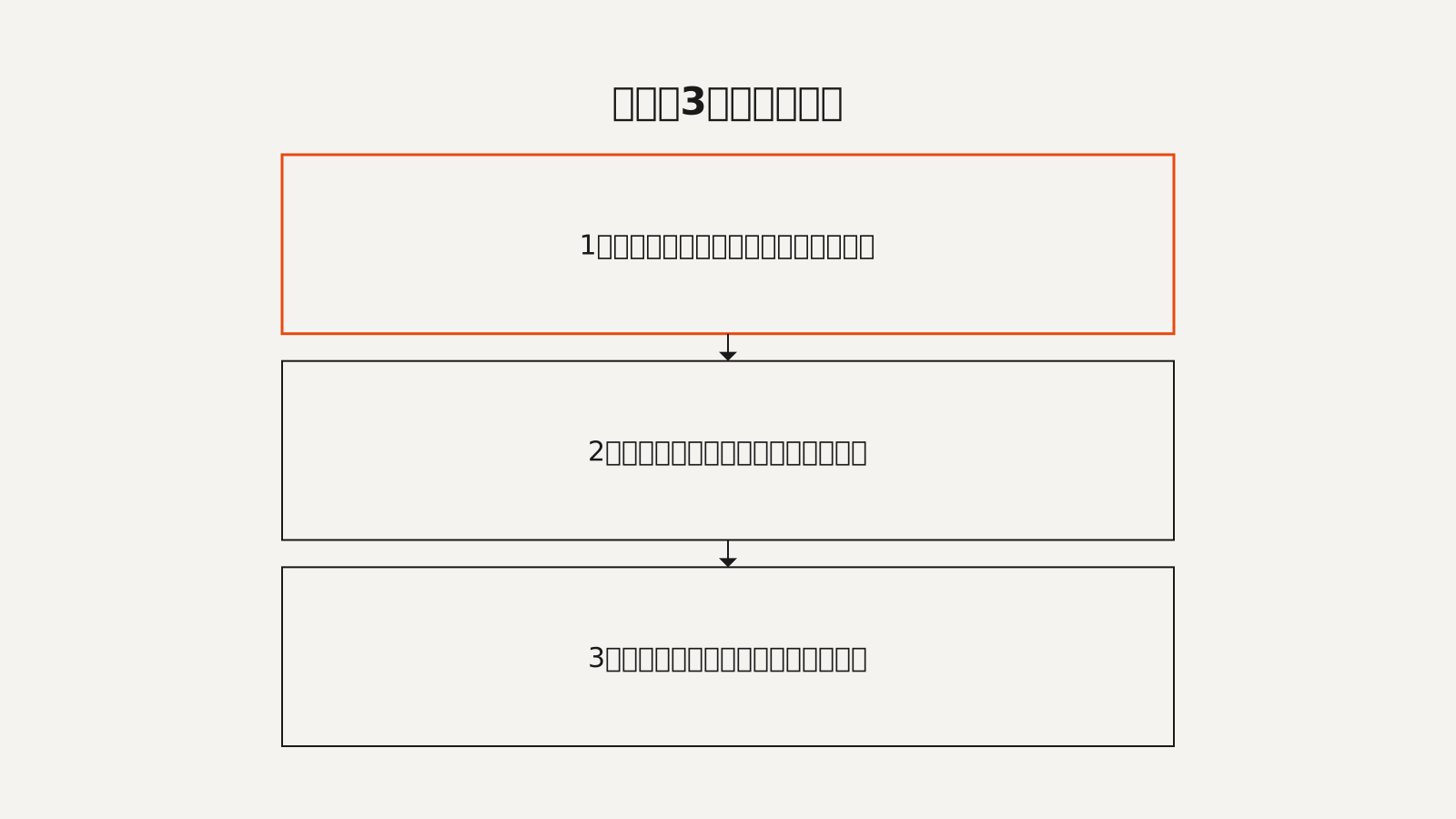
When a Korean cosmetics brand begins influencer initiatives in Japan, structuring the first three months in the order of "sorting out labeling rules," "designing gifting and casting," and "aligning posts with launch and promotional timing" allows preparations to proceed without falling behind schedule.
| Timing | Core Activity | Points to Watch |
|---|---|---|
| Month 1 | Sort out internally, in line with the Pharmaceutical and Medical Device Act and the Act against Unjustifiable Premiums and Misleading Representations, the scope of permissible efficacy claims and labeling rules | Standards for wording tend to diverge between the Japan entity, the agency, and headquarters, so document this early |
| Month 2 | Design gifting and casting, and determine the premises for request documents and labeling | Make clear at the request stage that even voluntary posts can be subject to labeling requirements |
| Month 3 | Schedule posts in line with launch and promotional timing | Thoroughly manage pre-launch information control and share the post embargo date |
What Constraints Are Specific to This Industry?
Cosmetics are subject to the Pharmaceutical and Medical Device Act and the Act against Unjustifiable Premiums and Misleading Representations, and even influencer posts are held to the same standards as company advertising when it comes to how efficacy and effects are described. Unless the "scope of permissible efficacy claims" is sorted out internally beforehand, wording will end up inconsistent from post to post. The same applies to gifting: as discussed in What Is Gifting? Differences from Sponsored Collaborations and Suitability (Basics Explained), PR labeling may be required depending on the purpose of the provision and the business relationship involved, and this same logic applies directly to providing cosmetics samples. If headquarters' existing marketing claims are translated directly into Japanese, they may not meet the standards of the Pharmaceutical and Medical Device Act, so the approach should be to recreate the wording for the Japanese market rather than simply translate it. Even efficacy claims already printed on packaging or the headquarters website may need to be rewritten to meet Japanese standards, so checking this thoroughly in Month 1 will make drafting request documents in Month 2 and beyond go more smoothly. Postponing this check leads to the need to redo request documents, which becomes a cause of delays to the overall schedule.
Which Main Initiative Formats Are Suited to Which Situations?
| Initiative Format | Well Suited To | Not Well Suited To |
|---|---|---|
| Sampling (Gifting) | Periods when brand awareness in Japan is still low and the priority is to expand hands-on experience | Products with strong efficacy claims, where inconsistent wording across posters would undermine standards |
| Launch Events / Experience Events | Products with characteristics—such as texture or scent—that are hard to convey without actual trial | Early-stage launches where there isn't enough time to arrange a venue |
| Ongoing Sponsored Collaboration Posts | Products where awareness needs to be built up over a period of time after launch | Cases where headquarters' approval process for wording takes time, making it hard to align post timing |
Practical details on initiatives across the beauty industry as a whole are summarized in Influencer Marketing in the Cosmetics and Beauty Industry — Practical Details on Launch Events, Gifting, and Post Rates. Whichever format is chosen, understanding in advance where headquarters' review process will occur is a prerequisite for building the schedule on the Japan side. When working through an agency, deciding in advance the order of review among the four parties—headquarters, the Japan entity, the agency, and the influencer—helps prevent duplicated or missed wording approvals.
How Should Timing Align With Launches and Seasons?
For example, when rolling out a new foundation in spring, sampling should begin one to two months before launch, working backward so that experience events and ongoing posts coincide with launch week. As another example, when launching a new skincare line timed to an inbound tourism season, it helps to separate pre-arrival awareness-building from in-store visits and hands-on demonstrations, assigning post reach to the awareness role and posts that convey actual hands-on experience to the demonstration role. In either case, if headquarters is slow to finalize the launch schedule, the preparation period on the Japan side gets compressed, so confirming when the launch date will be finalized should be one of the first things checked. For brands that roll out seasonal products in multiple phases, it is also useful to set post timing and measurement timing together in advance, so that the results measured in the first phase can inform the scheduling of subsequent phases.
What Should Be Watched for in Labeling and Wording?
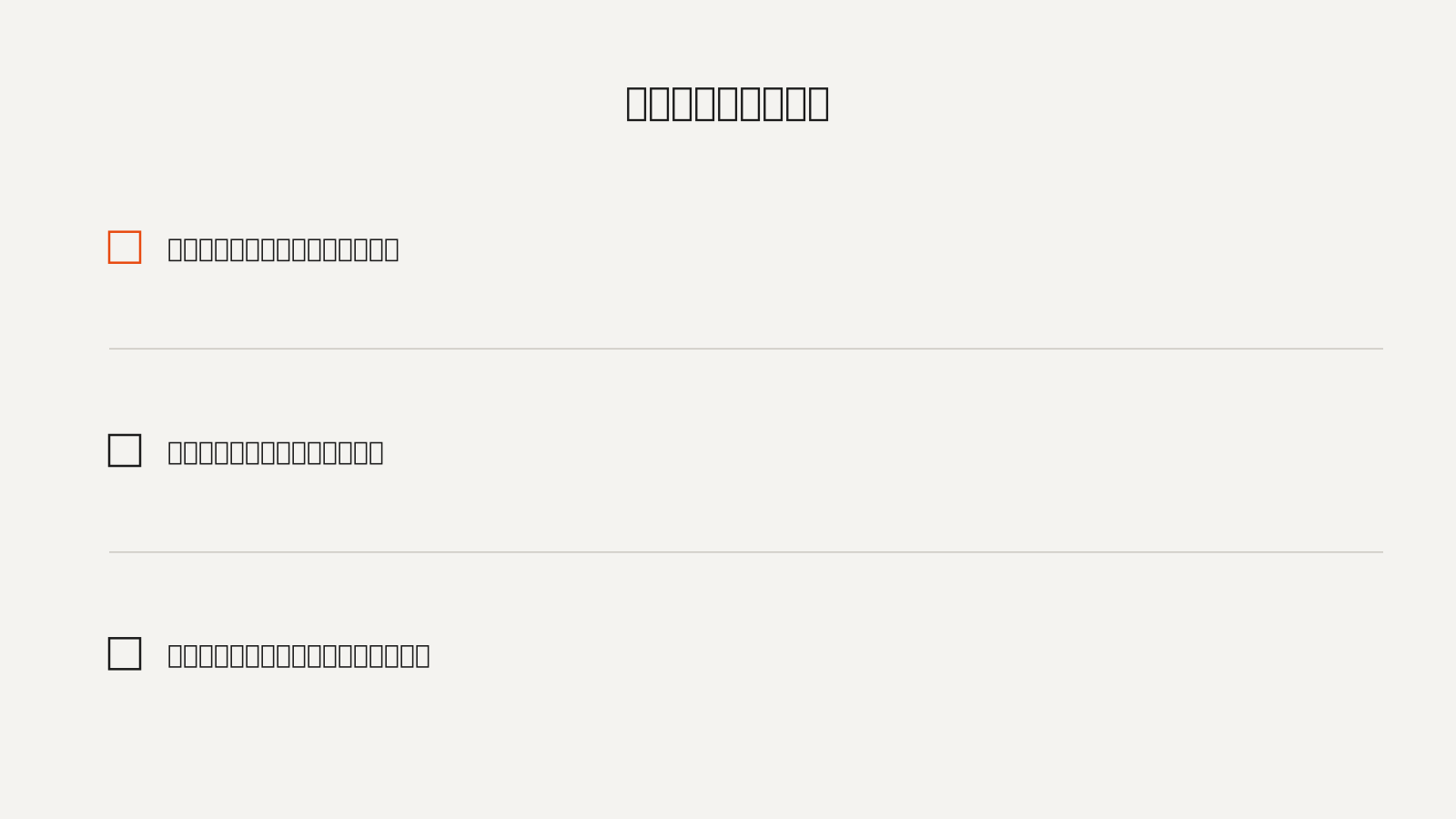
Even in influencer posts, definitive claims that guarantee efficacy should be avoided, and the wording to avoid at the request stage should be shared together with the thinking on PR labeling covered in What Is PR Labeling for Sponsored Collaboration Posts? The Basics of Stealth Marketing Regulation and a Practical Framework. As a basic rule, avoid definitive statements like "it will definitely work" and wording that uses figures that haven't been actually measured, and keep posts within the range of what can be written as the poster's personal impression. Even if the product materials provided by headquarters include numerical efficacy figures, whether posters can use those figures as-is needs to be separately confirmed against Japanese standards. Practical details by genre are compiled on the K-beauty genre page.
Scope of This Article
This article covers how to proceed through the first three months when a Korean cosmetics brand begins influencer initiatives in Japan. Matters such as how contracts and budgets are decided among headquarters, the Japan entity, and the agency, and the appropriateness of specific efficacy claims, vary depending on conditions for each product, and are not addressed here.
Closing Thoughts
In the first three months in Japan, not postponing the sorting out of labeling rules, and completing it before designing gifting and casting, makes the overall preparation toward launch go more smoothly. We place importance on an approach that takes into account both headquarters' standards and Japan's labeling rules, and we believe we can work together from the early stages of a launch to build preparations suited to practical operations in Japan.