The Synergy Between Event Invitations and SNS Posts — What It Takes for an Experience to Become Content
This article was automatically translated from the Japanese original. Read the original in Japanese
When companies consider hosting an invitation-only event, the first question that comes to mind is usually "how many people can we gather?" In reality, though, what matters most isn't the number of attendees itself, but how those attendees talk about the experience afterward. Even among events of the same scale, some naturally generate posts while others end with almost none. This difference doesn't come down to on-the-day operational skill—it's already determined by the design work done before the invitations are even sent.
We handle both event production and influencer casting in-house. This means we can view the process of deciding "who to invite" and the process that shapes "how that person will post" through a single, unified lens, rather than as separate responsibilities. In this article, we'll organize the key points of invitation design that emerge from this perspective into three stages: before the event, during the event, and after the event.
Invitation Design Means Preparing Before You Ask for a Post
When people think about how to encourage attendees to post, what usually comes to mind are things like photo spots on the day or the wording used when asking for a post. In practice, however, most of the quantity and quality of posts is already determined at the stage when the invitation is sent.
Invitation design refers to deciding, in advance and as a single continuous flow, who to invite and how, what that person will take away from the experience, and what they'll carry with them afterward. No matter how carefully an event is run on the day, if the invitation design is missing, posts become a matter of luck. Conversely, when invitation design is properly in place, what needs to be asked for on the day is kept to a minimum.
The work of creating an experience and the work of creating conditions for that experience to be talked about may look continuous, but they actually require separate design decisions. We covered where this split occurs in detail in The Work of Creating an Experience vs. the Work of Creating Conditions for It to Be Talked About—Where Does Activation Design Diverge?. This article focuses on an earlier step within that divide: the question of "who to invite, and how."
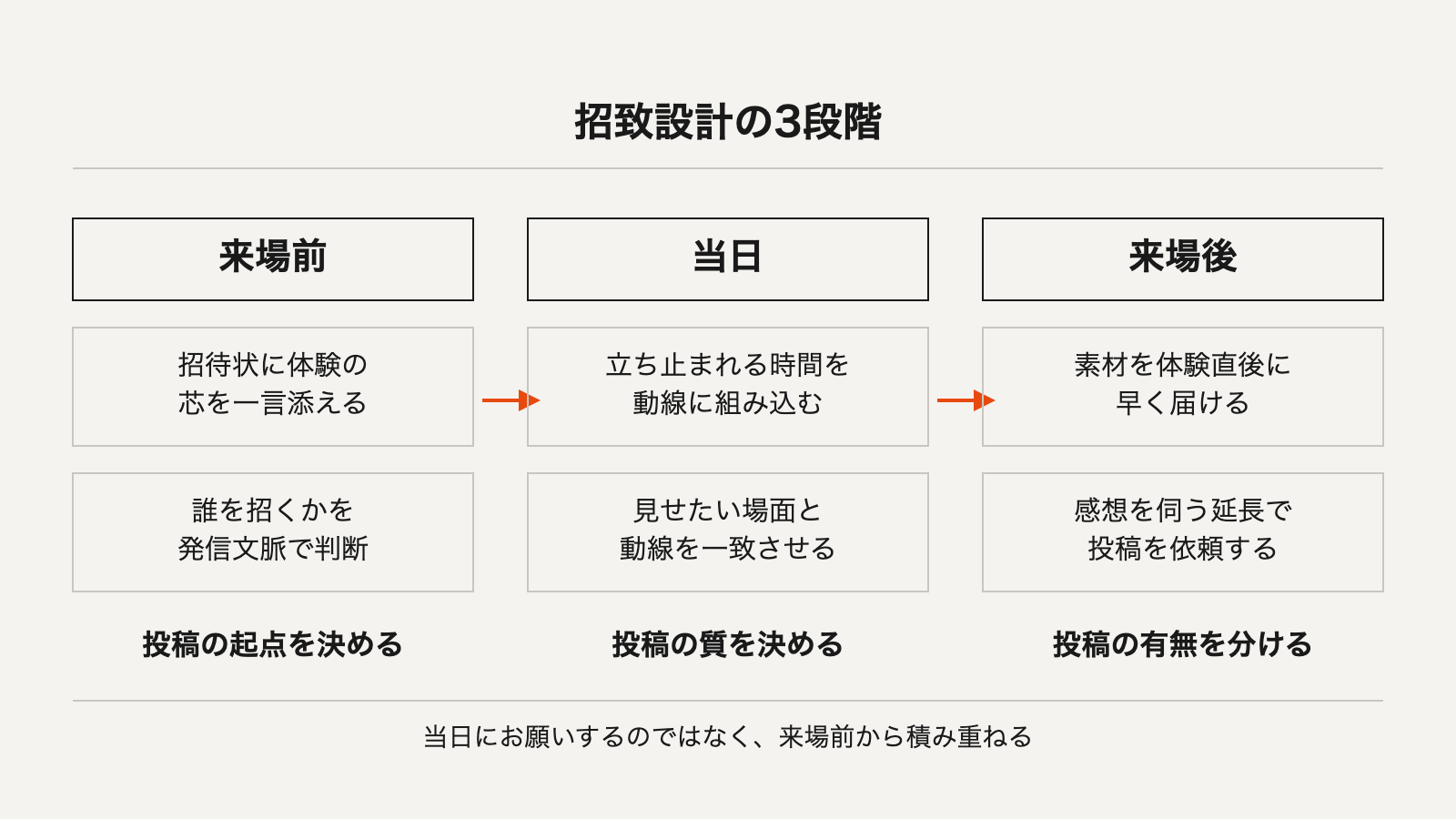
Figure 1: The Three Stages of Invitation Design (Before, During, After the Event)
| Stage | What Gets Determined | Key Considerations |
|---|---|---|
| Before the event | The starting point of posts | Who to invite and how, what to convey in the invitation |
| During the event | The quality of posts | Whether there's time to pause, flow design |
| After the event | Whether posts happen at all | Speed of providing materials, how the request is phrased |
Pre-Event Design Determines the Starting Point of Posts
When securing attendee numbers becomes the priority, invitations tend to turn into an exercise of "filling open slots." But what matters for invitation design is a different perspective: what kind of content the person usually posts, and whether this experience can be positioned as a natural extension of that.
To be clear, this isn't about screening out people who seem more likely to post. What we're focused on isn't the person, but the experience we're preparing. Taking into account what themes and tone that person typically posts in, can we shape this experience so it fits naturally as an extension of that? If it can't, we believe the thing that needs fixing is the content of the experience—not the person being invited.
The wording of the invitation itself is an extension of this same perspective. There's a real difference in how attendees mentally prepare between an invitation that simply states the event details and one that includes even a single sentence about what the experience values most. By communicating, at the invitation stage rather than on the day, what kind of moments to expect and what we'd like captured in photos, the request made on the day becomes less of an ask and more of a confirmation.
Another thing worth deciding before the event is how to prepare the materials and information that will be handed over on the day. This is work that should begin at the same time as sending the invitations, not on the day itself. If preparation gets pushed to the day of the event, it ends up being deprioritized wherever the operations team has the least spare capacity—and as a result, how easy it is for attendees to post ends up being dictated by the organizer's convenience rather than by design.
On-the-Day Flow Determines the Quality of Posts
What can be done on the day ultimately comes down to not betraying the design established beforehand. That said, the design of the on-the-day flow itself also contains elements that affect the quality of posts.
Central to this is whether the flow of the event has, built in from the start, moments and time for attendees to calmly engage with the experience. A flow packed with movement and explanations leaves little room for moments attendees can describe in their own words. Conversely, if there's a moment where attendees can pause at the one point the brand cares about most, that becomes the core of the post.
Signage and props that encourage photography only work once the flow itself is well designed. If the flow remains hectic, adding more signage won't create the breathing room needed to actually take a photo. What matters most in on-the-day design isn't whether there's a photo spot, but whether there's time to pause at all.
Another important point is making sure the moment the brand wants to showcase matches the moment attendees actually pause at. If these two are misaligned, posts may still happen, but they'll describe a different moment than the one the brand intended to convey. The deciding factor here is whether what was decided during the pre-invitation design phase—what to have attendees pause at as the core of the experience—is properly reflected in the on-the-day flow.
How Things Are Handed Over After the Event Determines Whether Posts Happen
The moment an experience ends, it starts slipping out of attendees' hands. Photos, as well as the behind-the-scenes staging that could only be seen in the moment, tend to remain solely with the organizer. Whether attendees end up posting depends heavily on how quickly and carefully this follow-up is handled.
The sooner the materials are delivered, the better the results tend to be. If materials arrive while the memory of the experience is still fresh, the post can be written as a natural reflection on the experience. If they arrive after some time has passed, writing the post becomes an exercise in "trying to remember," and the burden takes over.
There's also room to design how the request for a post is phrased. Even worded politely, a request that frames posting as an obligation comes across as a burden. What we're careful to do is phrase things so that a post arises naturally as an extension of asking for feedback on the experience, rather than treating the post itself as the goal.
The post-event process serves one more purpose. By looking back at whether a post was made and what words were used to describe the experience, it becomes clearer what should go into the next invitation. The post-event stage marks the close of one event, while also functioning as a process for gathering material for the next round of invitation design.
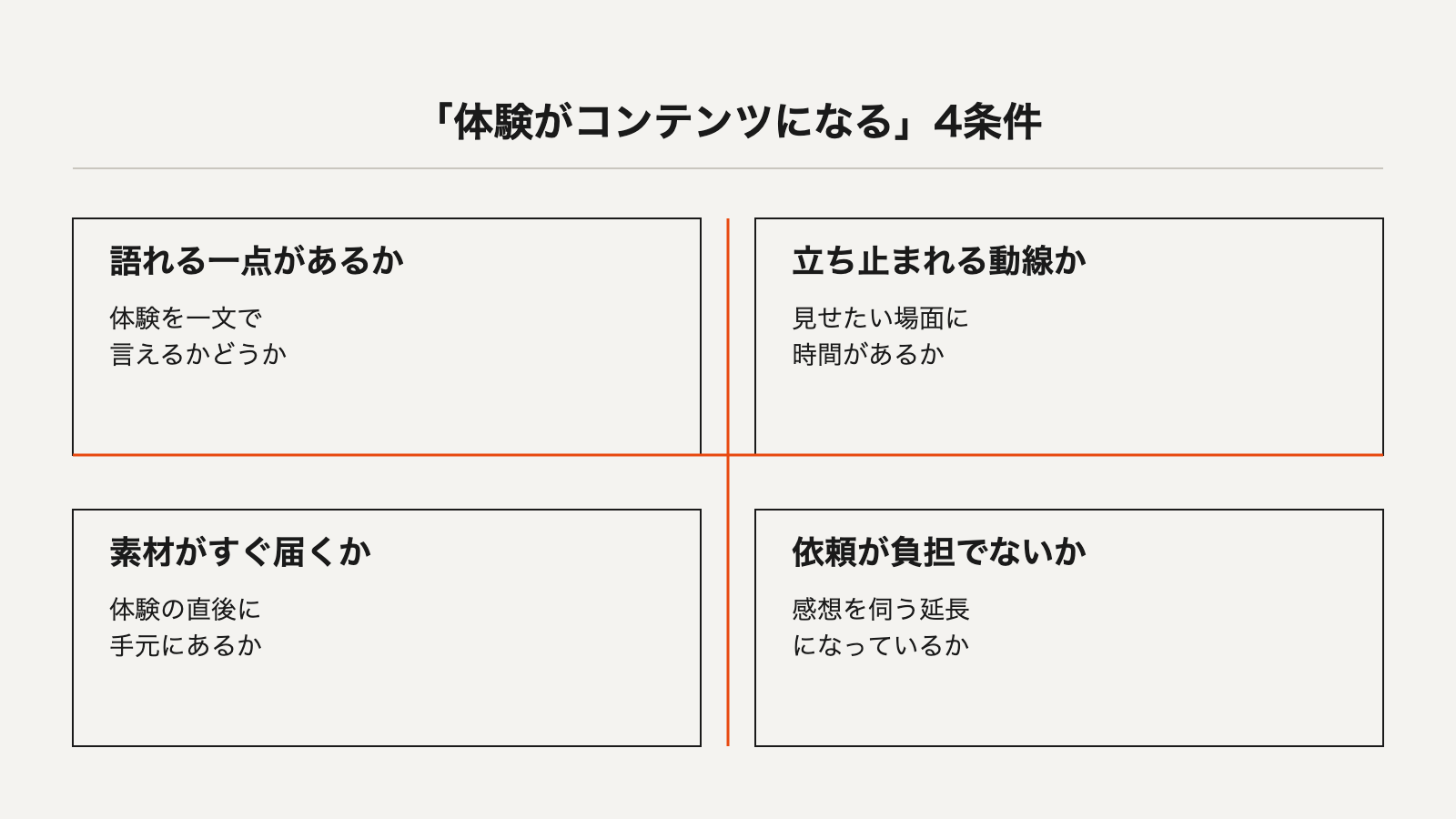
Figure 2: The Four Conditions for an Experience to Become Content
Posts Happen Even Without Making Them Mandatory
The point of building up these three stages is this: posts can arise naturally through the design of the experience, without ever needing to be made mandatory.
According to our own track record, 94.6% of attendees (390 people across 37 events) at invitation-only events with no posting obligation went on to post (a detailed breakdown is available in What Event Post Rates Reveal About the Effect of Scale). The same article also shows that non-posting attendees start to appear once attendance reaches around 10 people or more. We don't interpret this simply as "more attendees means fewer posts"—we see it as an issue on our own side of the design: the more attendees there are, the more the per-person invitation design tends to thin out. Designing for numbers and designing for each individual's experience are locked in a tug-of-war given limited resources.
When to Apply This — Where the Emphasis Shifts Depending on Scale
For small-scale invitation-only events, most of the invitation design can be completed through near one-on-one exchanges before the event. As long as the wording of the invitation and how the request is made on the day are properly set up, posts happen without forcing them.
As the number of attendees grows, the effort that can be devoted to each person inevitably thins out. In that case, the emphasis should be placed not on providing more individual attention on the day, but on how thoroughly the pre-event design can be built into a repeatable template. If the invitation format, on-the-day flow, and method of delivering materials are all set up in advance as a system, it becomes easier to maintain per-person experience quality even as numbers grow. Conversely, if this template-building is put off while only the attendee count is increased, the strain shows up as a drop in the post rate.
The deciding factor is whether, before increasing attendance, you can identify which of the three stages—before, during, or after the event—hasn't yet been turned into a template. Scaling up while leaving an un-templated stage in place tends to make the strain show up right there. Put another way, the more a plan calls for scaling up, the greater the value of investing time in pre-event design.
Scope of This Article
This article covered the design thinking behind how invitation design affects the quantity and quality of posts. It did not cover the specific wording of invitations, templates for messages requesting posts, or methods for measuring post-event effectiveness. Congestion management for reception areas or the flow itself is a separate topic and was not addressed here.
Closing Thoughts
Posts aren't something you generate simply by asking for them on the day—they're the result of design built up starting from the invitation stage. Being able to view the work of creating an experience and the work of creating conditions for that experience to be talked about through a single, unified lens is precisely why we continue to keep both functions in-house.