Influencer Marketing in the Cosmetics and Beauty Industry — The Practical Craft of Launch Events, Gifting, and Posting Rates
This article was automatically translated from the Japanese original. Read the original in Japanese
Once you start handling cosmetics and beauty campaigns, you'll encounter situations where approaches that worked in other categories simply don't translate. New products change over quickly, there's a distinctive culture of launch events, and there's a lot of information that photos and videos alone can't convey. If you select candidates based solely on follower counts or past track records, you often end up in a situation where the post gets published, but "what you wanted to communicate" never actually comes across.
In this article, after organizing the conditions unique to the beauty industry, we'll look at the beauty-specific design points for each of four types of initiatives: launch event invitations, gifting, sponsored collaborations, and in-store or pop-up activations. We've written this in a way that avoids identifying specific brands or products, so that it applies to any brand's campaign.
The Beauty Industry Has Several Conditions That Set It Apart From Other Categories
Beauty campaigns feel difficult not because of a lack of experience on the part of the person in charge, but because of the structure of the category itself. There are mainly four conditions we keep in mind in our day-to-day work.
The first is the speed of new product turnover. In a category where new products are released every season, or even more frequently, the question of whether a relationship built for one campaign should end there or continue into the next new product launch comes up far more often than in other categories.
The second is the existence of launch events as a format. The beauty industry has a deeply rooted culture of creating spaces where people can experience new products firsthand and then share that information. This means there's fertile ground for initiatives that turn hands-on experience into a starting point for content creation.
The third is that information about texture and finish—things that are hard to convey through photos or descriptive text alone—carries significant weight. Qualities like texture, color payoff, and how a product feels on the skin can often only be conveyed through the words and expressions of someone who has actually used it.
The fourth is the wide range of individual differences in skin type and preference. Even with the same product, whether it "works" for someone or not varies from person to person. It's precisely because of these individual differences that followers turn to beauty influencers' posts in search of "the real experience of someone similar to themselves."
We don't see these individual differences as an inconvenient factor to manage in campaign design—rather, we see them as the very foundation of it. Because people with different skin types and preferences each speak from their own genuine experience, a single product can generate content from multiple angles. Trying to standardize everyone's wording into the same phrasing works against this foundation, flattening it out.
It should also be noted that the beauty industry has certain constraints on how products can be described. Here, we simply acknowledge that such constraints exist; we do not address individual legal interpretations.
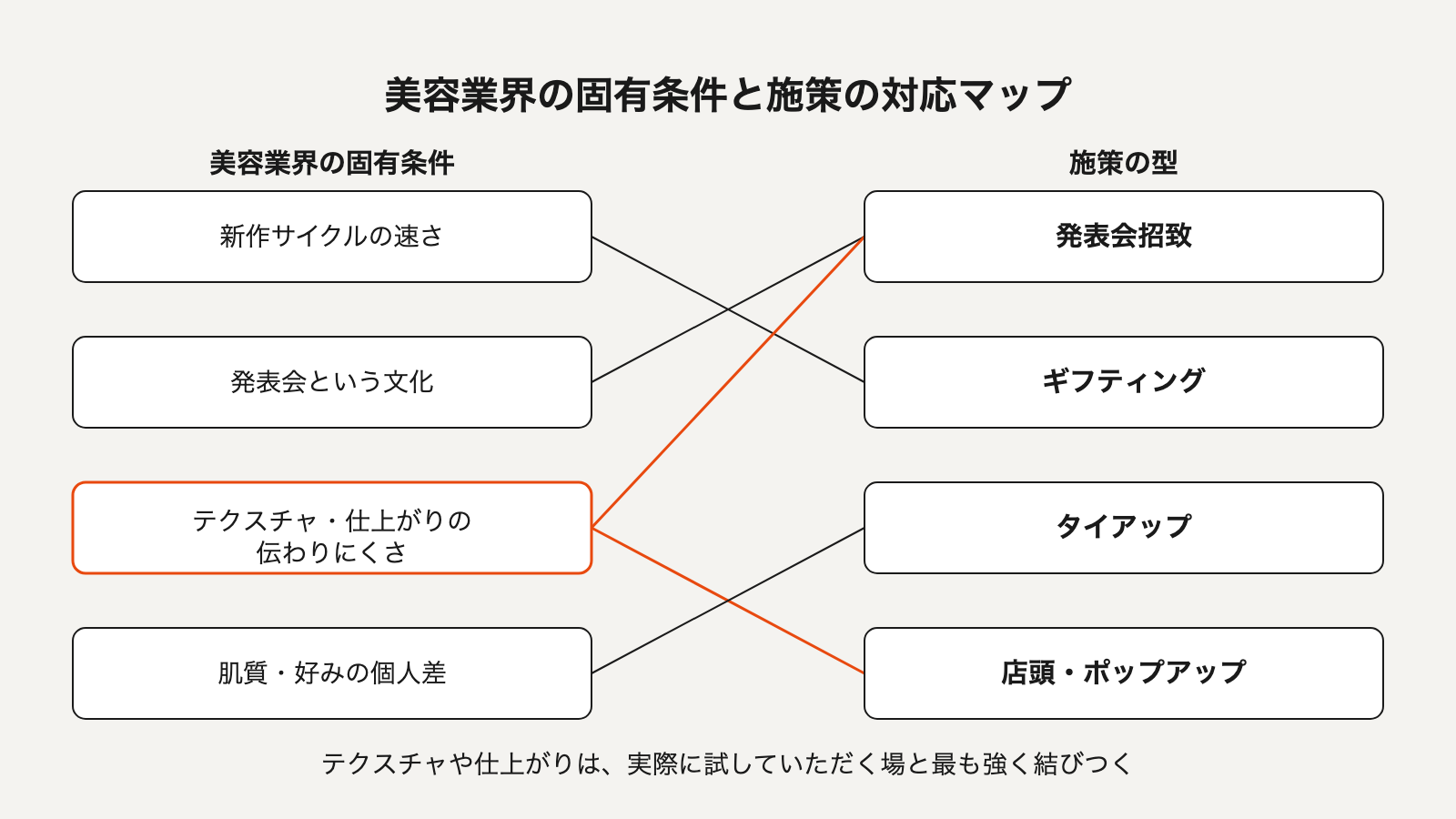
Figure 1: Mapping the beauty industry's unique conditions to corresponding initiatives
Launch Event Invitations Are Best Suited to Information That Can Only Be Conveyed Through Hands-On Experience
Of the four conditions, the one that launch event invitations address most directly is the difficulty of conveying texture and finish. By creating a space where people can actually pick up and try a product on their skin, you allow information that photos or descriptions can't capture to be received as the individual's own genuine experience.
Our data shows that people who attend invitation-only experience events tend to post at a high rate even when posting isn't a condition of attendance. In aggregate data from event attendees, the posting rate was 94.6% (for more details, see What Event Scale Reveals About Posting Rates). This tells us that a good experience naturally gets talked about, even without being asked for.
In designing beauty launch events, we pay particular attention to the length of time allotted for the experience. Texture and color payoff sometimes don't fully register as a genuine impression after just a single touch. Whether you can provide enough time and an environment for people to try the product thoroughly determines the quality of the experience—and, by extension, the depth and specificity of the content that follows.
In categories where new products turn over quickly, there's also a natural opportunity for people to attend launch events repeatedly. Rather than designing each event as a one-off occasion, positioning it as a place to deepen an ongoing relationship with people you'd like to invite again for the next new product reduces the burden of renegotiating the details of the invitation from scratch each time—freeing up that effort to be redirected toward the quality of the experience itself.
Gifting Is an Initiative That Meets the Speed of New Product Turnover With Scale
In categories where new products change over quickly, there are times when launch events alone can't cover every new release. This is where gifting—which doesn't require posting as a condition—comes into play.
Some may worry that without an obligation to post, nothing will actually get shared. But our data shows that even with gifting that carries no posting obligation, 91% of recipients still end up posting (for more details, see What Percentage of Gifting Without a Posting Obligation Actually Results in a Post?). In most cases, what determines whether someone shares something isn't the presence or absence of an obligation—it's whether it's something they genuinely want to talk about.
What we prioritize in beauty gifting is making sure people actually try the product on their own skin and describe what they felt in their own words. Since how a product feels varies from person to person, we don't dictate specific wording or ways of describing texture. The more we impose such specifications, the more a person's authentic voice gets lost—and the further the content drifts from the "experience of someone similar to me" that followers are actually looking for.
Just because posting isn't required doesn't mean we can skip thinking carefully about who receives the product. If anything, because there's no contract to serve as a checkpoint, how well we've anticipated the fit between the product and a person's usual content beforehand shows up directly in how satisfying the experience turns out to be. Precisely because this is a numbers-driven initiative, not skipping that case-by-case assessment of fit ultimately contributes to the quality of the content as well.
Sponsored Collaborations Demand Precision in Selection Precisely Because of Wide Individual Differences in Skin Type and Preference
Sponsored collaborations, where post content and publication timing are agreed upon by contract, are chosen when certainty is required. In beauty, what determines the precision of this initiative isn't a high follower count, but the overlap between a person's skin type and preference tendencies and how the brand envisions the product being used.
Even when introducing the same product, how it lands with followers varies greatly depending on what skin concerns or preferences a person typically shares. If you build your candidate list based on follower count alone, without carefully assessing this overlap, you often end up with a post that gets published but doesn't actually resonate as a genuine experience for followers.
Because this is an initiative where post content is agreed upon by contract, care is also needed in how the brief is written. The more thoroughly you try to include every piece of information you want conveyed, the more detailed the specifications become—and the further the language drifts from what the person would naturally use. In our briefs, we only fix the essential facts we want communicated; how those facts are expressed, in what words and presentation, is left as an extension of the person's own everyday content.
In-Store and Pop-Up Activations Bring Together In-the-Moment Experience and Content Creation
In-store and pop-up activations don't need to be as large-scale as launch events to create a space where people can actually try a product. Sometimes people stop by while passing through, and sometimes they're invited in advance—and how the experience is designed shapes how it ends up being shared.
In designing beauty pop-ups, we're mindful of thinking through the flow for trying the texture of a product and the environment for capturing photos or videos as two separate considerations. If the space for focusing on the trial experience and the space for capturing that experience visually are either too close together or too far apart, both experiences end up feeling incomplete. We've also discussed the idea that designing the experience itself and designing the conditions for it to be talked about are two separate judgments in The Work of Creating an Experience and the Work of Creating the Conditions for It to Be Talked About—Where Does Activation Design Diverge?.
When to Use Each Approach, and Where the Decisions Diverge
The four initiatives aren't ranked by superiority—they simply serve different roles. The choice between them mainly comes down to two questions.
The first is how many people you want to experience a new product, and how deeply. If you want a small number of people to experience a new product thoroughly, launch event invitations are well-suited; if you want to spread natural content across a wide number of people, gifting takes on greater weight.
The second is the complexity of the information you want to convey. If you want to carefully explain usage details or tips for combining products, sponsored collaborations or launch events—where people can take the time to engage deeply—are well-suited. Conversely, at a stage where the priority is simply generating awareness, the lighter burden of gifting or in-store/pop-up activations works to your advantage.
If these two questions remain unclear and you decide on an initiative without addressing them, a mismatch arises between how the experience is designed and what you're asking for—and the information about your new product ends up not being fully conveyed after all. These four formats can also be combined. Following up with a sponsored collaboration request after someone has thoroughly experienced a product at a launch event, or connecting an in-store experience to a later gifting opportunity, are combinations we frequently use in our own work.
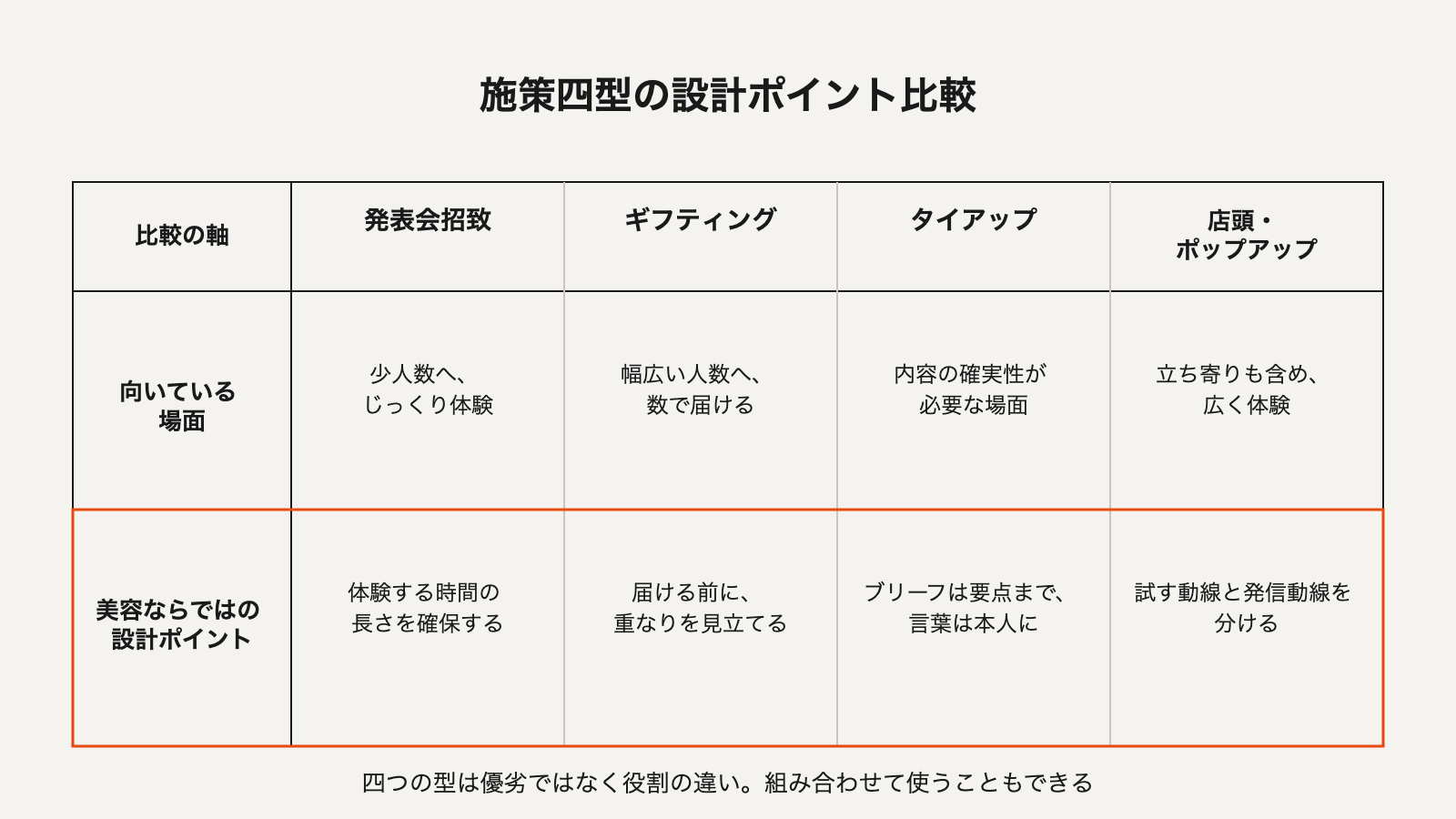
Figure 2: Comparing the design points of the four initiative types
The Scope of This Article
This article covered the conditions unique to the beauty industry and the design considerations for each of the four initiative types. Case studies involving specific brands or products, legal interpretations of expression-related constraints, and detailed implementation schedules for each initiative fall outside the scope of this article. Constraints on product claims, including those under Japan's Pharmaceutical and Medical Device Act, require specialized review on a case-by-case basis, and we do not address them here.
Closing Thoughts
Influencer marketing in the beauty industry feels difficult not because of any shortcoming in the person managing it, but because of the structure of the category itself—the speed of new product cycles and the sheer amount of information that can only be conveyed through hands-on experience. Using these four initiative types not as a hierarchy, but according to their distinct roles, is a principle we hold central to our work in the field.