What Is UGC? Its Relationship to Sponsored Collaboration Posts and How to Leverage It [Basics Explained]
This article was automatically translated from the Japanese original. Read the original in Japanese

UGC refers to content that consumers post of their own accord, without any request or compensation from a company. It is often discussed alongside sponsored collaboration posts and gifting posts, but these three do not sit on the same axis. UGC is a "post that was not requested," while sponsored collaboration and gifting are "posts that were requested."
This article organizes, as a single map, how requested posts connect to UGC, and then looks at what brands can design to make UGC more likely to emerge.
What you'll learn from this article:
- What UGC refers to, as distinct from sponsored collaboration posts and gifting posts
- The structure by which requested posts lead to UGC from those around them
- What brands can design to increase the likelihood of UGC
UGC Refers to Posts That Were Not Requested
UGC (User Generated Content) refers to posts that consumers make of their own volition, without any request or compensation from a company. A customer who writes a review after purchasing a product, someone who shares a gift they received, a person who photographs their experience at a store—all of these count as UGC.
Sponsored collaboration posts and gifting posts, on the other hand, are posts that arise because a brand asked someone it has hired to make them. The differences among the three can be organized as follows:
| Term | Whether a Request Was Made | Handling of the Post |
|---|---|---|
| UGC | No request made | Whether to post, and how to post, is entirely up to the individual |
| Gifting Post | Requested by providing a product or service | Posting is not obligatory; the decision is left to the individual |
| Sponsored Collaboration Post | Requested with compensation | The content and timing of the post are agreed upon by contract |
An overview of methods including sponsored collaboration posts and gifting posts is organized in What Is Influencer Marketing? Types of Methods and the Overall Picture. This article focuses instead on UGC, which sits even further outside that overall picture, and how it relates to requested posts.
This distinction matters in practice because "requested posts" can be ordered as a deliverable, with progress and results that can be tracked, whereas UGC cannot be ordered at all. We often receive requests to "increase UGC," but UGC itself cannot be directly requested. The moment you ask for it, it becomes a requested post. This is precisely why, when thinking about UGC, it's more accurate to talk about "making it easier for UGC to emerge" rather than "increasing UGC."
Requested Posts and UGC Are Not Opposites—They Form a Continuous Flow
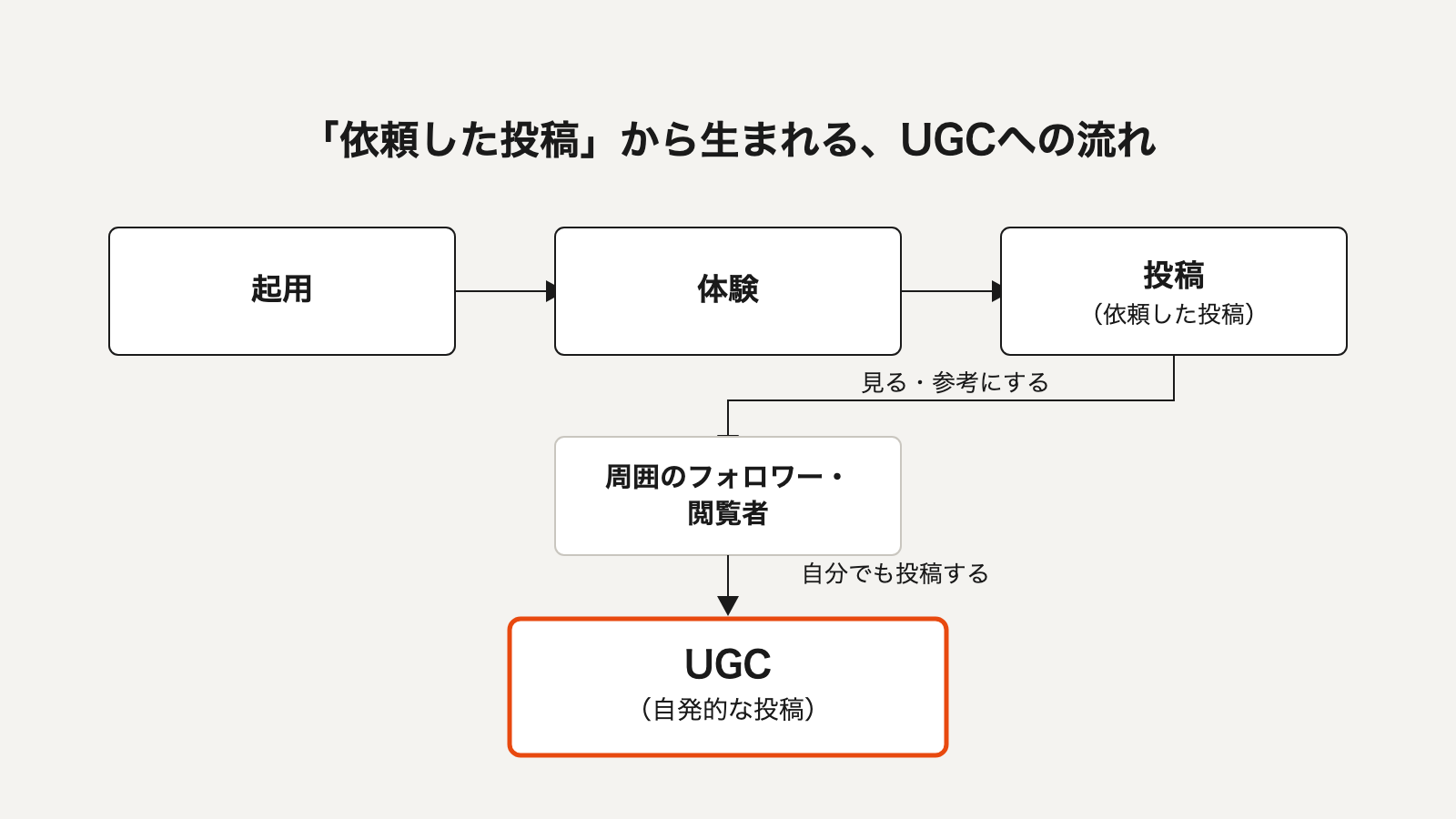
Figure 1: The relationship between "requested posts" and "spontaneous posts (UGC)" (casting → experience → spillover to others)
It's tempting to treat requested posts and UGC as separate, unrelated initiatives. In reality, though, the two exist within a single continuous flow.
A brand hires an influencer and has that person experience the product or brand. A post is created based on that experience. Up to this point, we're still within the range of "requested posts"—sponsored collaboration or gifting.
This post doesn't end with the person who made it. Followers who see the post, or people who come across it by chance through search or recommendations, may encounter the same product and post about it themselves. Or they may reference the way the product was used or presented and create their own post in their own style. The posts that emerge from this spillover to the people around the original poster are UGC.
According to our own track record, even gifting with no obligation to post results in posts being made at a high rate (91%, N=342) (for details, see What Percentage of Gifting Without a Posting Obligation Actually Results in a Post?). However, this figure only indicates whether the person who received the request actually posted. Whether UGC emerges beyond that is a separate layer—how the people who see that post respond—and cannot be measured simply by the number of requested posts.
UGC Cannot Be Engineered on Purpose, But There Are Conditions That Make It More Likely
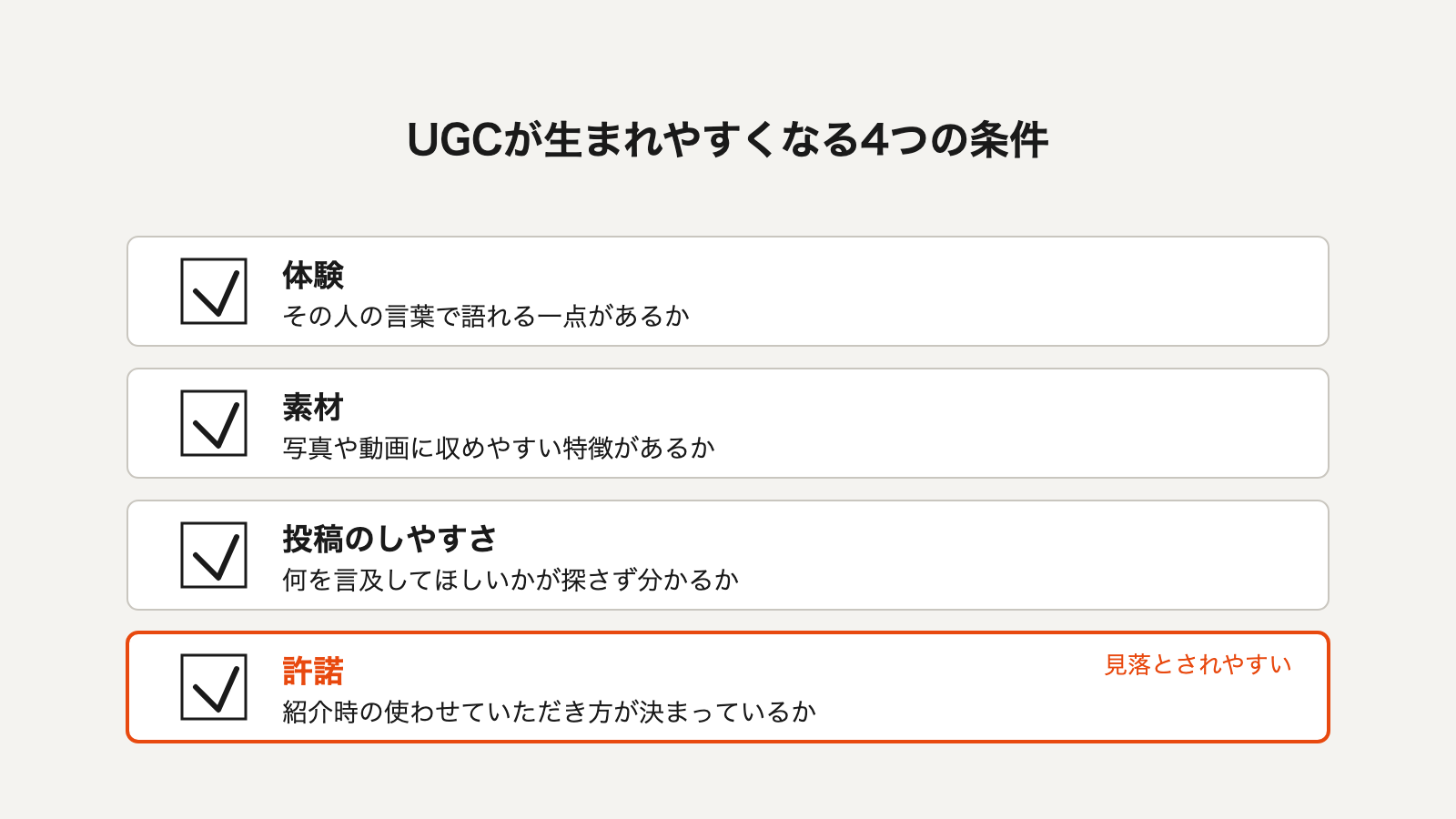
Figure 2: Four Conditions for UGC to Emerge
UGC is the result of an individual's spontaneous action. So a brand can never guarantee that "doing this will produce UGC." That said, the conditions that affect how likely UGC is to emerge can be shaped from the design side. In our work designing experiences and product touchpoints, we check the following four conditions:
- Experience: Is there a single point the person can describe in their own words? Something that can be taken away as an experience, rather than a mere product description?
- Material: Are there features that are easy to capture in photos or videos? Being able to talk about something and being able to capture and show it are two different conditions.
- Ease of Posting: Is it clear—without having to search for it—what should be mentioned and how?
- Permission: Has a process been decided in advance for how the brand obtains permission to use a discovered post, such as featuring it on an official account?
Where the design of an experience tends to branch off is discussed in The Work of Creating an Experience vs. the Work of Creating Something Worth Talking About—Where Does Activation Design Diverge?. The same point applies not only to requested posts but equally to the UGC that emerges afterward. If the experience lacks a single point worth talking about, the requested post itself becomes thin, and there's no material left to spill over to the people who see it.
Of the four conditions, permission is the one most often overlooked. Because UGC arises from the poster's own volition, how the brand handles it needs to be decided separately from the post itself. If you reach out to ask for permission each time you find a piece of UGC, the burden grows as the number of posts increases, and depending on the timing of the outreach, it can also confuse the poster. Deciding in advance—and presenting clearly to posters—what kind of post will be featured and how, reduces the burden on the downstream process.
Where to Use Each: Should Design Start From Sponsored Collaboration/Gifting or From UGC?
The starting point for design differs depending on whether you want to reliably secure a post or aim for spillover to those around it.
In situations where you want to control the content and timing of a post, or where a certain level of exposure is needed within a fixed period, sponsored collaboration posts are well suited. Because the post can be agreed upon by contract, you can prioritize certainty.
UGC, on the other hand, cannot promise certainty, but it has the potential to reach a broader audience in a more natural way than requested posts. What you should aim for is not "an initiative that directly generates UGC," but rather a design in which "raising the quality of requested posts creates fertile ground for UGC to emerge." It's practical to think of the experience design itself, within sponsored collaboration or gifting, as an investment in UGC.
This isn't a matter of choosing one over the other. Solidify the parts you want to reliably deliver through sponsored collaboration or gifting, while leaving room for spillover through the design of the experience and materials. Thinking of it as these two wheels working together makes decisions easier.
One more thing worth checking when you're unsure is the time axis. With sponsored collaboration or gifting, the period from request to post is fairly predictable. UGC, by contrast, has the characteristic that it's hard to foresee how much time will pass between the touchpoint with the experience or product and the post itself. For initiatives where you want to confirm results in a short period, it helps to place requested posts at the center and think of UGC as a longer-lasting effect that follows—this reduces mismatches in expectations.
The Scope of This Article
This article organized the relationship between UGC and requested posts, along with the conditions brands can design for. It does not, however, cover what happens after UGC emerges—such as how to find and track the UGC that's been generated, the practical handling of rights when repurposing posts, or the specifics of designing posting campaigns to gather UGC. These are separate topics that will need to be organized on their own.
Closing Thoughts
UGC has value precisely because it isn't requested—but for that same reason, it's something a brand can never fully control. That's exactly why raising the quality of requested posts is, in itself, the most reliable investment in UGC. Rather than viewing the two as separate things, designing them as a single continuous flow is the key takeaway from this article.