What Is SNS Activation? — A Method for Designing Experiences All the Way Through to Being Talked About on Social Media
This article was automatically translated from the Japanese original. Read the original in Japanese

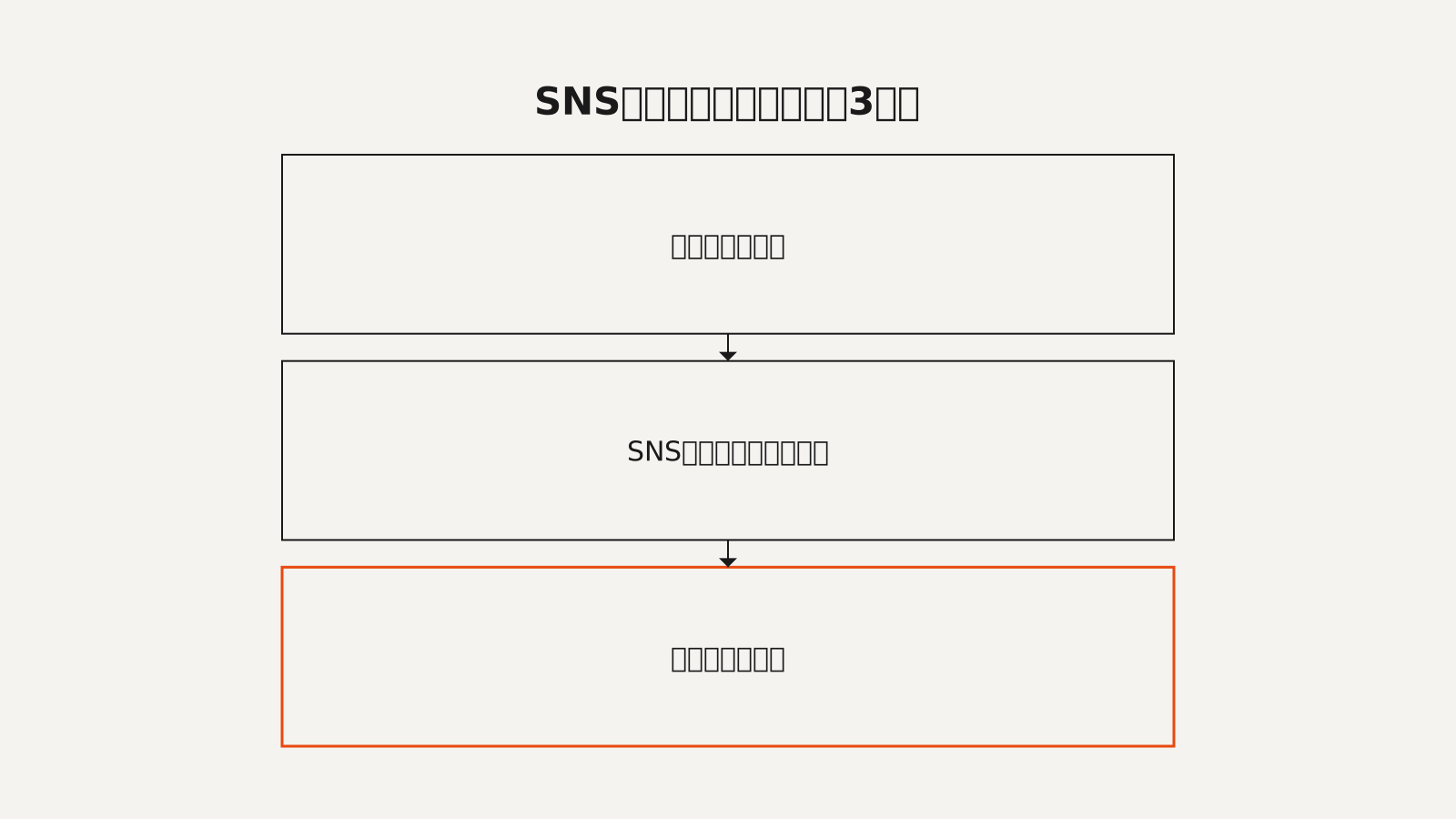
SNS activation refers to an approach to activation that designs not just the experience itself, but also extends the design to cover how that experience gets talked about on social media. Unlike traditional event initiatives, it doesn't stop at the experience of people who attend the venue—from the very start of planning, it assumes that the experience will reach people outside the venue through posts and shares.
| Element | What it involves | Why it's necessary |
|---|---|---|
| Designing the experience | Preparing the content and setting of an experience that attendees can describe in their own words | Without a tellable experience, there's no trigger for posting in the first place |
| Enabling SNS spread | Placing locations and mechanisms within the venue that make photographing and posting easy | Even a great experience can go unexpressed if it's not easy to post about |
| Measuring the results | Measuring post rate, the spread of mentions, and subsequent branded searches | Attendance numbers alone don't reveal whether the experience actually reached people outside the venue |
What's the Difference Between SNS Activation and Brand Activation?
Brand activation, as covered in What Is Brand Activation? The Basics of Event Design in the SNS Era, is a broader term referring to the overall range of initiatives that translate a brand's worldview or products into forms that attendees can experience. SNS activation is a subset of brand activation that extends the scope of design to include the point at which the experience gets talked about on social media. The two concepts aren't in opposition—it's easier to understand SNS activation as one particular approach to designing brand activation. The reason for distinguishing the terms is to clarify, at the planning stage, whether or not the occurrence of posts and shares is being treated as part of the design from the outset. If you build out the venue experience in full detail and only later try to bolt on mechanisms that lead to posting, the design of the experience and the design of the posting behavior end up misaligned, and both tend to fall short.
What Kinds of Initiatives Are a Good Fit, and What Kinds Aren't?
Good fits are initiatives that have elements that can't be conveyed unless attendees experience them firsthand. For example, a launch event where attendees can actually try a new product's scent or texture, or a limited-time pop-up that presents a brand's worldview as a physical space—these have elements within the experience itself that make people want to put them into words, and designing them as SNS activation tends to produce strong results. For instance, a limited-time experiential facility featuring multiple brands, structured so that attendees can explore at their own pace, is also a good fit, since it's easy to place photo and posting triggers within each zone. On the other hand, press conferences aimed at accurately conveying information, or business-meeting-focused settings limited to a very small number of attendees, prioritize accuracy of content over spreading the experience, making SNS activation design less necessary. Misjudging this fit tends to result in a well-crafted experience that nonetheless fails to generate posts.
What Does the Process Look Like?
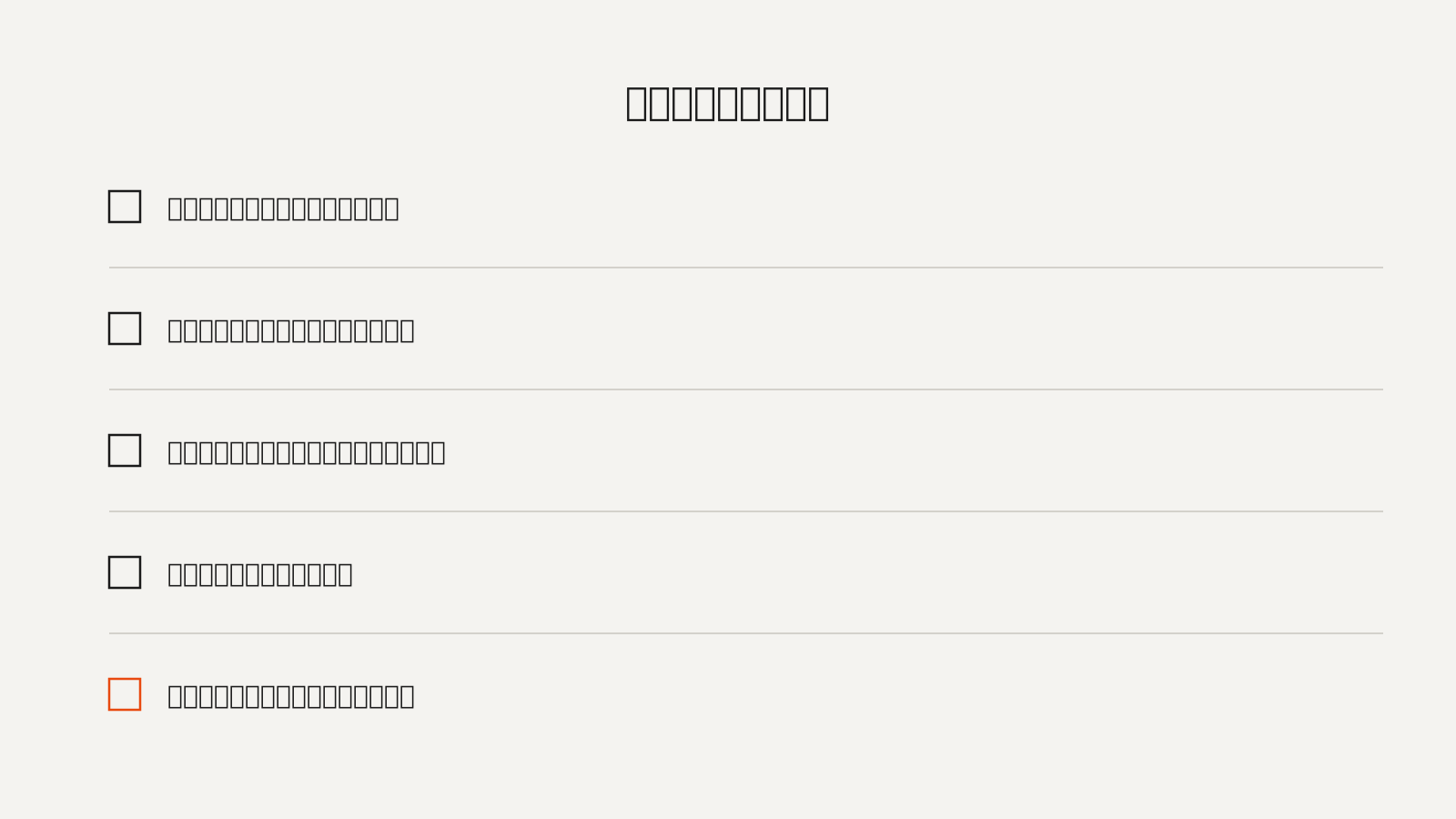
- Decide on the objective (is the goal to broaden awareness, or to deepen brand understanding?)
- Decide who you want to reach and the direction of the message you want people to express
- Translate the content of the experience and the posting-friendly locations/mechanisms into the venue design
- Decide who to invite and the flow of on-the-day operations
- Measure post rate, the spread of mentions, and subsequent branded searches, and feed the results into the next round of design
For inquiries about having us handle everything from experience design to measurement, see our SNS Activation service page.
How Should Results Be Measured?
Actual figures are presented in our previously published articles as well. Event Attendee Post Rate of 94.6%—The Assumptions Behind Estimates Shift Around the 10-Person Mark covers the relationship between the number of invitees and the post rate. When explaining the effects of SNS activation internally, reporting not just attendance numbers but also this post rate alongside changes in subsequent branded searches makes it easier to demonstrate whether the experience actually reached people outside the venue. If attendance numbers alone are reported as the outcome, there's no way to know whether the experience reached beyond the venue.
What Are Common Misconceptions When Adopting This Approach?
If a plan is driven solely by the goal of "getting talked about on social media," the number of posts may increase while brand understanding fails to deepen. Creating triggers for posting and deciding the direction of what you want people to say about the brand are two separate design tasks, and both need to be decided in the early stages of planning. It also helps to avoid misunderstanding by sharing internally the premise that SNS activation is not a one-off initiative aimed solely at generating buzz, but a design approach that conveys the experience outward while maintaining its quality.
Scope of This Article
This article covers the definition of SNS activation, its relationship to brand activation, when it's a good fit, and how the process unfolds. The effectiveness of specific initiatives and concrete post-rate targets vary depending on the conditions of each project, so no judgment is made on those here.
Closing Thoughts
SNS activation is an approach that considers, from the very start, the design of the experience and the point at which it gets talked about on social media as a single continuous process. If you try to measure success by attendance numbers alone, you'll overlook whether the experience actually reached people outside the venue. We place importance on thinking through both experience design and measurement together.