Why Measuring Sponsored Collaborations and UGC Requires Separate Metrics
This article was automatically translated from the Japanese original. Read the original in Japanese

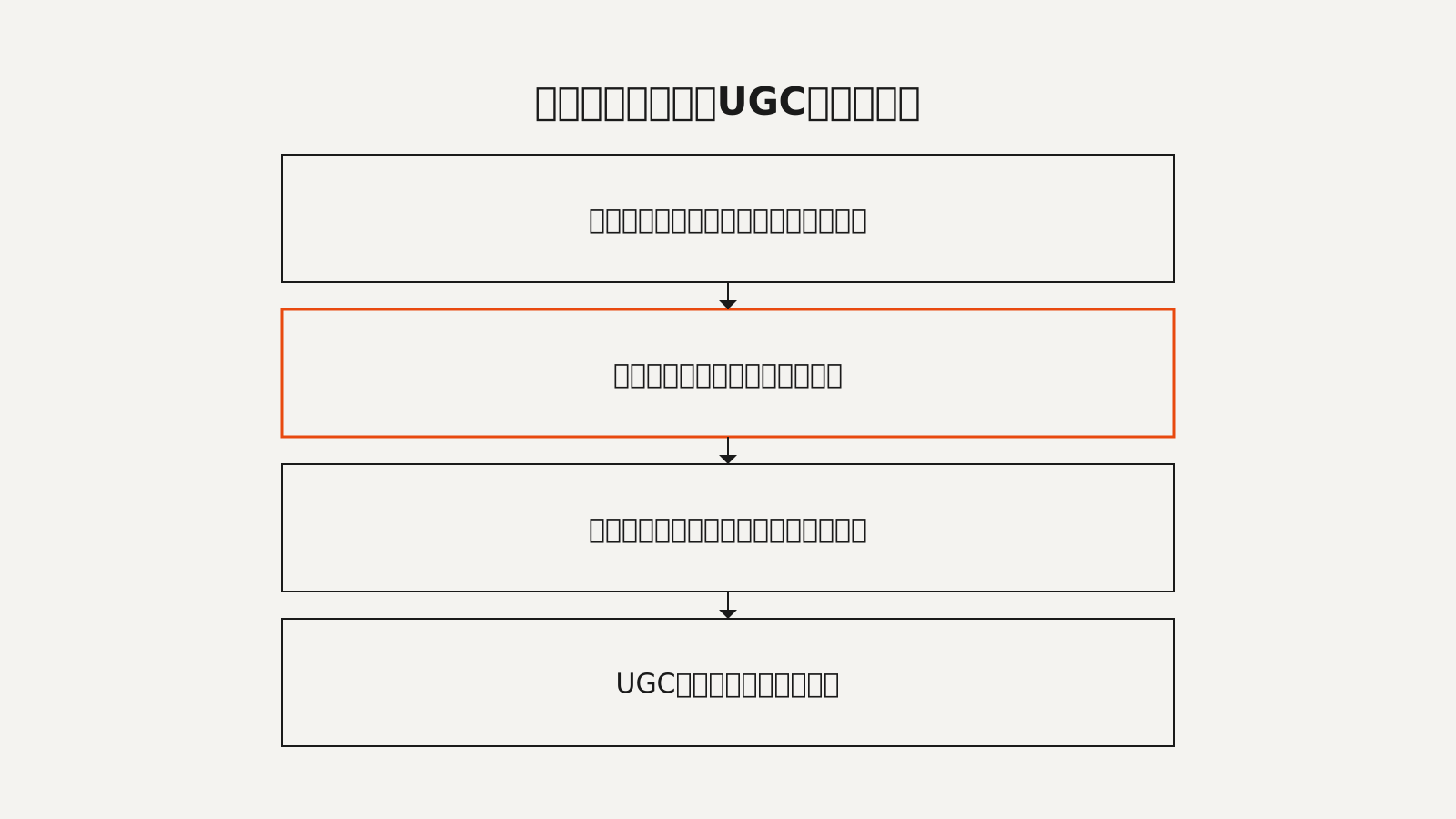
Sponsored collaboration posts and UGC should be tallied separately because they arise from fundamentally different mechanisms. Sponsored collaboration posts represent commissioned outcomes, evaluated as a direct output relative to the number of people engaged and the terms agreed upon. UGC, on the other hand, is a ripple effect triggered by the campaign—the result of people who weren't commissioned reacting spontaneously. If these two are combined into a single "post count," it becomes impossible to distinguish the direct effect of the campaign itself from the secondary reactions it provoked.
What Do Sponsored Collaboration Posts Actually Measure?
Sponsored collaboration posts indicate how much output was generated relative to the number of people engaged and the conditions set. As discussed in What Is UGC? Its Relationship with Sponsored Collaborations and How to Leverage It (Basic Guide), because the correspondence is clear—how many people were commissioned and how many of them actually posted—this metric can be used directly to inform future casting decisions.
What Does UGC Actually Measure?
UGC is the result of people who weren't commissioned reacting spontaneously after seeing a campaign—it's a number that shows how much reach the campaign as a whole generated. Because it doesn't directly correspond to the number of people commissioned, it can't be used as a basis for casting decisions. However, it becomes a crucial reference point when reviewing whether the overall campaign design was sound.
What Happens When the Two Are Combined?
As discussed in Why Casting Decisions and Campaign Evaluation Require Different Measurement Metrics, combining figures with different purposes reduces the accuracy of both types of decision-making. If you add the UGC count to the sponsored collaboration post count and report simply that "the total number of posts was high," neither the value of results relative to the number of people commissioned nor the value of the ripple effect the campaign generated remains clear.
How Should These Be Presented Separately in Reporting?
As a matter of practical convention, the number of sponsored collaboration posts and the number of UGC posts should be presented as separate rows or separate tables. As also noted in How to Explain Influencer Campaign Results Beyond Sales, when explaining results other than sales, clearly indicating what each number represents prevents misunderstanding on the part of the reader.
Sponsored collaboration posts and UGC are not a matter of which is superior—they differ in purpose, in terms of what each number is meant to evaluate. Simply keeping this distinction in mind will improve the accuracy of your campaign reporting.