Invitation Design to Improve RSVP Response Rates — Why Attendance Confirmations Don't Come In, and How to Fix It
This article was automatically translated from the Japanese original. Read the original in Japanese

An RSVP is an invitee's expression of intent in response to an invitation—whether they will attend or not. Between sending the invitation and the day of the event, organizers must make many decisions based on expected attendance: venue layout, seating arrangements, catering quantities, and on-site reception setup. Anyone who handles invitation-only events has likely experienced the situation of having to move forward with preparations while responses are still trickling in.
When RSVPs don't come in, our first assumption isn't that "many people simply don't intend to attend." Instead, we start by checking whether the invitation design itself contains factors that discourage responses. This article frames the causes of low RSVP collection on the invitation side, and examines invitation design for improving collection rates from the perspective of the response pathway, deadlines and reminders, and the connection to the day of the event.
An RSVP Is an Expression of Attendance Intent in Response to an Invitation
RSVP refers to the entire mechanism by which invitees respond with their attendance status. The term originates from the French phrase "Répondez s'il vous plaît" (please respond), which has long been used as a standard phrase requesting an attendance reply within invitations.
For public events, attendance is generally open, and confirming attendance in advance isn't essential. Invitation-only events, however, presuppose that the attendance of invited guests is known ahead of time. This is because venue size, seating arrangements, and on-site reception setup are all built around expected attendance numbers. We view the RSVP as the process that connects the "request" made in the invitation to the "preparation" required for running the event on the day.
The Cause of Missing RSVPs Often Lies with the Invitation Itself
When responses don't come in, organizers tend to assume that interest is low. However, in our experience working on invitation-only events, the reasons responses fail to come in most often lie not with the invitees, but with how the invitation itself was designed.
We generally identify five main causes: the effort required to respond, unclear response deadlines, invitations that don't provide enough information to judge what the event actually is, response channels split across multiple methods, and the absence of a reminder design to prompt responses.
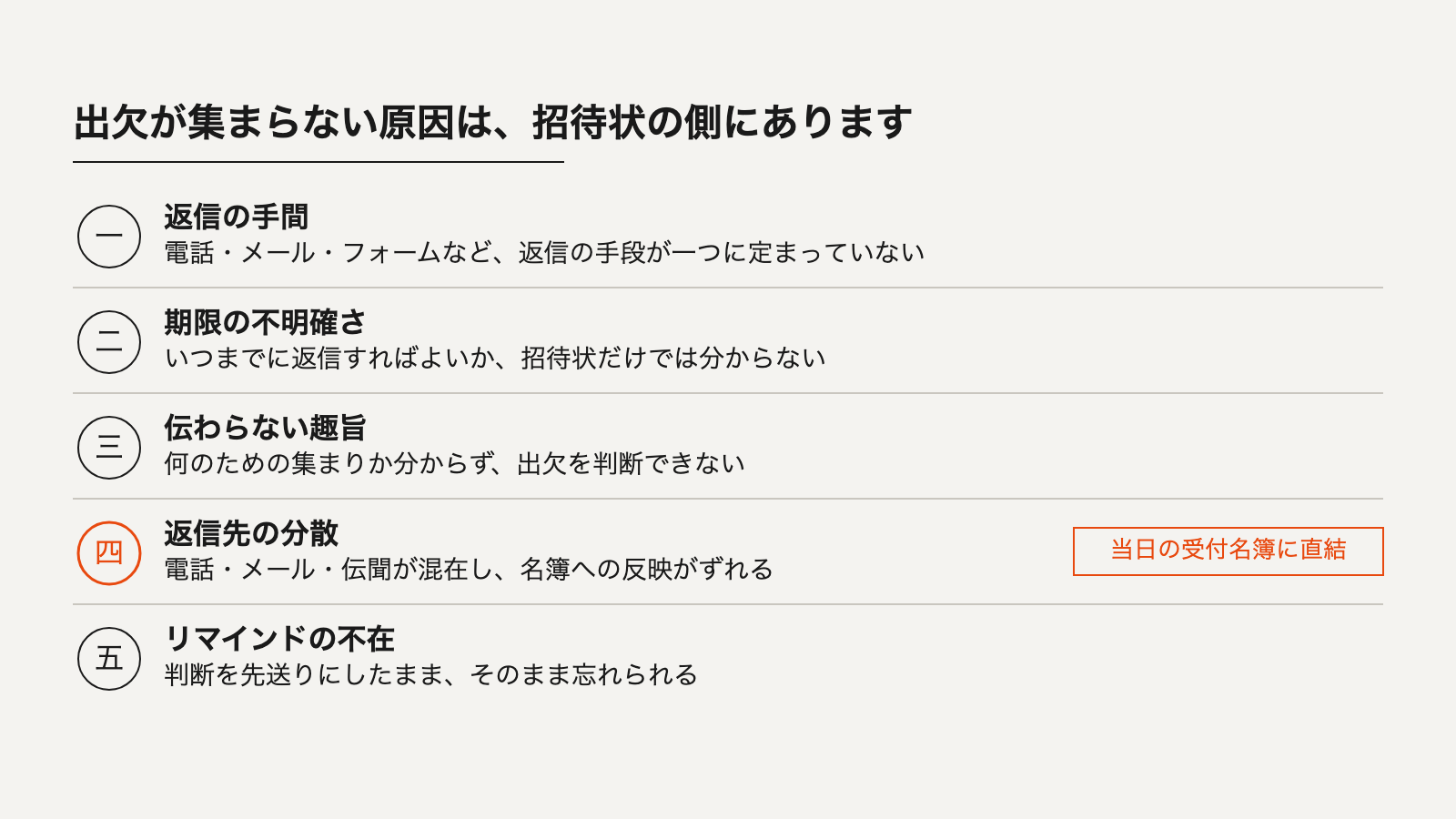
Figure 1: Five causes of low RSVP collection (invitation side)
These causes are not independent of one another—they compound to lower response rates. For example, if responding requires significant effort and the deadline is also vague, a postponed response is likely to be forgotten altogether. Breaking down these causes individually and translating them into design decisions is the starting point for improving collection rates.
The Effort Required to Respond Determines Whether People Respond at All
For recipients of an invitation, responding isn't the main event. Checking their schedule, deciding whether to attend, and communicating that decision to the organizer is, from the invitee's perspective, an incidental task. The greater this effort, the more likely the response is to be postponed and ultimately never sent.
Designing to reduce response effort means consolidating the response channel into one, and limiting the information requested to essentials such as attendance status and whether a companion will be joining. When response methods are split across phone, email, and a dedicated form, invitees become uncertain about which to use, which tends to result in the response being put off. Designing the response itself to be completable in a single action is effective for reducing this effort.
Deadlines and Reminders Should Be Designed as a Set
Simply stating a response deadline doesn't guarantee that responses will come in. A deadline is information that tells invitees "by when they need to decide"—it is not a mechanism that reminds them to actually respond.
What we consider important is treating the communication of a deadline and the notification that the deadline is approaching as two separate design elements. Immediately after an invitation is sent, many recipients have not yet finalized their plans. In our experience, when responses are slow to come in, it is more often because the person is busy or still coordinating other commitments, rather than a lack of interest. Sending a courteous reminder as the deadline approaches—only to those who haven't yet responded—can nudge along people who had been putting off their decision.
How reminders are communicated also requires care. Sending a uniform notice even to those who have already responded can come across as a demand for a reply. By building into the design from the outset who receives what message and when, reminders arrive not as pressure to respond, but as helpful nudges that support a decision.
The Information in the Invitation Becomes the Basis for the Decision to Respond
When an invitation contains too little information, invitees cannot determine whether to attend. What is the purpose of the event? What format will it take? How much time should they set aside? If these details aren't communicated, being asked to confirm attendance leaves the invitee with no way to judge, and the response is left pending.
What we check when designing an invitation is whether the information invitees want to know before responding is fully contained within the invitation itself. If, in addition to the date and venue, the purpose of the gathering and how the day will unfold are communicated clearly, invitees can plan their schedules more easily and reach their decision faster. Cutting information down too far is not the same as reducing effort. The key point of design is to remove only the procedural burden while retaining the information necessary to make a decision.
Splitting Response Channels Causes Attendance Data to Drift On-Site
Related to the issue of response effort, having multiple response channels also creates a separate problem for organizers. When responses come in by phone, by email, and secondhand through a representative, the organizer must consolidate all of this information into a single list. If anything is missed during this consolidation, it can lead to situations at the door where a guest's name isn't on the list.
Attendance information ultimately becomes the reception list used on the day of the event. Much of the reason invitation-only events see lines forming right after doors open isn't due to the reception process itself, but the accuracy of the list behind it (we cover this in more detail in our guide to reception design for invitation-only events). Consolidating response channels into one not only reduces the effort for respondents—it also keeps the reception list unified from the very start.
Design So That Attendance Data Becomes the Reception List As-Is
The four perspectives covered so far—response effort, deadlines and reminders, invitation content, and consolidated response channels—are not independent improvements. They are elements of a single, continuous design that spans from the invitation to reception on the day of the event.
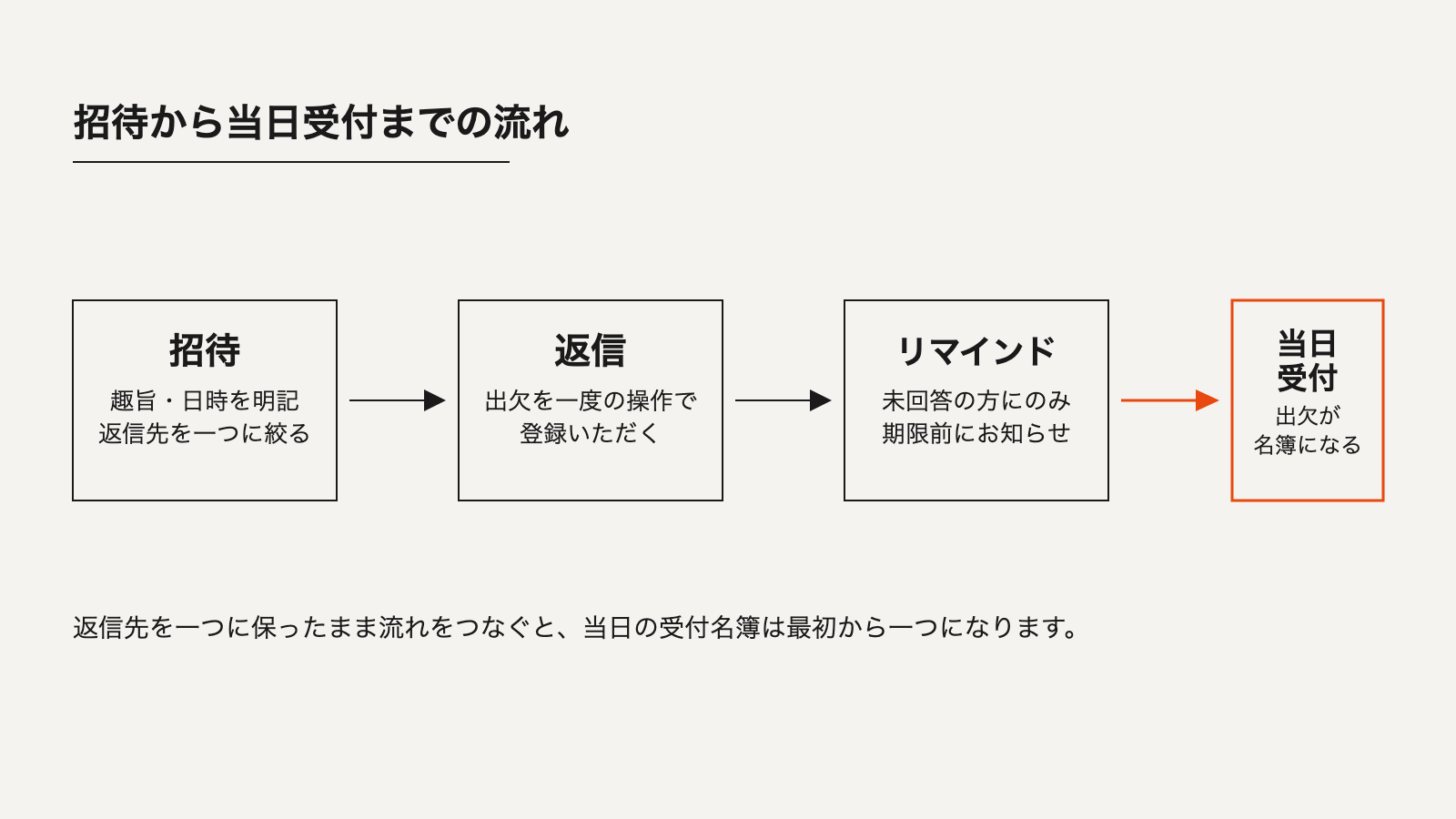
Figure 2: The flow from invitation to reception on the day of the event
What we focus on in practice is treating the design for reducing response effort and the design for maintaining a unified reception list not as separate concerns, but as a single continuous flow. If response channels are consolidated from the start, the attendance data collected becomes the basis for the reception list as-is, eliminating the need to rebuild the list midway through. We also cover how to connect invitations, responses, reminders, and reception on the day in our article on QR-coding event reception.
The deciding factor here is the scale of the guest list. For small gatherings, phone calls or individual exchanges may be enough to track attendance. As the number of invitees grows, however, the risk of missed updates from fragmented response channels, and the effort of sending individual reminders, both increase. We also touch on how the scale of invitation-only events affects post-event engagement in our article on scale effects seen in post rates for event initiatives, but designing the attendance collection process carefully from the start matters even more as event scale increases.
Scope of This Article
This article focused specifically on improving RSVP response rates through invitation design. It does not cover the design or tone of the invitation itself, criteria for setting the number of invitees, operational handling of cancellations or absence notices, or criteria for deciding whether companions or proxy attendees are permitted. Reception operations on the day of the event are also outside the scope of this article. How to handle guests who never respond, and how response history should inform future invitation decisions, are likewise outside the scope of this article.
Closing Thoughts
If low response rates are dismissed as simply a matter of invitee interest, the next invitation will carry the same underlying causes forward unchanged. Response effort, deadlines and reminders, invitation content, and consolidated response channels—revisiting these four elements as part of invitation design is, in our view, the first step toward improving RSVP collection rates.