Which PR Disclosure Wording Is Enough? Understanding the Differences Between "#PR," "#Provided," and "#SponsoredCollaboration"
This article was automatically translated from the Japanese original. Read the original in Japanese
PR disclosure wording is sufficient as long as ordinary consumers can tell that the post is an advertisement, for example "Ad," "PR," "Promotion," or "This post was made after receiving a product from Company A." Making the text smaller, making the color lighter, or burying the disclosure among a large number of hashtags is not accepted (operational standards of the Consumer Affairs Agency's guidance on stealth marketing under the Act against Unjustifiable Premiums and Misleading Representations, confirmed October 2026).
| Wording / format | Clarity | Reason |
|---|---|---|
| "Ad," "PR" | Sufficient | Clearly tells ordinary consumers that the post is an advertisement |
| "Promotion" | Sufficient | Equally clear. Even easier to understand when combined with the platform's sponsored collaboration label feature |
| "This post was made after receiving a product from Company A" | Sufficient | Specifically explains the relationship with the business |
| Making the text smaller or lighter in color than the surrounding text | Insufficient | Low visibility makes it hard to notice the post is an ad |
| Burying it among a large number of hashtags | Insufficient | Easily overlooked among the other tags |
Why Is "Clear to Ordinary Consumers" the Standard?
Under the operational standards for the stealth marketing regulation, the judgment depends not only on whether the business is involved in the content of the post, but also on whether it is clear to ordinary consumers that the post is an advertisement. Even if words like "PR" or "Ad" are themselves acceptable, the standard is not met if the placement or presentation makes the disclosure effectively unrecognizable. For example, even if "#PR" appears at the end of a post, if it is preceded by nearly 30 unrelated hashtags, readers may stop reading before they reach it and never realize the post is an ad. Likewise, if a disclosure flashes on screen only briefly at the start of a video and the main content never mentions it, the display is too short to be recognized and becomes a problem. Because the standard is whether the message reaches ordinary consumers, you need to think less about whether the wording is technically correct and more about how people who actually see the post will perceive it. It is important not to skip the step of checking the finished post as it actually appears, rather than merely confirming that the requesting side "had the disclosure added."
Who Should Check What?
Brand representatives need to specify in advance, in the format for the requested post, which wording should be placed where. Agencies are responsible for checking the visibility of the wording (text size, color, and hashtag position) as it actually appears at the pre-posting review stage. Influencers themselves can make the post's advertising nature more certain by using both the wording and any platform feature, such as a sponsored collaboration post label, when one is available. Since influencers are often accustomed to the formats and layouts they use every day, asking for their input on where the wording will naturally catch the eye improves the accuracy of how it will actually appear. For platform-specific display positions and features, see How Should PR Disclosures on Sponsored Collaboration Posts Differ on Instagram, YouTube, and TikTok?. Thinking about these three roles separately at the request stage reduces the hassle of discovering after posting that the disclosure was insufficient and having to ask for a correction. Rather than leaving responsibility for how the wording appears to just one of the three parties, it is a practical safeguard to set up a system in which the requesting side, the reviewing side, and the posting side each check the appearance from their own standpoint.
What Should Be Decided at the Request Stage?
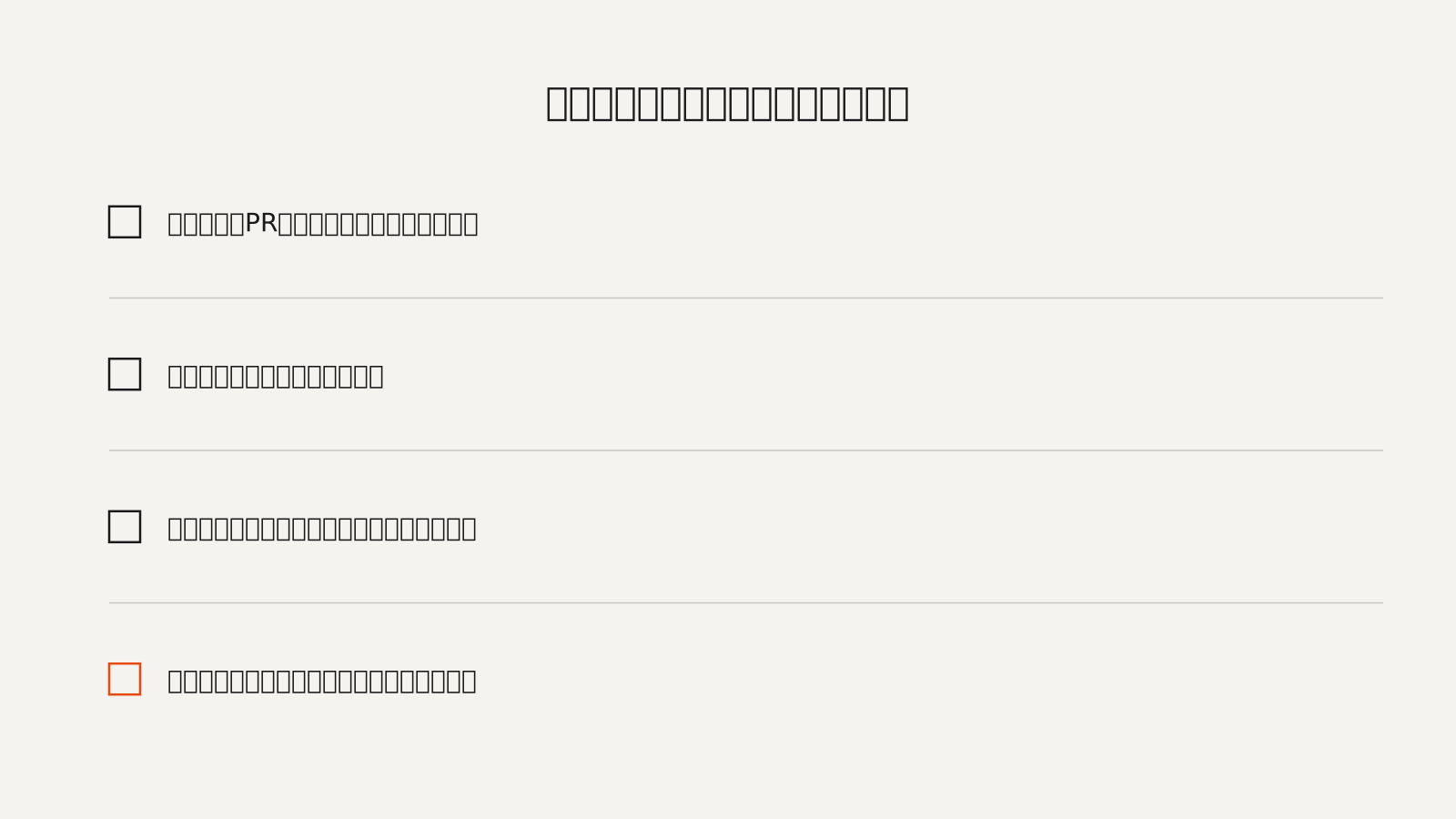
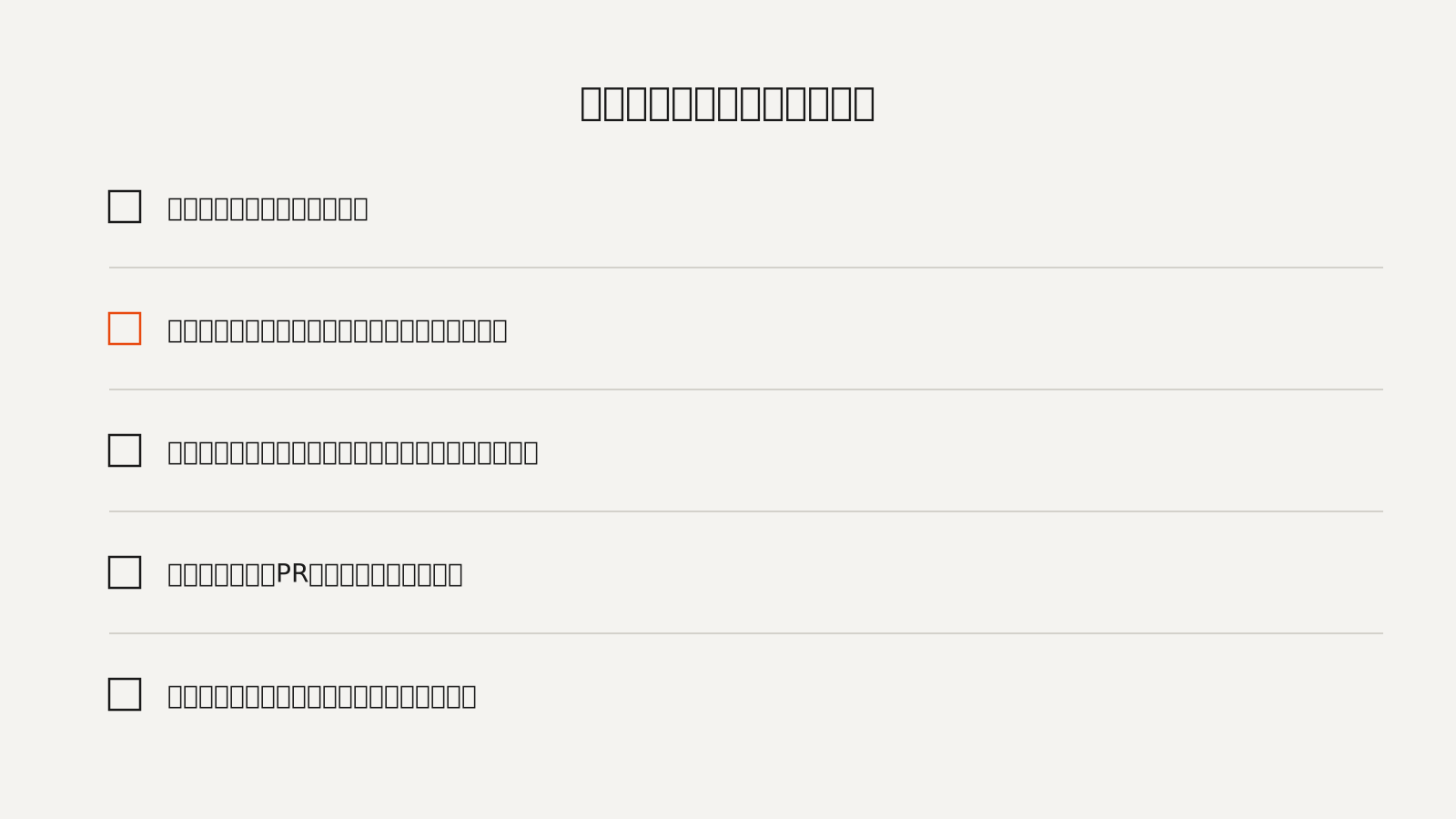
- Specify the exact wording to use, such as "Ad," "PR," or "Post made after receiving provided product"
- Specify the placement of the wording at the beginning of the post or in a place that is immediately visible
- Confirm that the text size and color are comparable to the other text
- If many hashtags are used, place the PR hashtag where it will not be buried
- If the platform has a display feature, such as a sponsored collaboration post label, use it together with the wording
What Are Common Misconceptions?
It is a misconception to think that writing "#PR" once is fine no matter where it appears. As explained in What Is PR Disclosure for Sponsored Collaboration Posts? Stealth Marketing Regulation Basics and Practical Templates, both the judgment of whether a disclosure is required and the judgment of whether the disclosure is written sufficiently rest on the same standard: whether it is clear from the ordinary consumer's point of view. Do not feel safe just because the wording exists; you need to check how it actually appears. Another misconception is that using the same placement and the same phrasing every time is automatically safe. Because appearance varies with platform specifications and post format (feed, Stories, video, etc.), you need to recheck how the disclosure appears in each format whenever the format changes.
Scope of This Article
This article covers what kinds of wording are sufficient for PR disclosure. It does not cover platform-specific display positions or how to use platform features, nor the final judgment of whether an individual post falls under the regulation. It also makes no determination on how to handle disclosures written in languages other than Japanese.
Conclusion
The PR disclosure wording itself is sufficient if it uses general terms such as "Ad" or "PR." What matters, we believe, is not whether the wording is present, but whether it appears in a way that actually reaches ordinary consumers. Deciding the wording and its placement concretely at the request stage is the shortest path to reducing correction requests after posting.