How Should You Evaluate Results When KPIs Weren't Agreed Upon in Advance?
This article was automatically translated from the Japanese original. Read the original in Japanese

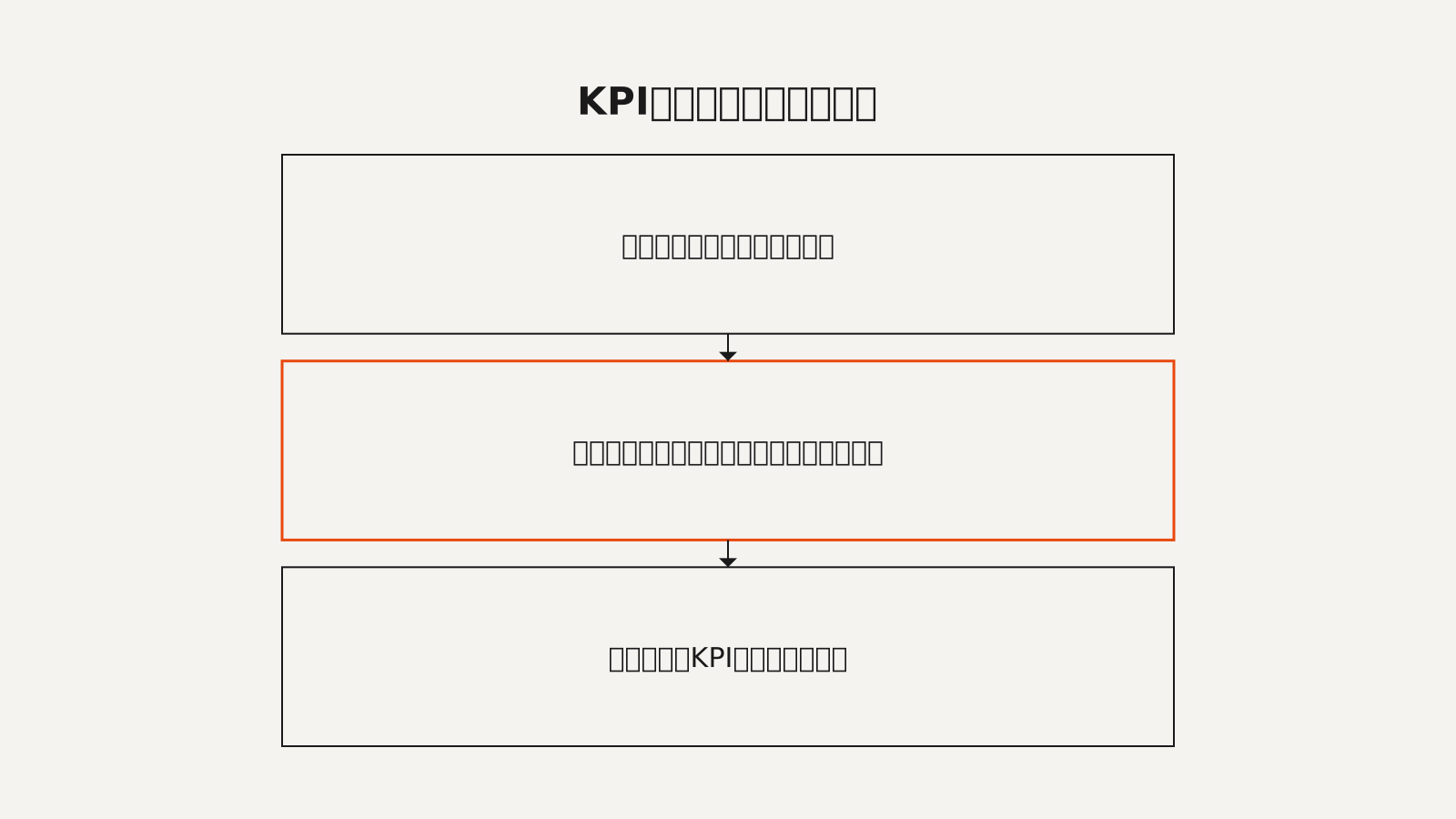
When KPIs haven't been agreed upon in advance, rather than setting KPIs after the fact, you should return to the objective of the initiative, qualitatively organize what was achieved and what challenges remain, and use that to inform KPI design for the next initiative.
Why shouldn't you set KPIs retroactively?
If you set KPIs after looking at the numbers, you tend to retrofit benchmarks to match whatever numbers happened to turn out well. This doesn't amount to a proper review of whether the initiative succeeded or failed. As discussed in Designing KPIs for Influencer Initiatives — How to Combine Reach, Engagement, and Branded Search, KPIs should originally be built in advance by working backward from the initiative's objective. Since agreement wasn't reached beforehand, you shouldn't force the appearance of KPIs after the fact—instead, you should start with a qualitative review that returns to the original objective.
What does it concretely mean to return to the objective and organize things?
First, put into words what the initiative was originally meant to achieve. Then, look at what actually happened (reactions to the post, the content of comments, the influencer's own sense of how it went, etc.) and, measuring it against that objective, sort it into what was achieved and what challenges remain. As discussed in How Should You Explain the Results of Influencer Initiatives Beyond Sales?, even without quantitative metrics, organizing qualitative information in line with the objective can still explain the significance of the initiative.
How should this be reflected in KPI design for the next initiative?
Bring what this review revealed—"what was achieved" and "what the challenges were"—into the KPI design stage when planning the next initiative. As discussed in What Should You Track Immediately After a Sponsored Collaboration vs. One Month Later?, the timing and metrics that should be measured vary by initiative, so directly applying this review to the design of the next initiative is a practical measure to avoid repeating the same mistake of failing to agree on KPIs.

Scope of this article
This article addresses how to review an initiative that ended without KPI agreement. It does not cover the specific methodology for designing KPIs themselves.
Conclusion
When KPIs weren't agreed upon in advance, we believe the practical approach to post-hoc evaluation isn't to forcibly retrofit numerical benchmarks, but rather to return to the objective, organize things qualitatively, and apply those insights to the design of the next initiative.