Inviting Influencers to Brand Events — From Guest List Creation to Post Verification
This article was automatically translated from the Japanese original. Read the original in Japanese
When you commission influencer invitations for a brand event, what remains visible to the client is essentially just two moments: "confirming the invitation list" and "the venue on the day." What happens in between often goes unseen. When things proceed without that visibility, decisions like "that candidate already has another commitment" or "how should we follow up on the RSVP?" suddenly land on the client at the last minute, causing a scramble.
Invitation work involves more stages than people tend to assume. You create a guest list, obtain approval, send invitations, manage attendance, welcome guests on the day, verify whether posts were made, and report back. In this article, we break this flow down into seven stages and organize what gets decided at each one, where things tend to stall, and what clients can prepare in advance to speed things up. We can walk through this process so directly because we run it ourselves, day in and day out.
Premise of This Article
Here, "invitation" refers to the full set of tasks involved in inviting influencers as guests to an invitation-only brand event. This covers everything from creating the guest list through post verification and reporting. The planning and staging of the venue itself, as well as the finer details of on-site reception operations, are covered in detail in separate articles; this article focuses on the overall picture of the process and the turning points within each stage.
Invitation work consists of the following seven stages.
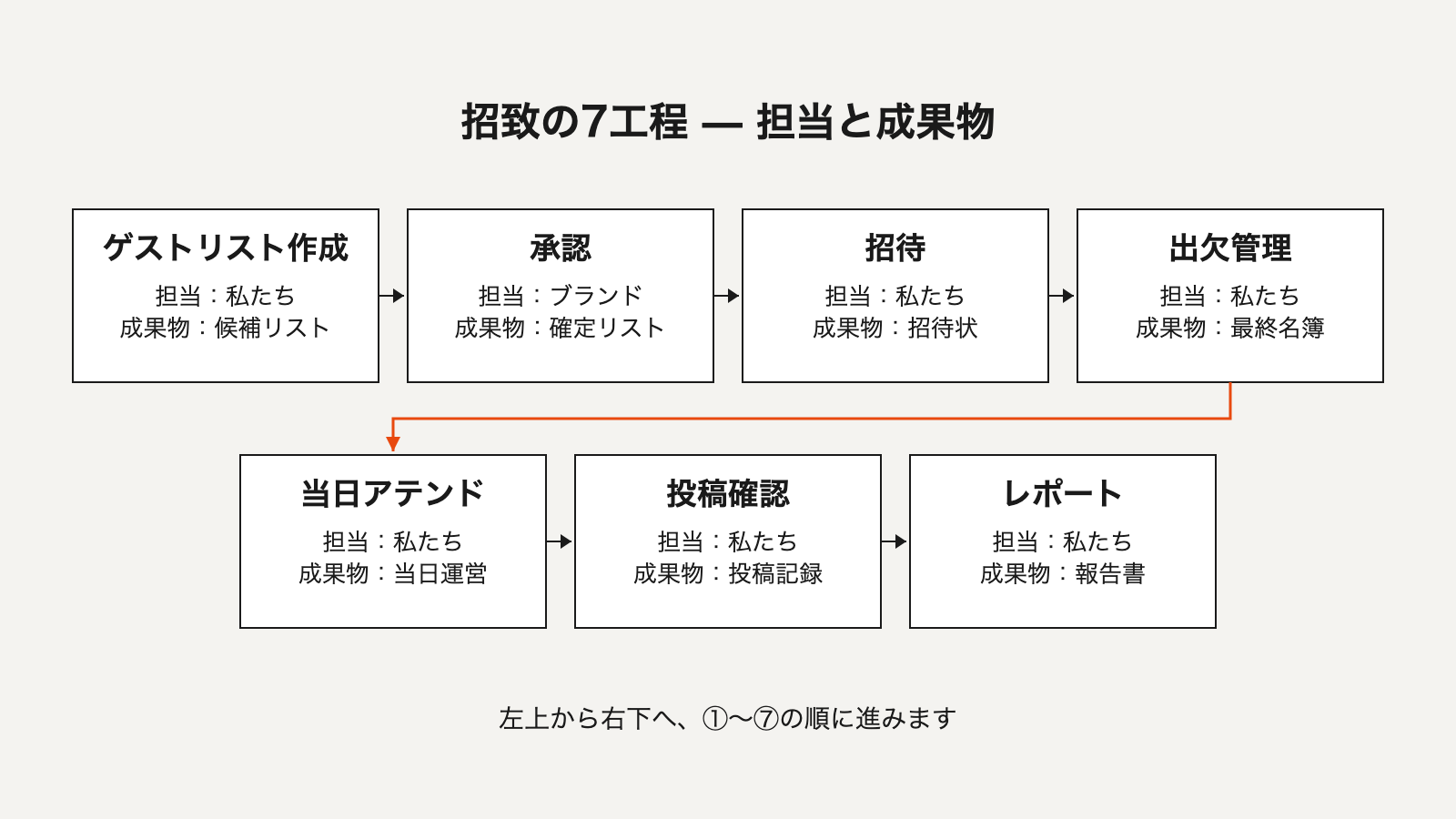
Figure 1: The 7 stages of invitation work, along with who is responsible and the deliverable at each stage
The Speed of Guest List Creation and Approval Depends on the Amount of Information Provided Before the Request
The first stage is creating the guest list. What gets decided here isn't simply who to invite, but rather what combination of guests to invite. Should you line up multiple candidates with different follower demographics, or focus on a specific theme for depth? At this stage, we also check whether any candidates overlap with those invited to a different brand event around a similar time in the past.
Things tend to stall when candidate selection begins before the goals and target audience have been clearly articulated. If the process moves forward based only on a vague condition like "someone who seems likely to generate buzz," candidates may be gathered, but at the approval stage, pushback like "this doesn't match what we had in mind" occurs, leading to more back-and-forth. This structure—where clarity in the initial requirements determines the speed of everything downstream—is common across influencer casting work in general.
Approval is the stage where the final list of recipients for the invitation is confirmed from among the candidates. This tends to stall when there are multiple approvers whose judgment criteria aren't aligned. Even if one person approves, if another stakeholder expresses hesitation, the list gets sent back, pushing back the timing of the invitations by that much. Since invitations require lead time to prepare, the length of this back-and-forth directly compresses the time available for the stages that follow.
What helps speed things up, if clients can prepare it in advance, is reference material on the brand's desired image and world, information on candidates previously worked with, and a single, unified point of contact for approvals. Just having one designated point of contact significantly reduces the number of back-and-forth exchanges.
Invitation and Attendance Management Must Be Designed with Change in Mind
At the stage of sending invitations, what gets decided isn't just the wording and format. It's also the operational design of by when, and in what form, RSVPs should be received. Whether or not the invitation clearly states "what to bring on the day" also affects congestion at reception, so invitation design is directly connected to the stages that follow. How something as simple as the way you communicate the opening time can change the level of congestion on the day is covered in detail in A Guide to Reception Design for Invitation-Only Events.
Attendance management tends to stall when last-minute changes aren't reflected, causing the guest list to split into multiple versions. Every time a decline, a substitution for attendance, or an additional invitation occurs, if the list keeps getting replaced, it becomes unclear on-site which version is the most current. The reason we unify guest attendance and check-in through QR codes is to structurally eliminate this "version splitting" problem; the details of this system are summarized in Converting Event Reception to QR Codes.
What helps speed things up, if clients can prepare it in advance, is designating a single point of contact for changes, and deciding in advance on a policy for whether to accept walk-in additions (uninvited companions accompanying guests). Postponing this decision until the day of the event brings on-site response to a halt.
On-Site Attending Is the Work of Taking On Real-Time Judgment Calls on Behalf of the Client
What gets decided in on-site attending is who is responsible for which scene—from reception, to guiding guests around the venue, to handling photography or media coverage if needed. The unexpected will always happen. Whether a companion shows up unannounced, or a guest can't make it by the start time, whether there's a designated person with the authority to make an on-the-spot decision determines how quickly the situation gets handled.
Things tend to stall when this decision-making authority is concentrated in one person, and while that person is handling something else, other situations come to a halt. The lines that form at reception stem from this same underlying structure—when the pace of processing can't keep up during a rush of arrivals, it surfaces visibly as a queue.
What we prioritize in on-site attending is the premise that creating a memorable experience and creating conditions for that experience to be talked about afterward are two separate jobs. Even if guidance at the venue proceeds smoothly, that alone doesn't lead to posts. Whether photogenic spots and moments are built into the flow, and whether the points the brand wants highlighted have been shared in advance of the event, are considerations that should be included in the design of on-site attending. We cover where to draw this dividing line in Where Does Activation Design Diverge?.
What helps speed things up, if clients can share it before the event, is the points they want highlighted, any elements they'd prefer to avoid appearing in shots, and who has final decision-making authority when something unexpected occurs.
Post Verification Means Recording Whether a Post Was Made and Reporting on It
The final stage is post verification and reporting. What we prioritize here is a clear line: this is not about forcing posts to happen, but about recording whether a post was made and reporting that back to the brand. Since invitation work is not a contract conditioned on posting, but rather an initiative built around inviting someone to an experience, our approach to verification reflects that.
What gets decided is the scope of verification (such as whether PR disclosure is present and how it's displayed) and how long verification continues. This tends to stall when the absence of a post gets treated by us as a matter to be chased up. A post is a response to an experience we offered, not something we're owed. Even when a post doesn't happen, we don't speculate on the reason—we treat it as material to inform the design of the next invitation.
According to our track record, the posting rate among influencers who attend events is quite high (details are summarized in What the Posting Rate of Event Initiatives Reveals About the Impact of Scale). That said, this figure is directly connected to the design of on-site attending. Whether the flow makes photography easy, and whether materials and context were provided early enough, both affect how easy it is for a guest to post. We view post verification not as a standalone stage, but as a mirror reflecting the outcomes of everything that came before it.
In the report, we share with the brand not just the number of people invited and attendance results, but also whether posts occurred and how that looks in light of the original objectives. What's reflected on here feeds into how the guest list is put together and how on-site attending is designed for the next invitation. Invitation work isn't a one-off task—it's a process that should be designed with the next occasion in mind.
Where This Matters — What Clients Can Prepare to Speed Things Up
What becomes clear across these seven stages is that much of the stalling stems from information not reaching the field in time. Organized chronologically, here's what clients can prepare in advance to speed up the entire process:
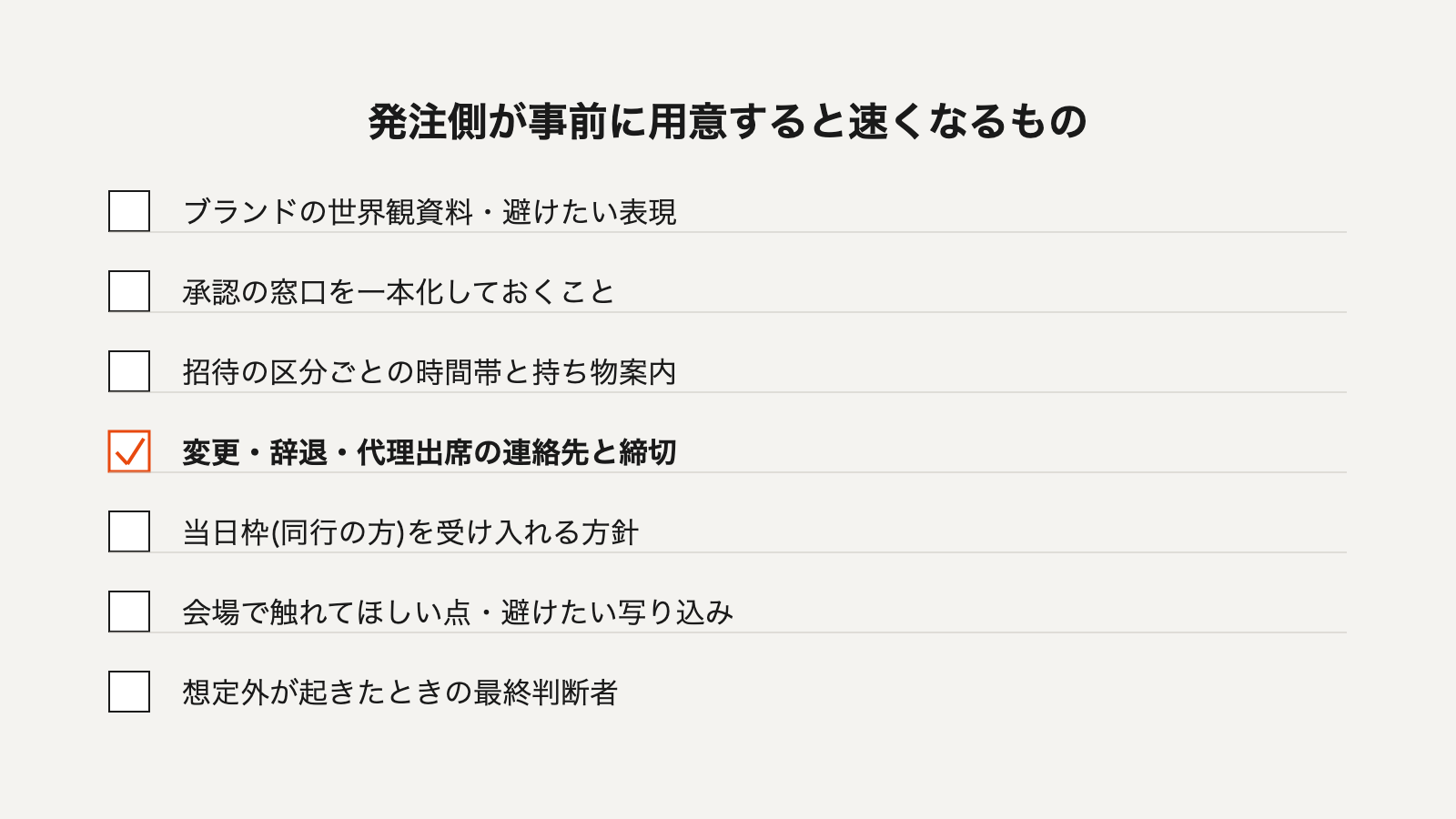
Figure 2: What clients can prepare in advance to speed things up
- Reference material on the brand's desired image and world, along with expressions or combinations to avoid
- A single, unified point of contact for approvals
- Start times by invitation category, and guidance text on what to bring on the day
- Contact information for changes, declines, or substitutions, and the deadline for reflecting them
- A policy on whether to accept walk-in additions (uninvited companions accompanying guests)
- Points the brand wants highlighted at the venue, and elements to avoid appearing in shots
- Who has final decision-making authority when something unexpected occurs
Every one of these is the kind of decision that, if left until the day of the event, brings the on-site operation to a halt. Conversely, when decided in advance, the range of issues we can absorb on our end expands significantly. We believe the value of invitation work lies not in the act of sending invitations itself, but in anticipating these seven turning points every time and addressing them before they cause a stall.
Scope of This Article
This article covers the overall outlook of the invitation process. It does not cover the design of venue planning and staging itself, the finer details of on-site reception operations, or how to design the content of posts themselves. These are covered individually in separate articles. Also, the breakdown of stages presented here reflects our own practical experience, and the relative weight of each stage will vary depending on the scale and nature of the event.
Closing Thoughts
Invitation work is not simply about sending out invitations and waiting for the day to arrive. Each of the seven stages involves decisions to be made, points where things tend to stall, and things that speed the process up if prepared in advance. We believe it's valuable for clients commissioning this work to understand these stages—not so they can leave everything entirely to us, but so we can identify where we can move forward with preparation together.