Designing KPIs for Influencer Campaigns — How to Combine Reach, Engagement, and Branded Search
This article was automatically translated from the Japanese original. Read the original in Japanese

Once an order is placed, there's a question that inevitably comes up internally: "How are we going to evaluate this campaign?" If you reach the execution date without being able to answer this question, you end up retrofitting metrics after the post goes live. KPIs are something you decide before a campaign begins—not something you work backward from the numbers you happen to be able to pull afterward.
This article addresses how to think about building KPIs for influencer campaigns. By combining three layers—reach, response, and action—with two timeframes—immediately after posting and several weeks later—you can evaluate effects that go beyond what direct traffic or follower count changes alone can show. This article does not cover target values or benchmark figures. Since these vary depending on a brand's positioning and campaign objectives, we assume that numerical targets should be discussed on a case-by-case basis.
After placing an order, a common source of anxiety is mistaking "numbers that are easy to see" for "numbers that show real effect." Reach-layer numbers, which can be checked immediately after a post goes live, tend to take center stage precisely because they're easy to report—but that doesn't necessarily mean they're the primary indicator aligned with the campaign's objective. The best way to avoid this misconception is to decide the correspondence between objectives and KPIs beforehand.
KPIs Are a Translation of the Campaign's Objective
Before deciding on KPIs is an exercise in selecting metrics, it's an exercise in translating the campaign's objective. What a brand expects from a campaign generally falls into three categories: "awareness," for shifting a state where the brand is unknown or forgotten; "understanding/attitude change," for shifting a state where the brand is known but understanding or favorability is shallow; and "action," for shifting a state where there is interest but no follow-through action. Influencer campaigns encompass a variety of approaches (see What Is Influencer Marketing?), and the center of gravity shifts depending on which approach is chosen—but the underlying approach to building KPIs remains the same across all of them.
These three categories are not independent of one another; they build on each other in sequence, but each campaign leans toward one in particular. Introducing a new product line will lean toward awareness, while a brand that's already well known and wants to drive concrete purchases or store visits will lean toward action. If this is left ambiguous and you simply decide to "look at reach and engagement for now," the campaign's objective and the numbers you're tracking end up misaligned as the campaign proceeds.
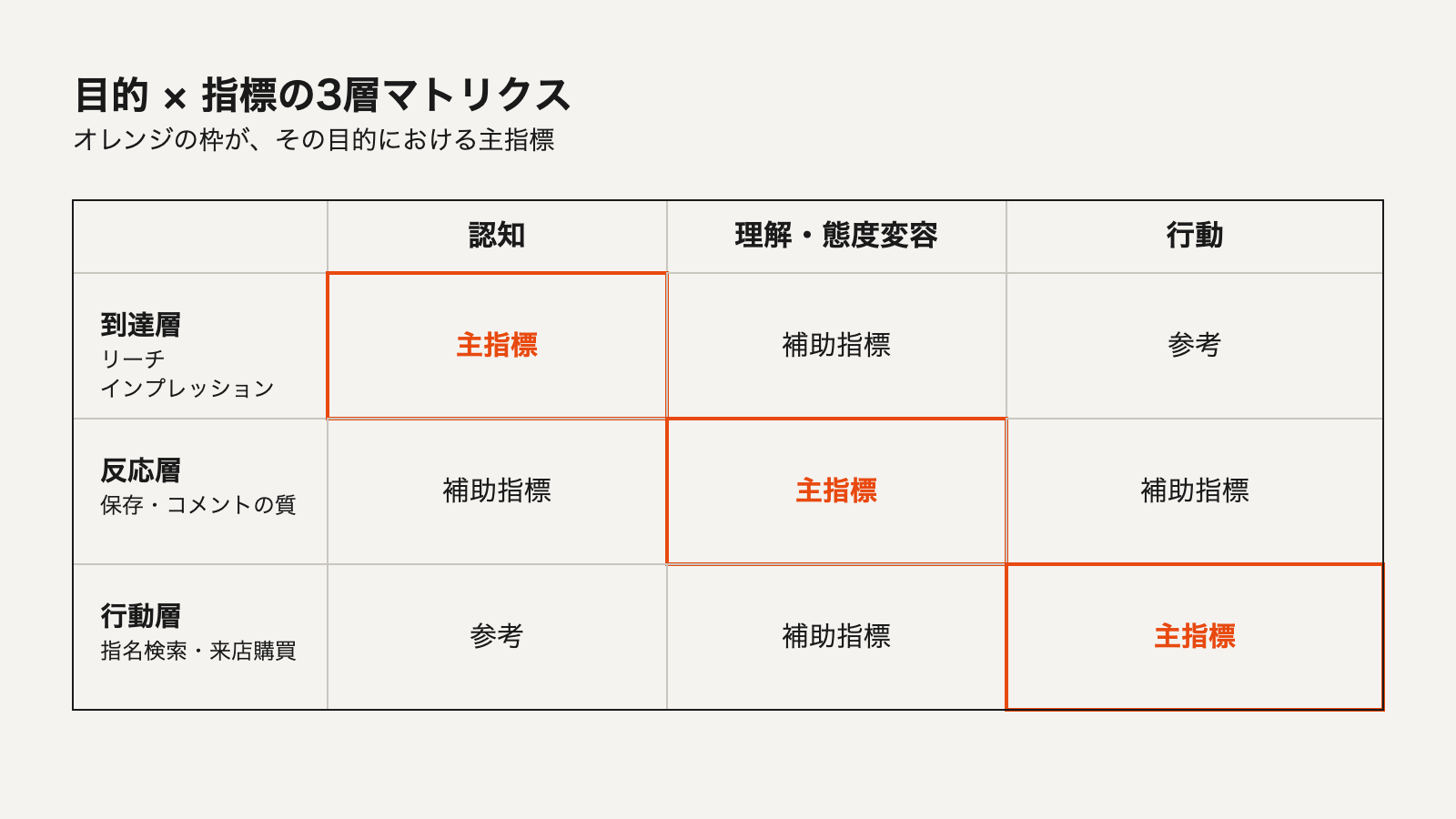
Figure 1: A 3-layer matrix of objectives and metrics
Viewing the Three Layers—Reach, Response, and Action—as a Cumulative Structure
What lies beyond translating the objective is a set of three-layered metrics: reach, response, and action. The reach layer, including metrics like reach and impressions, shows how many people's eyes the post reached. The response layer, including likes, saves, and comment quality, shows how those who saw the post reacted. The action layer, including branded search, profile visits to the brand account, and movements leading to store visits or purchases, shows whether those who saw the post moved on to a next action.
Of these, the response layer is the one most prone to misjudgment if you look only at raw numbers. The number of likes is influenced by posting timing and each platform's display logic, and even influencers with similar follower counts can show significant differences in engagement rate, as discussed in Even Within the Same Follower Band, How Much Does Engagement Rate Vary?. Only by also looking at how many saves a post gets, and whether comments consist of questions and empathy versus single emoji reactions, can you understand the real state of the response layer.
The three layers form a cumulative relationship: without reach, no response is generated, and without response, it doesn't lead to action. That said, which layer serves as the primary indicator depends on the campaign objective decided earlier. If the objective is awareness, the reach layer becomes the primary indicator; if it's understanding/attitude change, the response layer becomes the primary indicator; if it's action, the action layer becomes the primary indicator. The other layers serve as supporting indicators, providing material to help interpret the primary indicator.
The point of looking at layers beyond the primary indicator is to be able to explain why the primary indicator moved the way it did. When the action-layer numbers move, checking how the reach and response layers trended alongside it makes it easier to reproduce the same result in the next campaign. If you only look at the action-layer numbers and stop there, only the result gets recorded, with no understanding of why it happened.
Separate the Numbers That Move Right After Posting from Those That Take Effect Weeks Later
Another factor worth combining is the timeframe. Numbers that move immediately after a post and numbers that only become visible weeks later have different characteristics.
What moves immediately after posting includes impressions and the initial burst of likes, saves, and comments. These take rough shape by the day after the campaign runs. Meanwhile, trends in branded search, movement in the brand's official account followers, and responses reflected in store visits or purchases emerge gradually over the course of several weeks after posting. This is because people who see the post don't react on the spot—instead, they search later or visit a store when they happen to remember it.
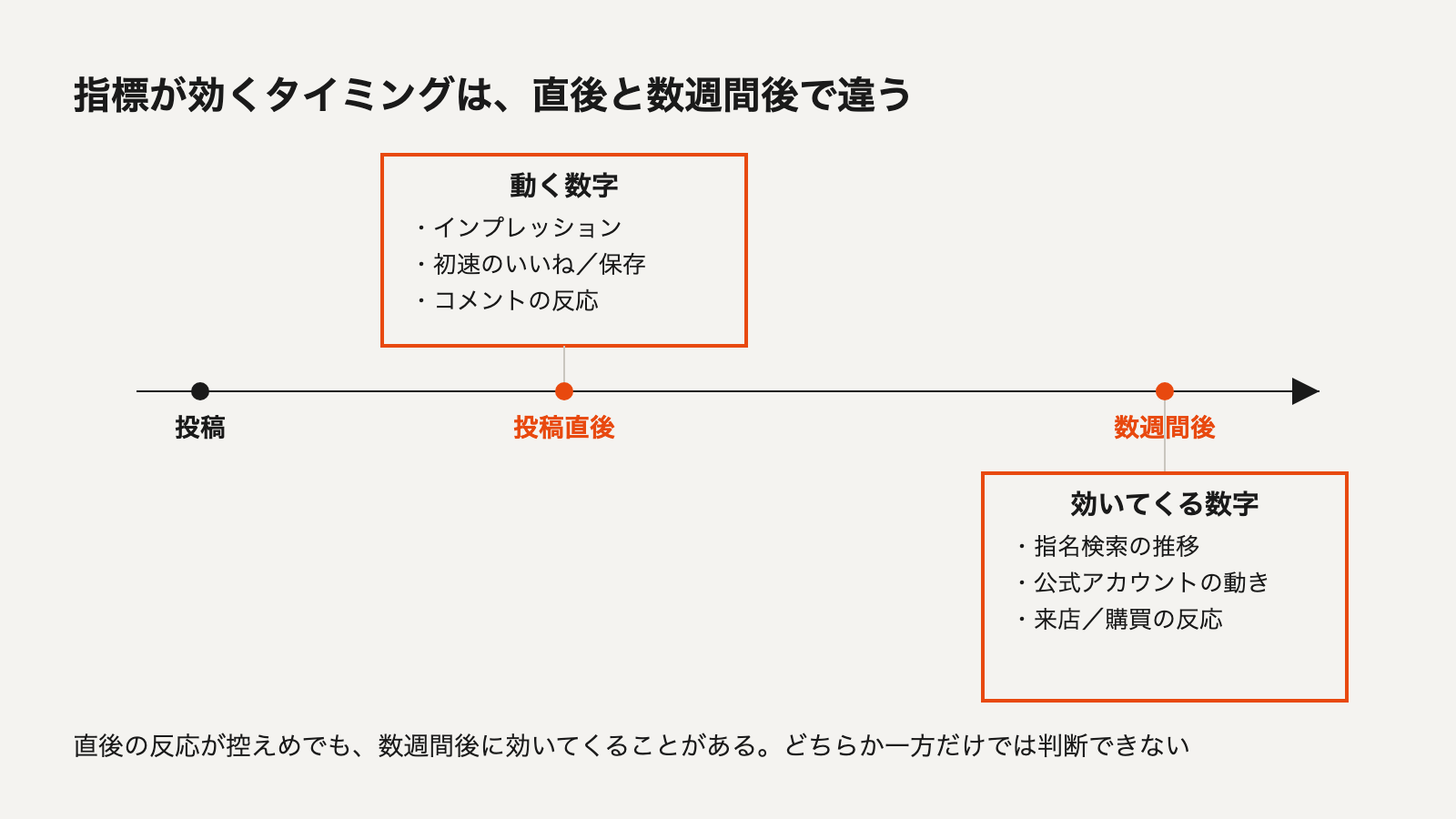
Figure 2: The timing at which metrics take effect differs between right after posting and several weeks later
There are two judgment errors that commonly occur here. One is judging the success or failure of a campaign based only on the numbers immediately after posting. It's not uncommon for a campaign with a modest initial response to still drive branded search or store visits weeks later. The other, conversely, is declaring the entire campaign a success based on good immediate numbers and ending the evaluation there without tracking what happens weeks later. Even if the immediate response is strong, it may never translate into action. Neither number, on its own, provides the answer for a campaign.
Position Growth in Branded Search and Brand Mentions as Action-Layer Indicators
A concern we often hear from clients is: "If direct traffic from the post is low, it looks like the campaign isn't working." This is worth clarifying. Most people who see an influencer's post don't tap the link in the post on the spot—instead, they later search for the brand or product name on their own. This doesn't mean action isn't happening; it means the action is taking a route other than direct traffic.
Trends in branded search and increases or decreases in brand mentions are action-layer indicators designed to capture this route. Rather than tying them directly to a single individual post, it helps to think of them as an aggregate across the entire campaign, or across multiple posts over a given period—doing so reduces the risk of misreading the numbers. If you limit your action-layer yardstick to direct traffic alone, you risk overlooking action that is actually taking place.
Design Around the Overall Campaign Structure, Not the Numbers of Individual Posts
The three layers and two timeframes discussed so far are not meant to grade the performance of a single influencer. How reach and response move is shaped by the overall structure that we and the brand build together—the combination of influencers engaged, the timing of posts, and how much intent could be conveyed in the briefing.
When response turns out smaller than expected, attributing the cause solely to an individual influencer's reach doesn't lead to improvement in the next campaign. Was the requirement definition ambiguous? Was the combination of influencers misaligned with the objective? Was the posting timing at a point where action-layer indicators were hard to track? What should be reviewed are the factors on the side of how the structure was designed. We think of KPIs not as a tool for evaluating individuals, but as a tool that we and the brand use together to improve the precision of the next campaign.
Our post-campaign reviews are conducted with this premise in mind. Rather than a venue for lining up numbers and ranking them, we design it as a venue for checking whether the way layers and timeframes were combined matched the objective. That way, the review becomes material for improving the next combination of influencers and the precision of the briefing, rather than an evaluation of any individual.
Where to Apply This, and Where Judgment Diverges
How rigorously you build out KPIs can be adjusted according to the scale of the campaign and the depth of the relationship. For a one-off campaign, narrowing down to a single primary indicator and simply recording the action-layer indicator as a note for the next campaign is often sufficient. For an ongoing relationship where campaigns are repeated over time, there's greater value in tracking even the numbers that take effect weeks later on a regular basis and accumulating them as comparison material across campaigns.
Where judgment diverges is on the question of "whether to treat the point when the immediate post-numbers are all in as a checkpoint, or to wait for evaluation until the numbers that take effect weeks later are all in." It's not uncommon for the timing of internal reporting and the timing at which KPIs actually take effect to be out of sync. Deciding in advance—before the campaign begins—when, what, and to whom you'll report helps avoid ending up in a situation later where you say, "We can't evaluate this yet because the numbers aren't in."
Another point where judgment diverges is the order in which KPIs are decided. Rather than lining up whatever numbers are easy to obtain and then retrofitting an explanation of the objective, the order should be to first put the objective into words, then choose the corresponding layers and timeframes. Starting from the numbers that are easy to obtain tends to result in a design where reach-layer numbers dominate and action-layer indicators are left out.
Scope of This Article
This article has covered the approach to determining which layers and timeframes to build KPIs around. It doesn't cover implementation details such as how to measure branded search or brand mentions, or how far to cross-reference action-layer indicators against a company's own sales or store-visit data, since the measurement environment available differs from case to case. It also doesn't touch on target values or benchmarks for achievement for each indicator, since these vary depending on a brand's positioning and campaign objectives.
Closing Thoughts
KPIs are the work of translating an objective before a campaign begins. By combining the three layers of reach, response, and action with the two timeframes of immediately after posting and several weeks later, you can look back on effects that go beyond what direct traffic alone can show. We make KPI design itself part of the preparation for a campaign, building it together with our brand partners.