When Gifting Comes With No Posting Obligation and No Post Follows, Is It Okay to Follow Up?
This article was automatically translated from the Japanese original. Read the original in Japanese
We do not follow up. Once a request has been made through gifting that does not require a post in return, keeping the presence or absence of a post separate from our evaluation of the influencer and our decisions about future requests is the practical standard for maintaining a long-term relationship with influencers. Even when we feel curious, the basic approach is to limit ourselves to a considerate message such as "How are you enjoying the product?" rather than words that request a post, and to avoid stepping into the influencer's decision about whether to post at all.
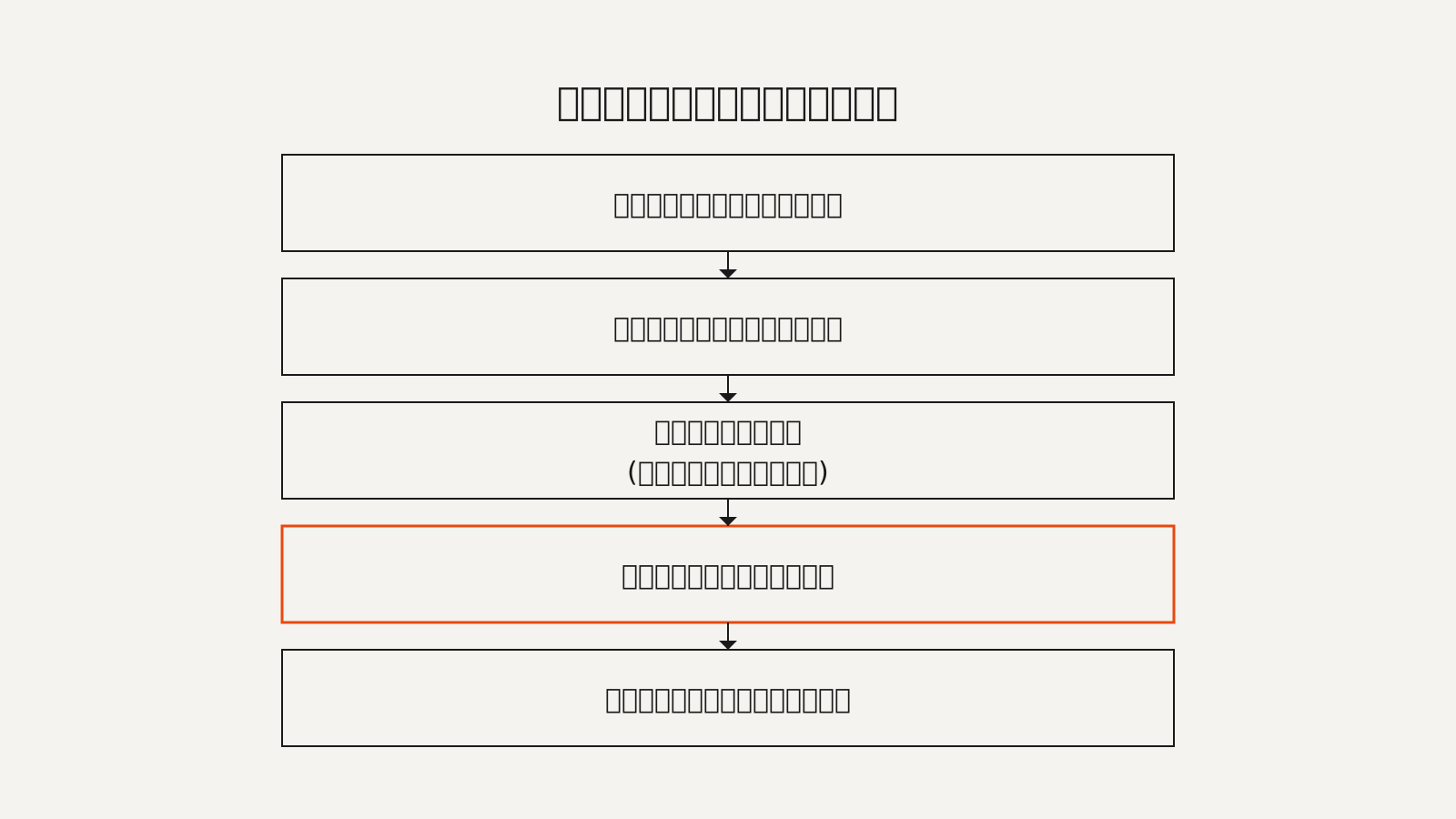
Why It's Better Not to Follow Up
Gifting with optional posting operates on a different premise than sponsored collaborations, where a post is promised in exchange for compensation. Once we've delivered a product on the understanding that posting is not a condition, asking "Did you get a chance to post?" effectively adds a promise after the fact. From the influencer's perspective, something that was supposed to be voluntary can start to feel like an obligation, which risks creating wariness about future interactions. Whether or not to post is an area left entirely to the influencer's own discretion, and introducing any sense of a sales push there undermines the very premise of it being optional. We treat not shifting the conditions communicated at the time of the request—regardless of our own convenience—as the primary reason for not following up.
How Should We Convey That We Care?
This doesn't mean we're indifferent to the absence of a post. However, it's important that the words we use to express this don't take the form of asking whether a post was made. Messages that show genuine interest in the influencer's actual experience—such as "How are you enjoying the product?" or "Has anything stood out to you since it arrived?"—allow us to maintain contact without giving the impression that we're pushing for a post. Sometimes the influencer will voluntarily mention their posting plans in their reply, but we treat this strictly as something they brought up themselves and don't press further. Maintaining this kind of distance keeps open the possibility of continuing to engage with this influencer in a different way next time, even if they didn't post this time.

How Should Posting or Non-Posting Be Evaluated Internally?
This is where mistakes most often happen in practice. For optional-posting campaigns, the posting rate should be treated as material for reviewing the overall campaign design, not as an evaluation metric for individual influencers. Recording a single non-post as a reflection of that person's low enthusiasm has an unfair influence on future casting decisions. Fair evaluation comes from framing the retrospective around "how the offer was made" or "how well the product matched the influencer," rather than around the individual. If posting rates are treated like a performance review, teams will unconsciously start choosing words that push for posts, and as a result the very premise of it being optional will gradually erode.
When Is It Acceptable to Add a Word About Timing?
During periods when timing matters to the brand's plans—such as around a product launch announcement—it's possible to state a condition upfront at the time of the request, for example: "If you do decide to post, it would help us if you could do so on or after [date]." This is not a follow-up; it's a condition presented in advance. Adding a deadline or request after the product has already been delivered should be avoided. We believe that tacking on a condition after the fact, one that wasn't communicated beforehand, breaks the promise of it being optional.
Scope of This Article
This article covers only optional gifting where posting is not a condition. It does not cover sponsored collaboration contracts or ambassador contracts where compensation or posting is included as a contractual condition and posting is a contractual obligation. For details on the actual posting rate for optional gifting itself, see When Gifting Comes With No Posting Obligation, What Percentage Actually Post?. For those who want to understand the difference between gifting and sponsored collaborations, see [What Is Gifting? Differences From Sponsored Collaborations and Suitability [Basic Guide]](https://statsworks.tokyo/insight/what-is-gifting).
Closing Thoughts
Not turning the presence or absence of a post into an evaluation based on our own convenience—this is the most fundamental stance for sustaining optional gifting over time. A single considerate message after delivery can shape the relationship that follows.