Casting Success or Failure Is Largely Decided at the List Stage
This article was automatically translated from the Japanese original. Read the original in Japanese

The outcome of a casting project may seem to be decided the moment a post goes live. In reality, that's not the case. Based on our experience across numerous projects, most of what determines success or failure is already decided at the stage where the "casting list" of candidates is assembled. That's because the adjustments possible after a post goes live are limited.
This article organizes the factors that separate a good list from a poor one, and traces what happens downstream when a project proceeds with a thin list. For agency and brand representatives, this should also serve as a benchmark for evaluating casting companies.
What Is a Casting List?
A casting list is not simply a lineup of candidates who seem to fit a project. It's something designed by examining how well each candidate aligns across multiple axes—objectives, conditions, and brand world—and then ranking them accordingly. We see this not as a task of "searching for and gathering" candidates, but as a task of "designing alignment with the project."
If this premise is misunderstood, a list ends up being evaluated by quantity—the idea that more candidates means a better list. But numbers don't substantiate alignment. You can pad the numbers with off-target candidates just as easily. When we present a list, what we explain first, before the number of candidates, is how each candidate aligns with the project.
Clients requesting a project can't see the process behind how a list came together. All they see are the names and profiles of the candidates lined up. That's precisely why we believe it's worth clients developing an eye for how much consideration lies behind a list.
Six Factors That Determine List Quality
Rather than judging each candidate individually, when you look at a list as a whole design, there are mainly six factors that determine its quality.
- Alignment with objectives — Does the candidate's area of expertise and content themes match what this casting is meant to achieve?
- Fit with brand world — Does the tone the brand values align with the atmosphere of the candidate's everyday content?
- Context of past posts — Have past posts been taken into account, including any history of working with competitors or adjacent categories?
- Audience overlap — Do the follower base's interests and age range overlap with the audience the brand wants to reach?
- Schedule and feasibility — Can the candidate accommodate the project timeline, and does it align with the necessary preparation period and publication timing?
- Depth of alternative candidates — If the top choice falls through, can a replacement of the same caliber be put forward?
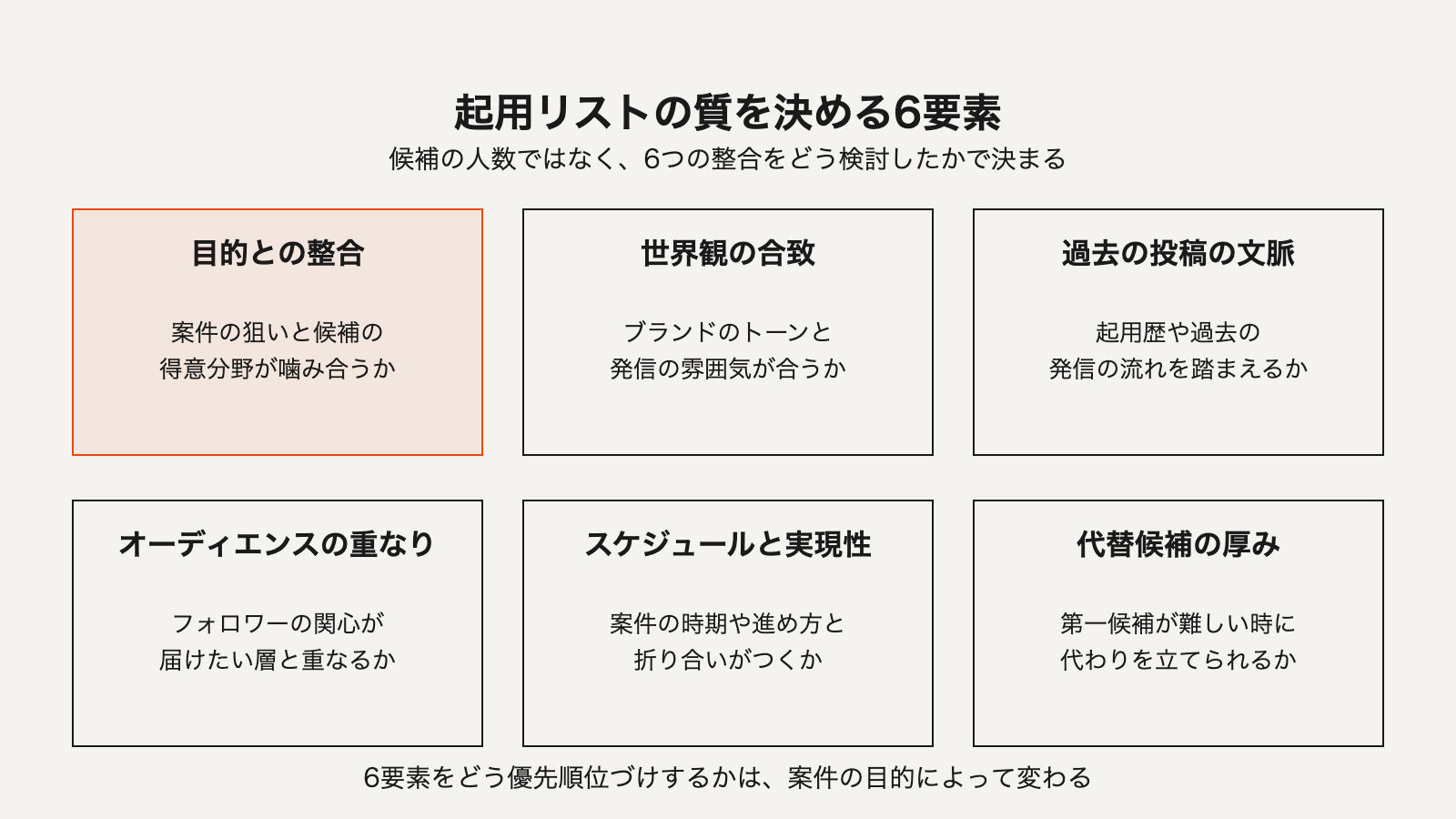
Figure 1: Six factors that determine the quality of a casting list
Of these six, audience overlap is particularly prone to being overlooked. Even among candidates with similar follower counts, actual engagement levels can differ significantly—something we've confirmed through our own track record (for more detail, see How Much Does Engagement Rate Vary Even Within the Same Follower Range?). If a list is built on follower count alone, this gap remains invisible while candidates are lined up.
These six factors aren't independent scoring items. A brand fit means nothing without feasibility, and feasibility doesn't lead to results if alignment with objectives is weak—even if the post gets published. A good list isn't one that leans heavily on any single factor; it's one where the balance is designed according to each project's priorities.
For example, a casting tied to a new product launch would place higher priority on schedule and feasibility. Conversely, a casting meant to carefully convey a brand's world would place greater emphasis on the context of past posts and fit with that world. Even with the same six factors, how priorities are weighted shifts depending on the project's objective. This prioritization itself is the substance of the work of building a list.
Building a List Means Reconsidering Everything from Scratch for Each Project
Examining these six factors isn't something that can be handled by reusing a list made for a previous project. Even for requests from the same brand, if the product being promoted or the timing changes, both alignment with objectives and audience overlap need to be reconsidered. The reason we devote so much time to building lists is that redoing this examination properly every single time directly translates into the precision of candidate selection.
This examination requires both ongoing observation of each candidate's content and an accurate grasp of the project's objectives. Neither alone produces a well-aligned list. Among all the work involved in casting, what actually takes up the most time for us isn't the back-and-forth of negotiation itself—it's this process of building the list.
A Thin List Always Comes Back to Bite You Downstream
When a list is finalized without thorough examination of these factors, the impact surfaces in the stages that follow negotiation. Tracing it step by step, the following chain reaction tends to occur:
- Rejection — When a request is made with weak alignment to objectives or brand world, the candidate themselves struggles to feel a fit with the project, making a positive response less likely
- Mismatched conditions — If schedule and feasibility haven't been properly examined, it can turn out only after the request is made that the timing or process doesn't work
- Off-context posts — Requesting without accounting for the context of a candidate's past posts causes a mismatch between the candidate's own content flow and the brand's intent, undermining the naturalness of the post
- No room for substitution — Without sufficient depth of alternative candidates, if conditions fall through midway, a replacement of equal caliber can't be lined up right away
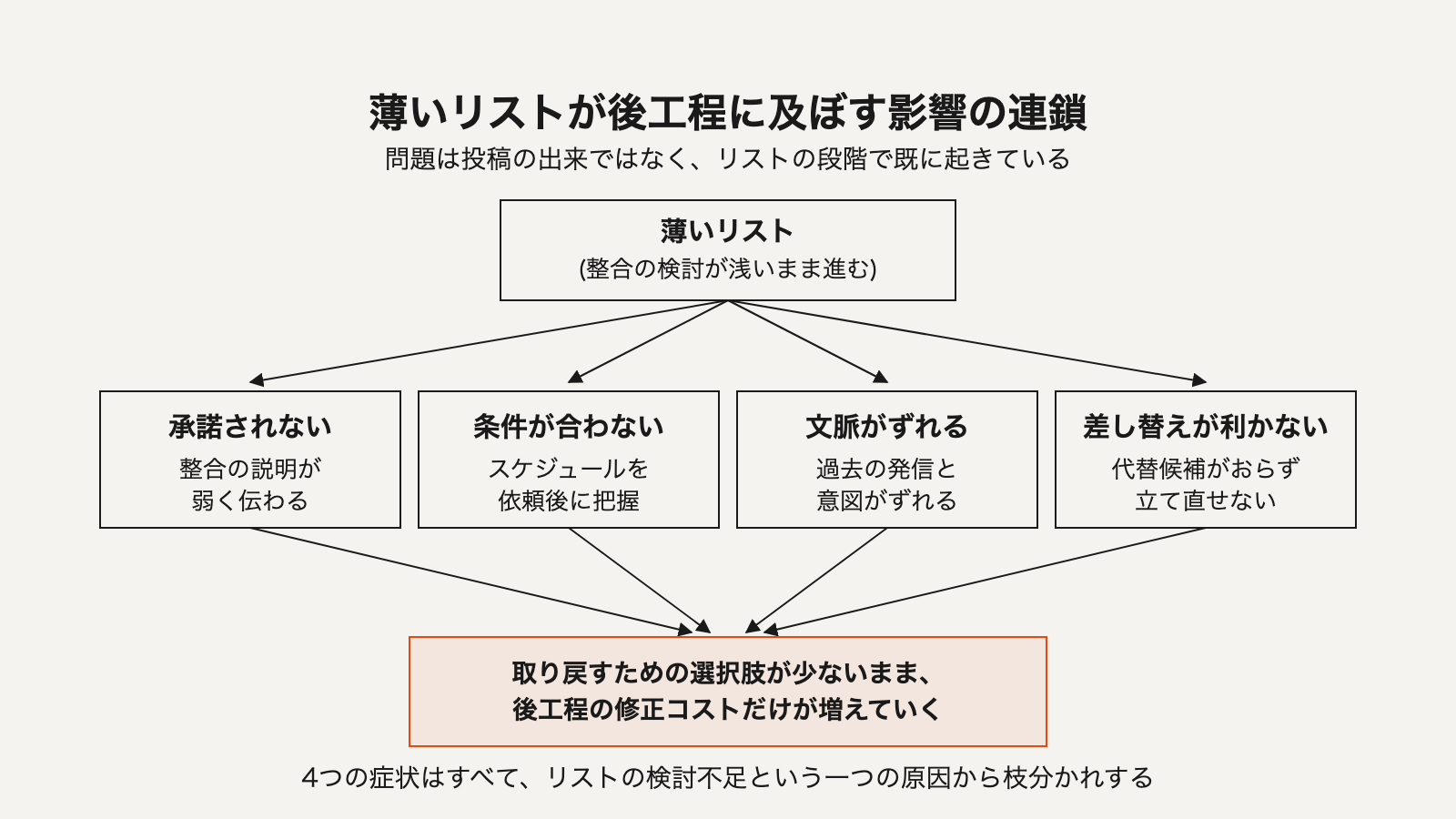
Figure 2: The chain of downstream effects caused by a thin list
What all of these have in common is that they're problems that exist before the question of "how good the post turns out." No matter how carefully post direction is handled, weak alignment at the list stage can't be recovered later. When we look back at projects that didn't go well, the cause is rarely on the side of the candidate who accepted the request—it's almost always a matter of how alignment with the project was designed, on our side or the brand's. What's Really Happening When a Sponsored Collaboration's Results Don't Add Up covers the typology of this mismatch in more detail.
How Candidates Are Presented Also Affects List Precision
Beyond examining the six factors, how candidates are presented is another crucial layer. Rather than simply listing candidates who meet the conditions, structuring the list in a way that's easy for the client to compare improves the precision of selection itself. How the way candidates are presented—one at a time versus multiple side by side for comparison—affects the quality of selection is covered in From "Searching" to "Comparing": The Effect of Order in Casting. A list isn't finished once it's built—how it's presented is part of the design too.
How to Use This: Distinguishing a Good List from a Poor One
When you receive a list as a client, checking the following points can help you gauge how substantial it is:
- Is there an explanation attached to each candidate showing how they align with the project's objectives and conditions?
- Is there any reference to metrics beyond follower count, such as actual engagement levels or trends in past posts?
- Are alternatives already prepared in case the top choice doesn't work out?
- Is the explanation of brand world and tone backed by concrete examples of past posts?
If these elements are all present, it's likely that a reasonable level of examination went into the list. Conversely, a list with a large number of candidates but thin explanations of alignment tends to lead to problems downstream.
When in doubt, a useful benchmark at the moment you receive a list is: "Could they explain, on the spot, how each of these candidates aligns with the project?" A list where alignment can be explained immediately is one that shows evidence of real consideration. If candidates were gathered afterward just to fill out the numbers, answering that question on the spot becomes difficult.
Scope of This Article
What this article covers is the design of alignment up through the stage of building a casting list. It doesn't cover negotiating casting terms, contract details, execution management from post direction onward, or post-publication reporting. It also doesn't address specific evaluation criteria or scoring systems for measuring list quality, since the premises differ by project. How to proceed with negotiating each individual candidate's engagement, and how to handle cases where terms can't be agreed upon, are also topics we've left for another occasion.
Closing Thoughts
The adjustments possible after a post goes live are fewer than you might think. How thoroughly alignment is examined at the list-building stage forms the foundation for everything that follows. The reason we spend so much time on building lists is that we believe this is the stage that almost entirely determines a project's success or failure. A good list isn't something that can be assembled quickly after receiving a request—it can only be built on the accumulation of day-to-day consideration.