How Much Lead Time Should You Allow from Casting Request to Talent Agreement?
This article was automatically translated from the Japanese original. Read the original in Japanese

The lead time you should secure varies depending on whether you're going through an agency or reaching out to an individual directly, but once you factor in waiting for replies, coordinating schedules, and negotiating terms, you should allow for at least 2–3 weeks. If holidays or busy seasons fall within that window, you should start moving even earlier.
Why Should You Allow for a Longer Lead Time?
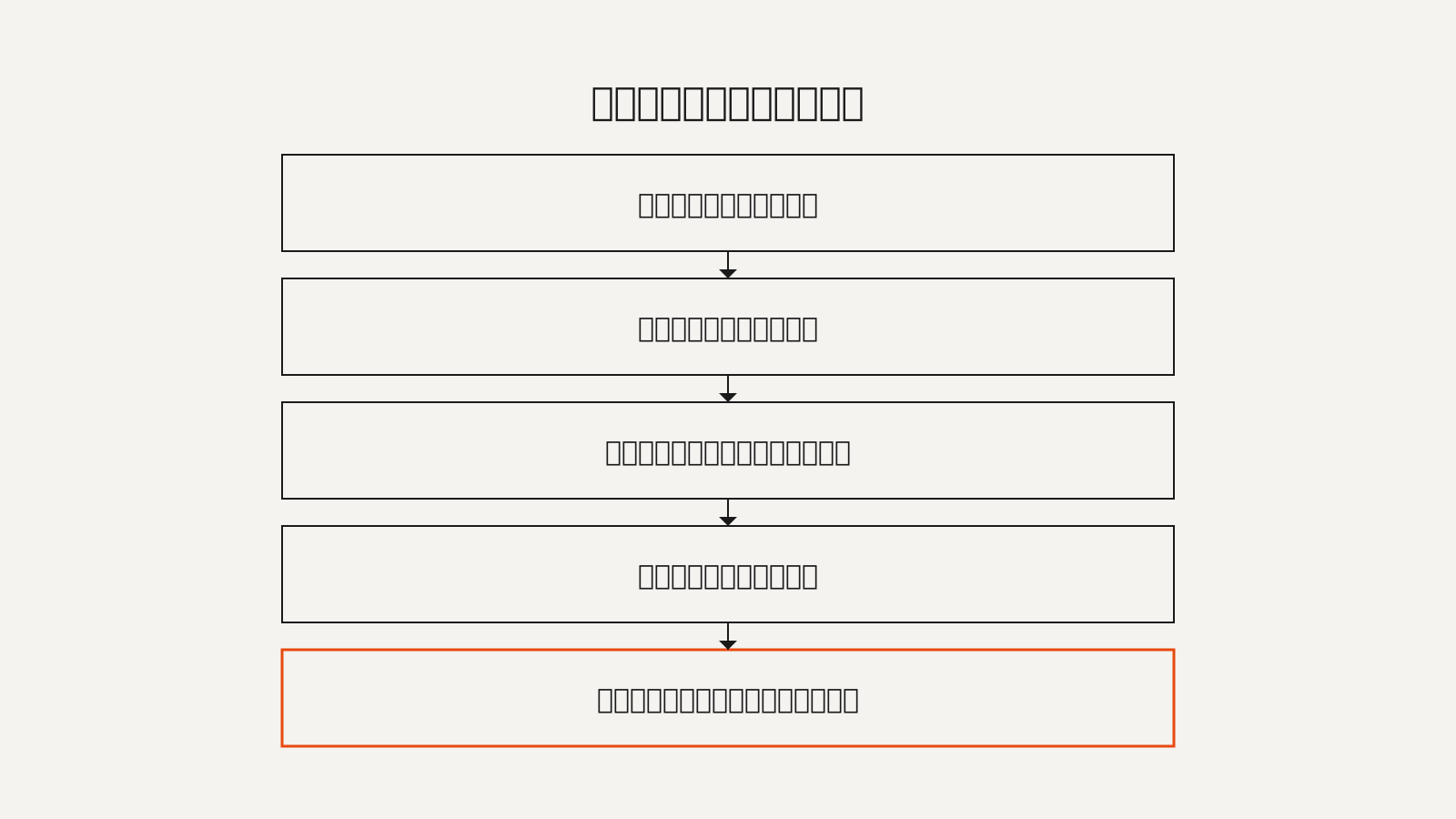
Between sending a casting request and securing the talent's agreement, time accumulates from waiting for a reply, coordinating schedules, and negotiating terms. Each of these steps may be short on its own, but combined they tend to add up to a longer period than expected. As a general guideline, securing at least 2–3 weeks allows you to proceed with a comfortable margin. If you underestimate this timeframe, you risk facing an approaching posting deadline before your other preparations are complete.
What's the Difference Between Going Through an Agency and Contacting an Individual Directly?
Working through an agency tends to take longer than reaching out to an individual directly, since it adds steps for internal confirmation and coordination within the agency. On the other hand, contacting an individual directly can move faster since it involves fewer confirmation steps, but if the person's schedule is already full, you may end up waiting even longer. Regardless of which route you take, you need to build in a generous estimate.
What Should You Front-Load When Holidays or Busy Seasons Are Involved?
During holidays and busy seasons, replies themselves tend to be delayed, and the options for scheduling coordination narrow. If you know in advance that such a period will fall within your timeline, it's standard practice to start sending offers earlier than usual.

What Do You Need to Build a Schedule by Working Backward?
Starting from your desired posting date and working backward, you determine the offer start date by adding up the time needed for waiting on replies, coordinating schedules, and negotiating terms. If you skip this step-by-step calculation and simply proceed assuming "it will probably work out," you'll only realize the lack of margin later on.
Scope of This Article
This article covers how to think about lead time from the initial casting approach to reaching agreement. For methods to prevent delays by approaching multiple candidates in parallel, see What Causes Casting Schedules to Get Pushed Back?.
Conclusion
It's safer to overestimate lead time than to underestimate it. When holidays or busy seasons fall within your timeline, starting early is especially standard practice.