What Does a Casting Coordinator Actually Do on Event Day?
This article was automatically translated from the Japanese original. Read the original in Japanese
On event day, the casting coordinator welcomes the invited influencers, shapes how they spend their time at the venue, and reworks the plan on the spot when things don't go as scheduled. It may look like a job spent in the glamorous spotlight, but most of the work is about continuously adapting the arrangements prepared in advance to the situation unfolding in front of you.
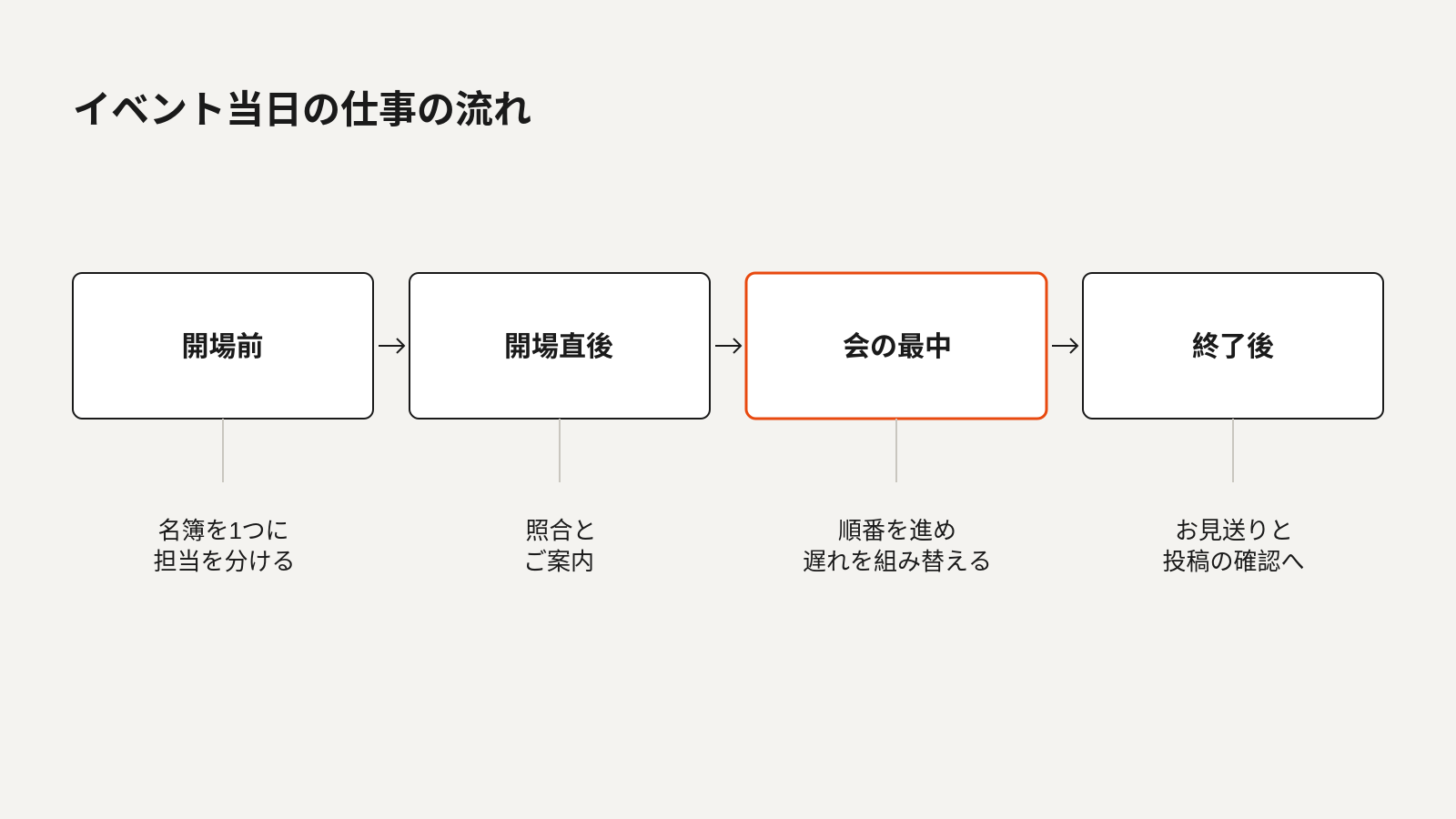
| Timing | What we do | Who we work with |
|---|---|---|
| Before doors open | Settle on a single, up-to-date guest list and divide roles between check-in and guiding | On-site staff, brand representatives |
| Right after doors open | Match arriving guests against the list and guide them into the venue | Influencers, their companions |
| During the event | Move through the shooting and interview sequence, and rework any gaps or delays | Influencers, shooting and interview staff |
| At the close | See guests off and follow up about their upcoming posts | Influencers, brand representatives |
| The following day onward | Check post content, manage publication, and compile results | Influencers, brand representatives |
On our recruitment page, we call this event-day work "ON SITE (on-site operations)," and present it as the stage that handles shooting and event-day progress and guest attendance. Because a single coordinator oversees everything from planning through results reporting without splitting it across departments, the person who did the preparation is also the one who stands on site on the day.
What Do We Pay Attention to Before and Right After Doors Open?
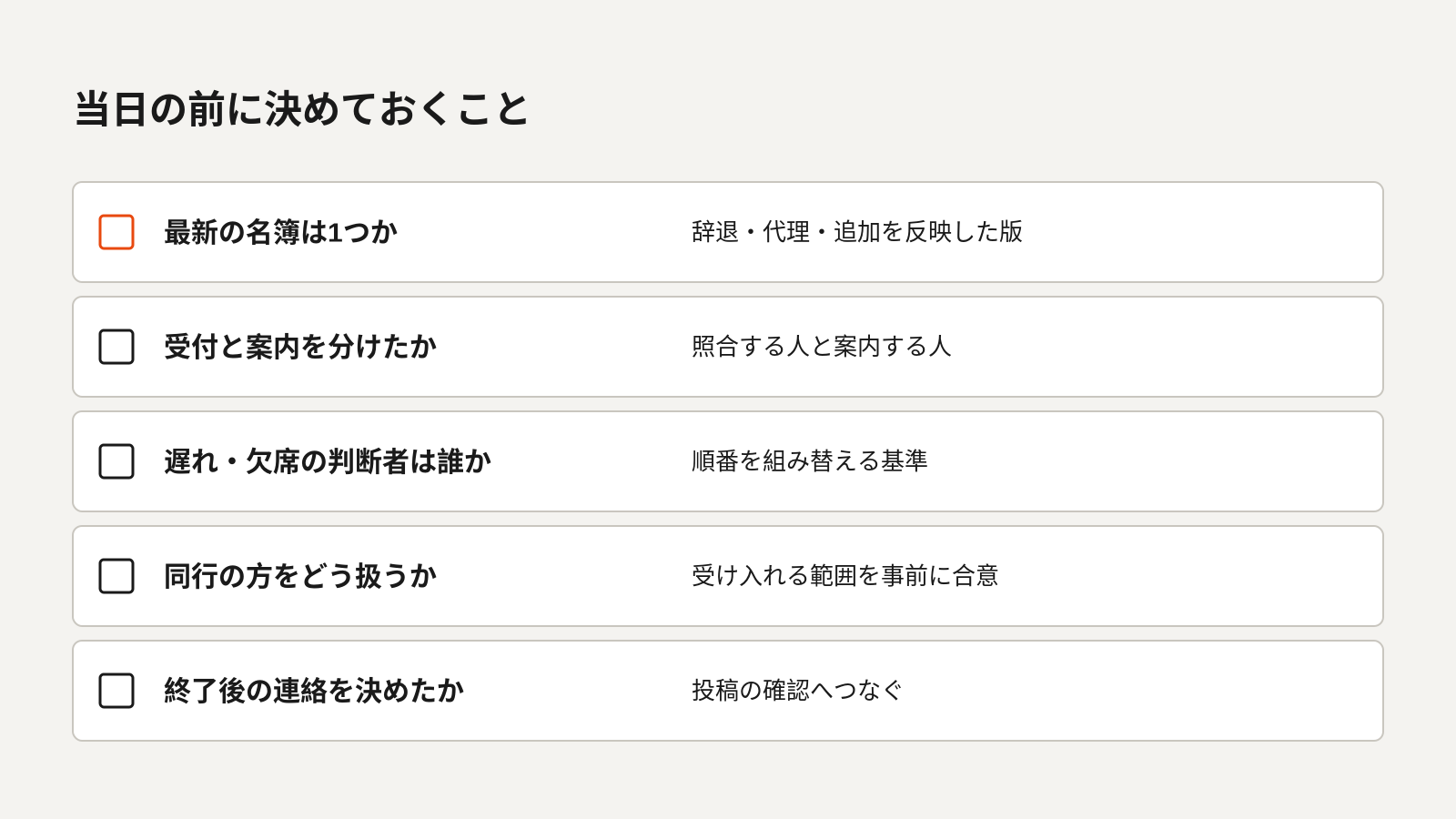
Before doors open, the most important thing is that there is one, definitive up-to-date guest list. Cancellations, substitute attendees, and additional invitations continue right up to the last minute, so if an old version remains on site, some guests will turn up as "not on the list" at check-in and the line will stall. We cover check-in design in detail in A Guide to Check-In Design for Invitation-Only Events: How to Avoid Lines Right After Doors Open. The check-in procedure, from the reminder one week before to exporting attendance data after the event closes, is summarized in the S/PASS GUIDE's Day-of Check-In Flow for Invitation-Only Events.
Right after doors open, arrivals cluster all at once. Assigning list matching and venue guidance to different people keeps the next guest from waiting. For example, when many guests arrive the moment doors open, the person matching names focuses solely on confirming them, while the person guiding takes care of handing over materials and explaining the flow of the venue. A guest's first impression is formed in these few minutes.
What Kinds of Decisions Are Made During the Event?
During the event, we move through the shooting and interview sequence while responding to anything that doesn't go to plan. Common cases are late arrivals and cancellations on the day itself. In those situations, rather than rushing to fill the open slot, we first rework the check-in flow and the shooting order so that the experience of guests already at the venue has no gaps (our approach is summarized in How to Respond When an Influencer Is Late or Absent on Event Day).
Another scenario is that companions who weren't invited may show up. If you only start thinking about how to handle this on the day, the response on site grinds to a halt. For that reason, we agree in advance with the brand representative on who makes the call on the spot and how far we will accommodate. The quality of event-day work depends less on quick thinking on the day than on how much was decided by the day before.
Does the Work Continue After the Event Ends?
Yes, it does. After seeing guests off, from the next day onward we move on to checking post content and managing publication. On our recruitment page, we show as an example a flow in which "DIRECT (post direction)" comes a few days after the event and "REPORT (results reporting)" about two weeks after.
What you saw at the venue on the day pays off in these later stages. If you remember where the most shooting took place and what kinds of conversations were happening, you can add context that numbers alone can't convey when checking posts and reporting results. The overall process from creating the guest list to checking posts is introduced in Inviting Influencers to Brand Events: From Guest List Creation to Post Review.
Who Is Well Suited to This Work, and Who Is Not?
The people who tend to excel on site are those who research things on their own and will go ask when they don't know, and those who find their own joy in making others happy. People who take it as a measure of their own work whether guests had a comfortable time can keep up the small acts of attentiveness this job requires.
On the other hand, it isn't suited to people who think of the job mainly in terms of its glamorous moments. Most of the day is made up of steady, behind-the-scenes adjustments: checking the guest list, reworking the order of events, and contacting the people involved. Also, because the projects we handle are subject to confidentiality obligations and cannot be publicly credited under an individual's name, it is not a fit for those motivated by publicizing the work they have done. For a broader look at fit for the job overall, see also Who Is Suited (and Not Suited) to Casting Work.
What Should You Know Before Joining?
Shoots and events may take place at night or on holidays, and our recruitment page states that this happens about 3 to 4 times a month. If you work on a holiday, you take a substitute day off. Because you move according to the on-site schedule, there are days when your hours don't match your usual working hours.
Also, there is no formal training program; after a one-month onboarding period, you learn within actual projects. Event-day work is also carried out by teams of two, so at first you will pair with a senior colleague to learn the flow. Details on openings and working conditions are available on our recruitment page.
Scope of This Article
This article introduces the event-day work of a casting coordinator based on what is written on our recruitment page and in previously published articles. It does not cover the circumstances of specific projects, or details about compensation or the selection process. How things are run on site varies depending on the scale and format of each project.
Conclusion
Event-day work means continuously adapting the arrangements you have prepared to the situation in front of you. It is a job we especially want people to know about if they find fulfillment in helping guests have a comfortable time and supporting the experience all the way until it becomes something people talk about.