What Is an Ambassador? How It Differs from a One-Off Sponsored Collaboration, and Which Fits Your Needs
This article was automatically translated from the Japanese original. Read the original in Japanese

"Should we go with an ambassador program, or is a one-off sponsored collaboration enough?" is a question we're often asked in the early stages of planning. Since both arrangements look the same on the surface—an influencer posting content—it's easy to settle on a structure without fully understanding the difference, only to find later that "this isn't what we expected."
This article organizes the structural differences between ambassador programs and one-off sponsored collaborations. The two aren't distinguished by the number of posts or how flashy they are; they're built on different design philosophies across four axes: duration, depth of involvement, exclusivity, and how results emerge. Our goal here is to help you understand these differences well enough to judge which one fits your own objectives.
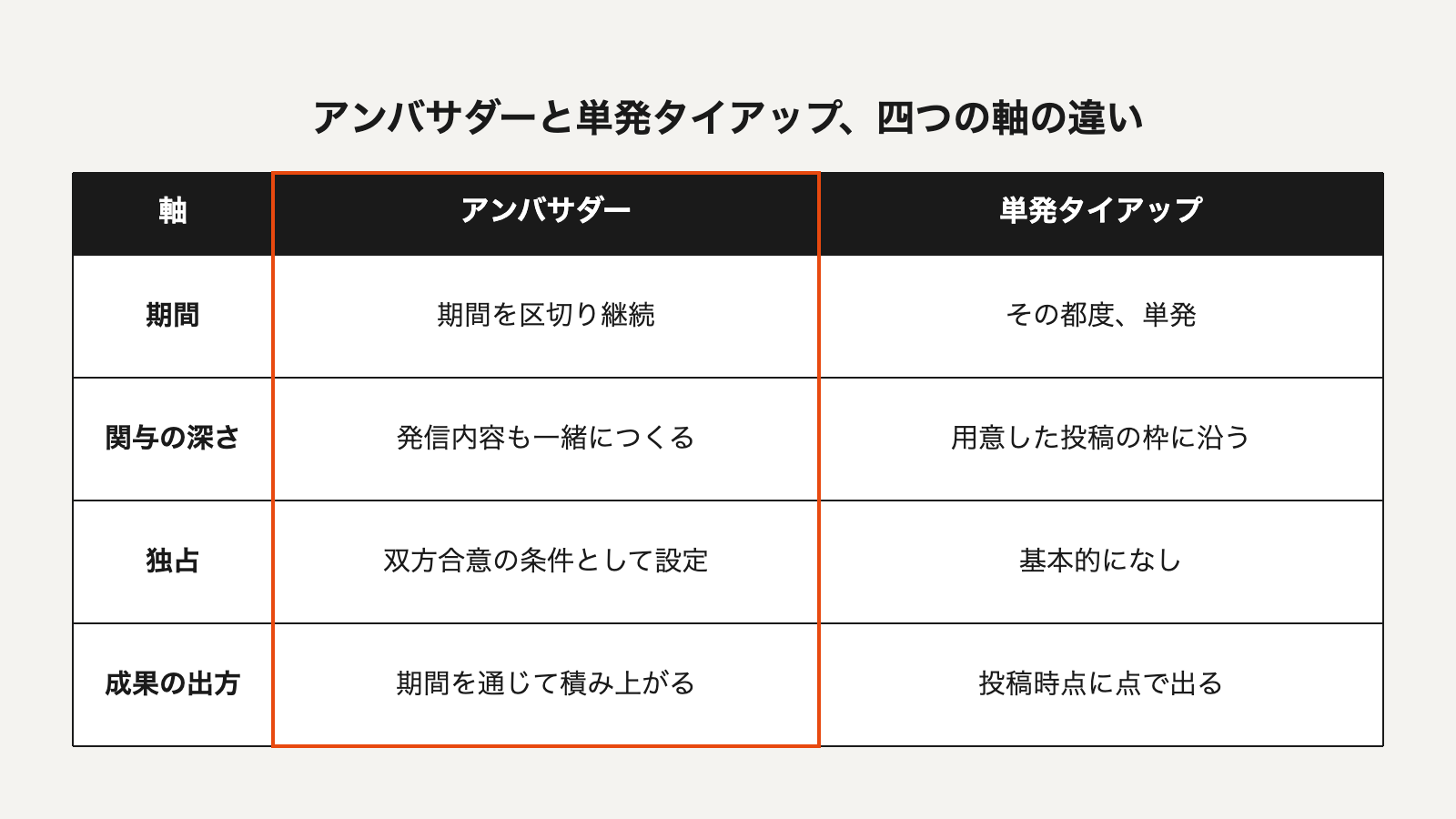
Figure 1: Ambassador vs. one-off sponsored collaboration—differences across four axes
Ambassador Programs and One-Off Sponsored Collaborations Rest on Different Time-Axis Design Philosophies
A one-off sponsored collaboration is a single-use engagement built around one post or one campaign. You bring someone on to align with a product launch or campaign period, and once the post is complete, the engagement wraps up. The defining feature is that you can choose a different person each time, matched to that particular objective.
An ambassador arrangement, by contrast, has the person serve as the "face of the brand" over a set period of time. Rather than requesting a single post, the contract is built around ongoing involvement for a defined term. That involvement often extends beyond posting to include appearances at brand events or providing input during product development.
What matters here isn't the length of the period itself, but whether the arrangement is built on the premise of sustained involvement over time—that's the real difference in design philosophy. Repeating one-off sponsored collaborations many times over might start to look like an ambassador arrangement on the surface, but there's a real difference between a relationship where each round begins with "could you do this again?" and one where the terms are aligned from the start around a fixed period of ongoing cooperation. That difference shapes the mindset on both sides, as well as what the brand needs to prepare.
The length of the term also translates directly into depth of involvement. In a one-off sponsored collaboration, the exchange mostly revolves around the influencer working within a post framework the requesting brand has already prepared. With an ambassador arrangement, because there are repeated opportunities throughout the term to communicate the brand's intent, the relationship tends to evolve into more of a collaboration—one where the ambassador also weighs in on the content itself and helps shape how the message comes across. Which approach is preferable depends entirely on the objective; deeper involvement isn't automatically better.
Exclusivity Isn't a Restriction—It's a Condition Both Sides Agree to Choose
One point that often comes up with ambassador engagements is the so-called exclusivity condition: the ambassador refrains from taking on competing brands' projects during the contract period. On its own, this might sound like a constraint imposed on the influencer's freedom, but that's not really the case.
Exclusivity isn't a restriction the brand unilaterally imposes—it's a mutually agreed condition, negotiated based on whether the terms work for both sides. From the brand's perspective, having no competing messages appear during the period makes it easier for the ambassador's role as the face of the brand to come through consistently. From the influencer's perspective, being deeply engaged with one particular brand naturally means a period with fewer other project opportunities. That's exactly why the level of involvement and terms need to be carefully matched to that limitation at the contract stage.
When we design these arrangements, we make a point of never leaving the scope of exclusivity vague. We spell out up front which categories of competitors are covered, how far the geographic or media scope extends, and exactly when the restriction lifts once the term ends. If the scope is too broad or the timeline is unclear, you end up with repeated after-the-fact questions like "does this count?"—which becomes a burden for both sides. We see exclusivity not as a tool for locking someone in, but as a condition that both parties consciously choose and design together.
Results Land as Single Points with One-Off Collaborations, and Build Cumulatively with Ambassadors
The results of a one-off sponsored collaboration show up concentrated at the moment the post goes live. When you want to capture attention around a launch announcement or a campaign window, this "single-point" quality becomes a strength in itself. If your goal is to land a strong hit within a specific window, a one-off sponsored collaboration is the better fit.
The results of an ambassador arrangement come less from the size of any individual post and more from the cumulative effect of the same person talking about the brand again and again over the course of the term. A single post on its own might look no different from a one-off sponsored collaboration, but because the same person keeps showing up over time, they stick in the audience's memory more effectively, and an association forms—"this brand, that person." In our experience, this kind of buildup is hard to feel over a short window; it tends to become tangible only toward the end of the term, or when it comes time to consider renewal.
The flip side is that if you choose an ambassador arrangement expecting fast, visible reactions in a short timeframe, results won't come at the pace you're hoping for, and the outcome can end up unsatisfying for both sides. Deciding in advance what you want to achieve, and on what timeframe, is the real starting point for choosing the right structure.
Which Brands and Objectives Suit an Ambassador Program
An ambassador program suits situations where you want to convey a brand's worldview or values over time, rather than make a single announcement. It fits objectives centered on building trust and affection for the brand itself, more than on capturing momentary attention the way a new product launch does. Brands with an ongoing stream of line extensions, or those with frequent occasions to communicate across seasons, tend to gain more from an ongoing relationship.
It's also worth thinking through the brand's own capacity to sustain the relationship. An ambassador relationship doesn't end once the contract is signed—it's an arrangement built on continued back-and-forth throughout the term. The benefits of an ambassador engagement only really show up once there's a system in place for continuous engagement: making sure the relationship carries over even if the point of contact changes, and consolidating the brand's communication with the ambassador through a single window. If you're not yet in a position to build that kind of structure, it may be more realistic for both sides to build the relationship gradually through repeated one-off sponsored collaborations first.
On the other hand, one-off sponsored collaborations suit situations where you want to draw attention around a specific moment, or reach a diverse audience by working with multiple people at once. Rather than relying on a single ambassador on an ongoing basis, one-off sponsored collaborations offer more agility, letting you choose a different, better-matched person each time. We cover the approach of lining up candidates for comparison and selecting the optimal combination for each project in Turning "Searching" into "Comparing": The Effect of Sequence in Casting.
Influencer marketing includes several approaches beyond these two, each suited to different objectives. For a broader overview of the full range of methods, see What Is Influencer Marketing? Types of Methods and the Big Picture, which is worth reviewing if you want to consider options beyond ambassador programs and one-off sponsored collaborations.
What to Decide Before Starting an Ambassador Program
Once you're at the stage of considering an ambassador arrangement, we recommend settling the following four points before even getting into the number or content of posts.
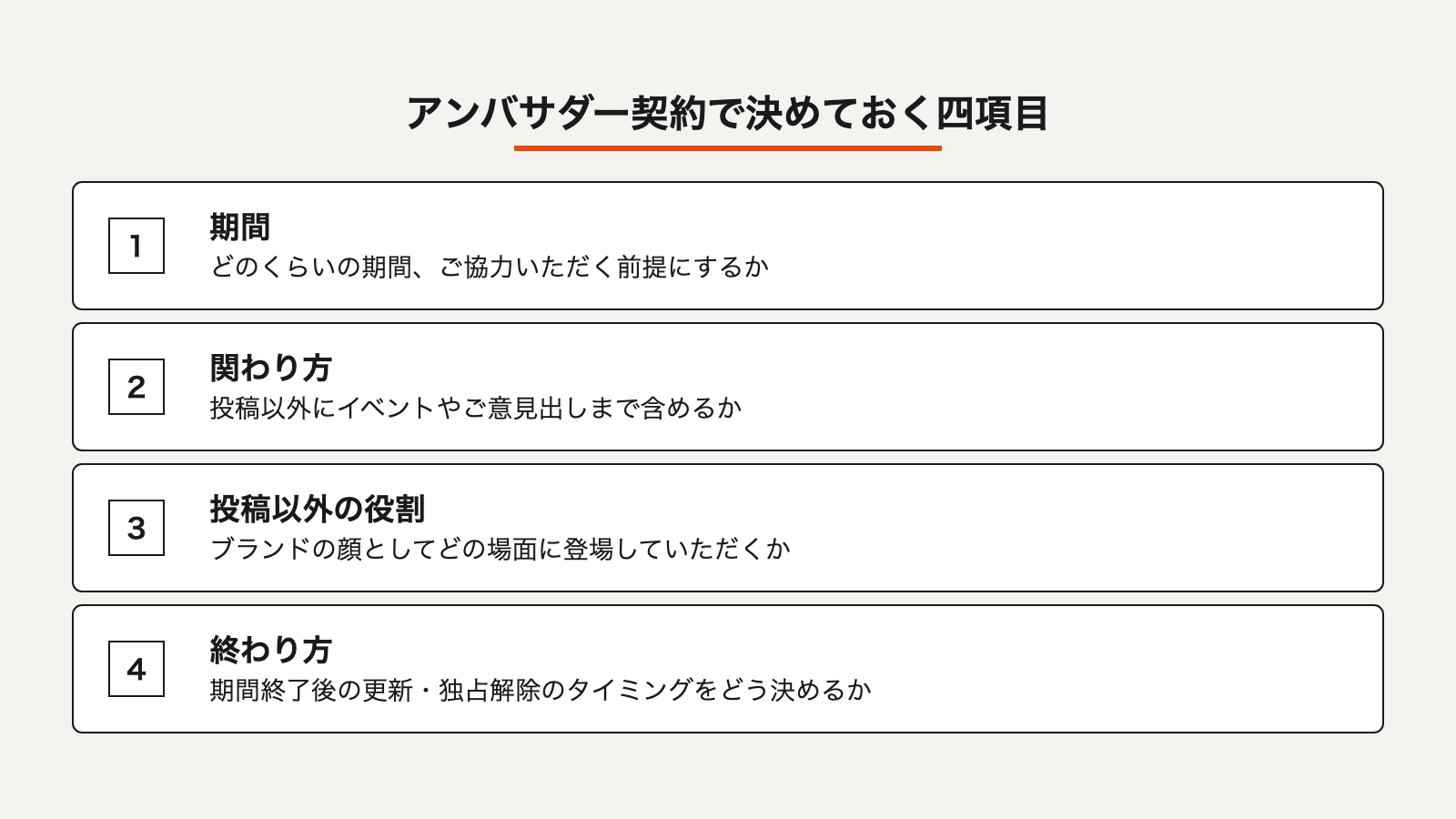
Figure 2: Four items to determine in an ambassador contract
- Duration — How long is the cooperation expected to last? Whether it's structured by season or by year changes how the involvement itself should be designed
- Scope of involvement — Is the request limited to posting, or does it also include event appearances and input on products? The wider the scope, the more carefully the terms need to be aligned in advance
- Roles beyond posting — In what settings will the ambassador appear as the face of the brand? Whether this extends to internal company announcements or media appearances should also be spelled out early
- How it ends — How will the relationship be wrapped up once the term ends? Whether renewal is possible, and exactly when the exclusivity restriction lifts, should be made clear at the contract stage
Leaving these points vague at the outset tends to create gaps partway through the term—moments where one side realizes "I didn't expect this to be part of the deal." Putting these details into clear words from the beginning is ultimately what allows both sides to sustain a comfortable relationship over the long run.
Scope of This Article
This article covered the structural differences between ambassador programs and one-off sponsored collaborations, along with how to think through choosing between them. It doesn't cover the detailed wording of contract terms, industry conventions around the scope of exclusivity, or concrete scheduling for specific engagements, since these vary case by case. Nor is this a question of which arrangement is inherently superior. The aim of this article is simply to help clarify which one to choose based on your objective.
Closing Thoughts
Ambassador programs and one-off sponsored collaborations aren't a matter of one being better than the other—they're options to choose between based on your objective. We believe the first question to return to when choosing a structure is always: what do you want to achieve, and on what timeframe?