What Is PR Labeling for Sponsored Collaboration Posts? The Basics of Stealth Marketing Regulation and a Practical Framework
This article was automatically translated from the Japanese original. Read the original in Japanese

When preparing a sponsored collaboration post, the question "How should we write the PR label?" inevitably comes up—whether from the brand's team or from the influencer themselves. In most cases, it should be the requesting party who already has the answer to this question. In practice, however, the topic often doesn't surface until right before the post goes live, leaving the decision to the influencer's own judgment.
This article organizes the basic thinking behind stealth marketing regulation based on information published by Japan's Consumer Affairs Agency, and clarifies what each of the three parties—brand, agency, and influencer—should confirm. We also cover how the positioning of labeling differs between gifting and sponsored collaboration. By the end, you should come away with a practical framework for what to confirm at the campaign design stage. Note that this article is a general overview of the regulatory framework and cannot serve as a legal determination of whether any individual post falls under the regulation—a point we return to later in the text.
Definition: What Does the Stealth Marketing Regulation Actually Prohibit?
According to guidance from the Consumer Affairs Agency, the so-called Stealth Marketing Regulation has been in effect under the Act against Unjustifiable Premiums and Misleading Representations since October 1, 2023 (Reiwa 5). The regulation prohibits, as an unjustifiable representation, "a representation that is in fact an advertisement but is difficult for general consumers to recognize as such."
What's worth noting here is that the regulation applies to "representations made by a business operator (advertiser) that supplies goods or services." According to the Consumer Affairs Agency's explanation, when a company requests or instructs a third party such as an influencer to post, this can also fall under "the business operator's representation." On the other hand, the influencer who posts upon request is explicitly not the subject of the regulation—the responsibility for the representation lies with the business operator. Content that is voluntarily shared as a personal opinion, or that is instantly recognizable as an advertisement (such as a TV commercial), is excluded from the scope.
The first message we take away from this framework is that "the responsibility for preparing and verifying labeling lies with the requesting party." If there is a scenario where an influencer is left to judge whether labeling is necessary, we believe that reflects a confirmation that should have been completed by the requesting party during campaign design—now pushed back to a later stage than it should be.
(Source: Consumer Affairs Agency, "Stealth Marketing Will Constitute a Violation of the Act against Unjustifiable Premiums and Misleading Representations from October 1, 2023 (Reiwa 5)" https://www.caa.go.jp/policies/policy/representation/fair_labeling/stealth_marketing/)
Why PR Labeling Matters—Protecting Readers Also Protects the Brand
The purpose of PR labeling can be explained from two angles. The first is the reader's perspective. Whether a post is an advertisement or a genuine personal opinion changes how readers interpret the information. When an advertising-style post circulates as a personal opinion without labeling, readers end up receiving it without the judgment material they should have had.
The second is the brand's perspective. If it later comes to light that a post was a sponsored collaboration, the impression of "having hidden it" tends to leave a stronger mark than the post itself. There's a significant difference in how much trust remains toward a brand between a post that discloses labeling and is still received favorably, versus one where the audience discovers on their own that it was an advertisement, with no labeling in place. We view labeling not as a minimal measure to avoid regulation, but as an act of honestly presenting the sponsored collaboration for exactly what it is.
This way of thinking is not unrelated to the influencer either. When a post turns out to be a sponsored collaboration without any label, it is the influencer whose trust with followers is shaken. Preparing labeling is both a matter of regulatory compliance and a way of protecting the relationship the influencer has built with their followers. This is precisely why it makes sense for the requesting party to complete this confirmation in advance.
Formats for Labeling—Post Text, Tags, In-Video: The Requirement Stays the Same Across Media
The Consumer Affairs Agency's framework does not prescribe specific wording or formatting. What it requires is a single point: that "it is not difficult for general consumers to recognize the representation as an advertisement." As a result, how labeling is displayed varies by medium and post format.
In post text, it's common practice in the field to use words like "広告" (advertisement) or "PR" at the beginning of the text or within hashtags. When hashtags are used, care is taken to place the label where readers will actually see it as they read through the text, rather than burying it among numerous other tags. For video content, in addition to noting it in the description field, it's also common practice to indicate it within the main video shortly after playback begins. For formats like live streaming, where the description field is less likely to be seen, workarounds such as verbal mentions during the stream or on-screen text overlays are used.
None of these are formats prescribed by law—they are approaches built up through practice to satisfy the requirement of "not being difficult to recognize." Put differently, as long as the requirement is met, there remains a certain degree of flexibility in expression. When we review the placement and presentation of labeling for each campaign, we keep this single point as our axis: can readers recognize it as an advertisement?
Division of Confirmation Among the Three Parties—Preparing and Verifying Labeling Is the Requesting Party's Job
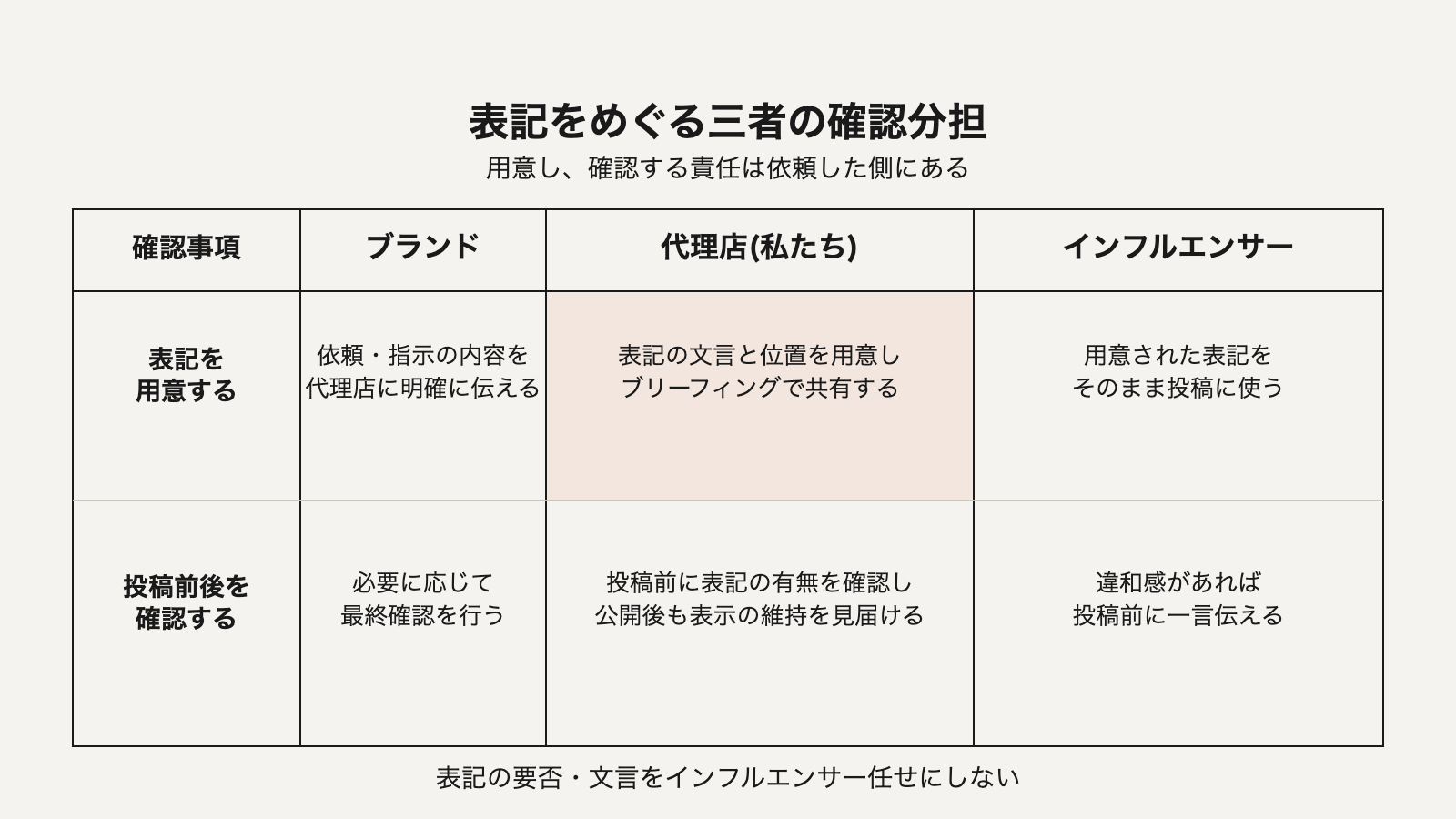
Figure 1: Division of confirmation responsibilities among brand, agency, and influencer
In many campaigns where communication around PR labeling breaks down, it's unclear from the start whose role it is to handle this confirmation. We divide the roles among the three parties as follows.
The brand's role is to make the initial determination of whether the campaign should be treated as an advertisement. At the point of requesting the post and coordinating on content and timing of publication, it's necessary to proceed on the premise that the post may fall under "the business operator's representation."
Our role as the agency, building on that determination, is to prepare the specific wording and placement of the labeling in advance and share it with the influencer during briefing. We consider it part of campaign execution management to confirm that labeling is included before the post goes live, and to follow up to ensure the labeling remains in place after publication. The core of this role is making sure there is never a scenario where the necessity or wording of labeling is left to the influencer's own judgment.
The influencer's role is to use the labeling as provided, and to flag any concerns about how it reads before the post goes live. The burden of researching and deciding whether labeling is necessary is not something an influencer should have to bear. The reason we prepare labeling as part of post direction is precisely to take on this burden ourselves, on the requesting side. As covered in What Is Influencer Marketing? Types of Methods and the Big Picture, the depth of involvement varies by method, but we position confirming labeling as a step that the requesting side should own regardless of method.
Gifting and Whether a Request Was Made—Whether Labeling Is Required Depends on "Whether There Was a Request"
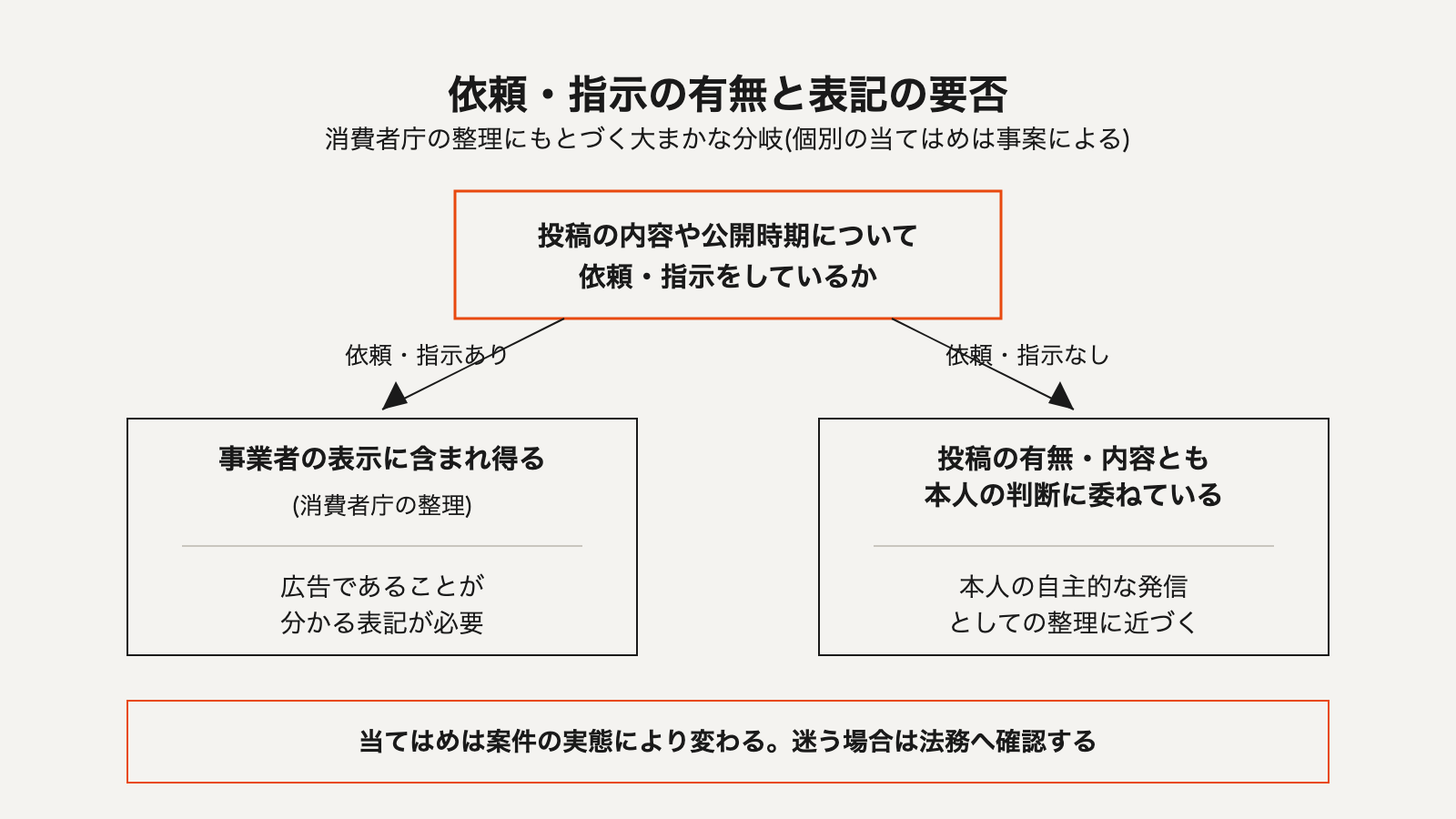
Figure 2: Decision flow for whether labeling is required, based on the presence or absence of a request
So far we've organized this around sponsored collaborations that request a post, but for initiatives like gifting, which don't make posting a condition, the positioning of labeling changes.
Under the Consumer Affairs Agency's framework, what may fall under the regulation is a "representation requested or instructed by a business operator," while what's excluded is a "personal opinion." Gifting is an initiative in which a product is provided and the decision of whether to post is left to the recipient, with no instructions given regarding post content. In this case, the post carries a stronger character of being a voluntary, personal expression.
On the other hand, even if posting isn't a precondition, if the requesting party gives specific instructions about post content or angle, the situation changes. What the Consumer Affairs Agency's framework focuses on is whether a "request or instruction" exists—not the form of the contract or the name of the initiative ("gifting") itself. Our own performance records confirm that even with gifting that carries no obligation to post, a meaningful share of recipients do end up posting (see What Percentage of No-Obligation Gifting Actually Results in a Post?), but whether a post occurs and whether that post involves an actual request or instruction are separate questions.
For this reason, even when running gifting campaigns, we check on a case-by-case basis whether the requesting party has given specific instructions about post content. If no instructions have been given, the post moves closer to being treated as the recipient's voluntary expression—though this is our own interpretation, and we apply it with the caveat that how it's classified may vary depending on the specific circumstances.
What to Check When You're Unsure
At the campaign design stage, we make a point of confirming the following:
- Whether the post is based on a request or instruction, or is left to the individual's own voluntary judgment
- If it is based on a request, whether the wording and placement of the label have been clearly communicated during briefing
- Whether, for each medium, the label is placed where readers will actually see it as they read through the content
- Whether the execution process includes a step to confirm that the label remains in place after publication
All of these are things that are hard to fix once a post has already gone live. That's exactly why it's worth completing them early in the campaign design stage. Note that the framework outlined here is based on the general views published by the Consumer Affairs Agency, and the specific application may vary depending on the facts of each case. For individual cases where judgment is difficult, we recommend consulting your company's legal team.
Scope of This Article
This article organized the basic thinking within the scope publicly disclosed by the Consumer Affairs Agency regarding the Stealth Marketing Regulation under the Act against Unjustifiable Premiums and Misleading Representations, along with the division of confirmation responsibilities among the three parties. It does not cover case-by-case determinations of whether specific post wording violates the regulation, the relationship with regulations other than the Act against Unjustifiable Premiums and Misleading Representations (such as the Pharmaceuticals and Medical Devices Act), disclosure regulations for influencer marketing overseas, or analysis of past enforcement cases. It also does not cover the practical formatting of how labeling agreements should be written into contracts or request documents.
Closing Thoughts
PR labeling is not a minimal task performed to comply with regulation—it is an act of honestly presenting the sponsored collaboration exactly as it is. We believe that keeping clear ownership of who is responsible for this confirmation is, in the end, the approach that places the least burden on readers, brands, and influencers alike.