Gifting or Sponsored Collaboration — A Blueprint for Choosing Based on Your Objective
This article was automatically translated from the Japanese original. Read the original in Japanese

"Should we go with gifting this time, or sponsored collaboration?" — Whenever we begin designing a campaign, we inevitably face this question. In many cases on the ground, this choice ends up being decided by what was done last time or by budget constraints. But these two are not a matter of one being superior to the other; they are two different means that let you promise different things.
Whichever you choose, posts will be created. The real issue isn't "whether posts will be created," but "whether what you wanted to achieve with the campaign matches the nature of the posts that actually get created." If this alignment is off from the start, you may end up with a sufficient number of posts on paper, yet still be left asking, during the review, "was this really the right call?"
This article organizes the axes for judging not "which is more advantageous" but "which one you should choose." By the end, you should be able to see clearly which approach suits the campaign in front of you—and also recognize that there is a third path: combining both.
What This Article Covers
The definitions and mechanics of gifting and sponsored collaboration are covered in What Is Influencer Marketing? Types of Methods and the Big Picture. Here, we won't go into definitions, and will instead focus solely on the judgment of which approach to apply to the campaign at hand.
The three axes we use for this judgment are as follows:
- Objective — What do you want to gain from this campaign (awareness, UGC, attitude change)?
- Certainty — How much certainty do you need regarding whether a post will be made, and its content or timing?
- Expression control — How much do you want to align on the brand's worldview and key selling points in advance?
Let's go through them in order.
The Right Approach Depends on Whether Your Objective Is Awareness, UGC, or Attitude Change
The first thing to confirm is what you want to gain from the campaign. If you choose a method before your objective is settled, you'll likely end up with results that don't match your expectations. If you want to build awareness, both approaches are viable options. But if you want to increase UGC (mentions in the form of posts), gifting has the advantage; if you're aiming for attitude change (deepening interest or favorability), sponsored collaboration has the advantage. This is a directional difference: the more tightly you control post content, the less natural it feels as UGC; conversely, the more you can align on context and messaging in advance, the closer you get to attitude change from your intended angle.
What often happens here is trying to have it both ways without settling on a single objective. Requests like "we want to build awareness and also drive attitude change" aren't unusual, but the more objectives you stack onto a single campaign, the more likely you are to end up with a result that falls short on both fronts, no matter which method you choose. If you have multiple objectives, designing separate methods for each objective, rather than combining them into one, tends to bring you closer to achieving both. It's precisely in these moments when you're tempted to have it both ways that the combined framework discussed later becomes effective.
How Much Certainty You Need Determines Whether You Should Sign a Contract
The second axis is certainty. Ask yourself how much certainty you need regarding "whether a post will be made" and "whether the content and timing of the post will align with the brand's intent."
For campaigns where the post content or publication timing cannot be compromised, sponsored collaboration—which can secure certainty through a contract—is the better fit. Conversely, for situations where you want to increase broad touchpoints and natural contact without restricting timing or angle, gifting offers more flexibility.
There's a premise we consider essential here: gifting is not a campaign that "guarantees a post," but one that "hopes for a post while leaving the decision to the other party." According to our own performance records, even gifting with no posting obligation achieved a 91% posting rate (What Percentage of Gifting Actually Results in a Post When There's No Posting Obligation?). This figure shows that "even when the decision is left to them, most people respond," but interpreting the remaining unposted cases as "a lack of cooperation" misreads the premise of this approach. Whether or not to post is the result of the individual's own judgment about whether it's worth sharing on their feed—and that judgment itself deserves respect. If you need certainty, sponsored collaboration is the way to go; if you choose gifting, you need to accept the premise of leaving the decision to the other party, in its entirety.
How Much You Want to Control Expression Determines the Depth of Involvement
The third axis is expression control. This is the difference between wanting to align in advance on visual tone and selling points, versus wanting to leave things to the individual's own style of communication.
For situations where you want stronger control, sponsored collaboration—which involves creating a brief and reviewing content before it's posted—is the better fit. This level of control is effective when you want to convey a new product's worldview exactly as intended, or when you want to clearly specify expressions to avoid.
On the other hand, for situations where you want to loosen control and leave things to the individual's own words, gifting is the better fit. This is because the value lies not in a polished, crafted post, but in something that feels like a natural extension of everyday life to the followers reading it. Whether or not to control expression isn't about which approach is superior—it depends on what you want the campaign to convey.
Note that the more strongly a design calls for control, the more the outcome depends on whether the influencer you cast and the brand's worldview were already aligned to begin with. If this alignment is misjudged, results can fail to come together no matter how carefully the contract or brief is crafted. This structure is discussed in When Sponsored Collaboration Results Don't Come Together, What's Actually Happening—A Study in Casting Design Failures, but this is not a problem on the influencer's side—it's a problem with the casting design itself.
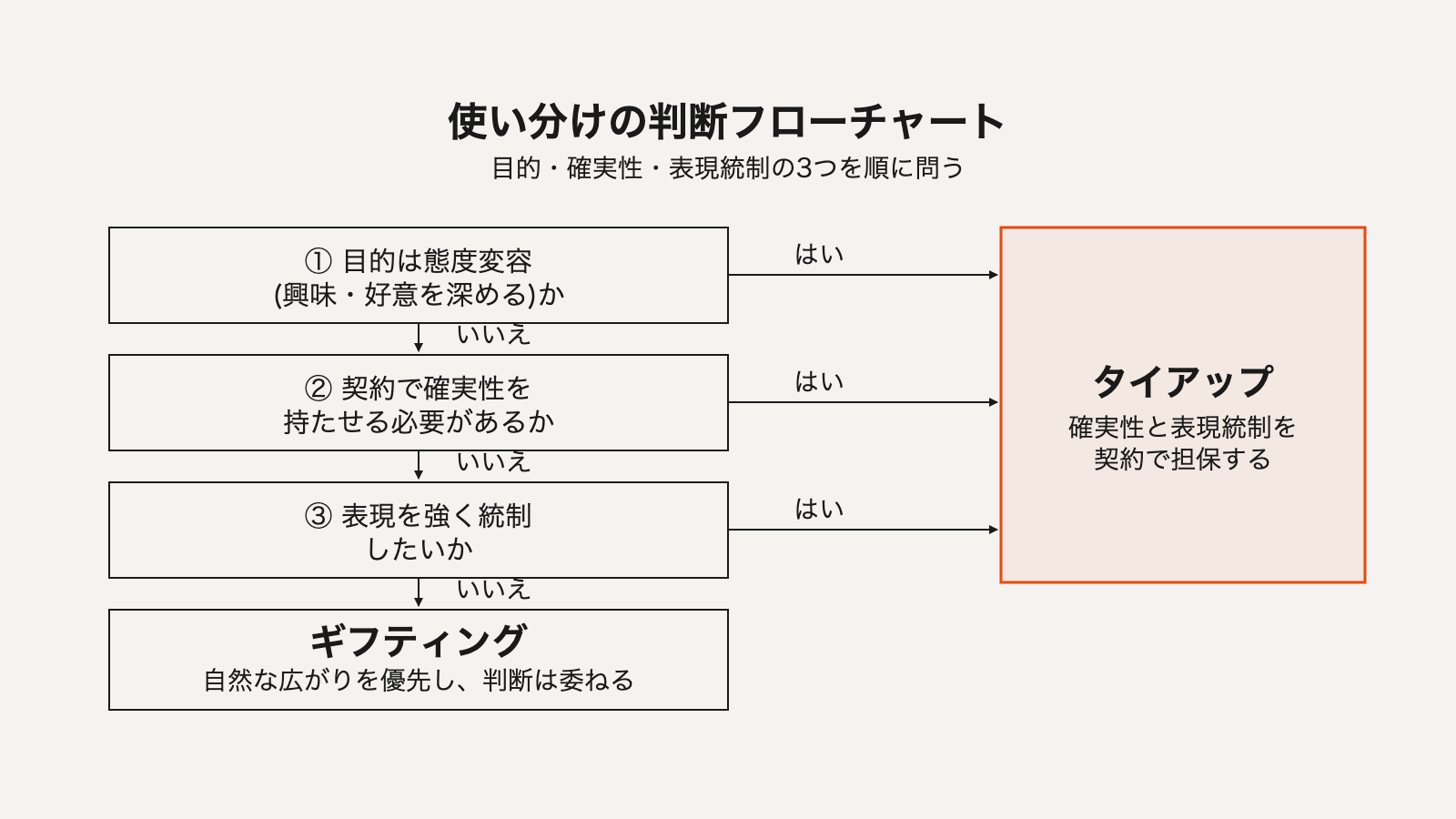
Figure 1: A decision flowchart for choosing based on the three axes of objective, certainty, and expression control
When You're Unsure, Ask Three Questions in Order
Rearranged into an order you can use in practice, the three axes become:
- Do you want to gain UGC or attitude change from this campaign? The more your objective leans toward attitude change, the more it points toward sponsored collaboration.
- Do you need to secure certainty, through a contract, regarding whether a post will be made, and its content or timing? If yes, sponsored collaboration is a candidate; if not, gifting becomes an option.
- How much do you want to control the brand's worldview in advance? The stronger the control you need, the more it points toward sponsored collaboration.
If the answers to these three questions don't come together consistently—or contradict each other—it may mean that the objective itself hasn't been sufficiently articulated. Before choosing a method, it's more important to sharpen the resolution of your objective.
There's Also an Approach: Build the Core with Sponsored Collaboration, Then Expand with Gifting
Up to this point, we've organized things under the assumption of choosing one or the other. In practice, though, combining both is also a viable framework.
Here's the idea. First, use sponsored collaboration to create, with certainty, the core post that captures the worldview and selling points the brand wants to convey. Then, roll out the same product broadly through gifting, building up a larger volume of natural mentions around that core post.
This framework works because the worldview established through the sponsored collaboration also shapes how the posts generated through gifting are received. Because the core post establishes the context first, the posts that emerge from gifting are less likely to drift from the direction the brand is aiming for. Conversely, if you roll out gifting broadly without going through a sponsored collaboration first, the angles of the resulting posts can scatter too widely and fail to converge on the intended worldview.
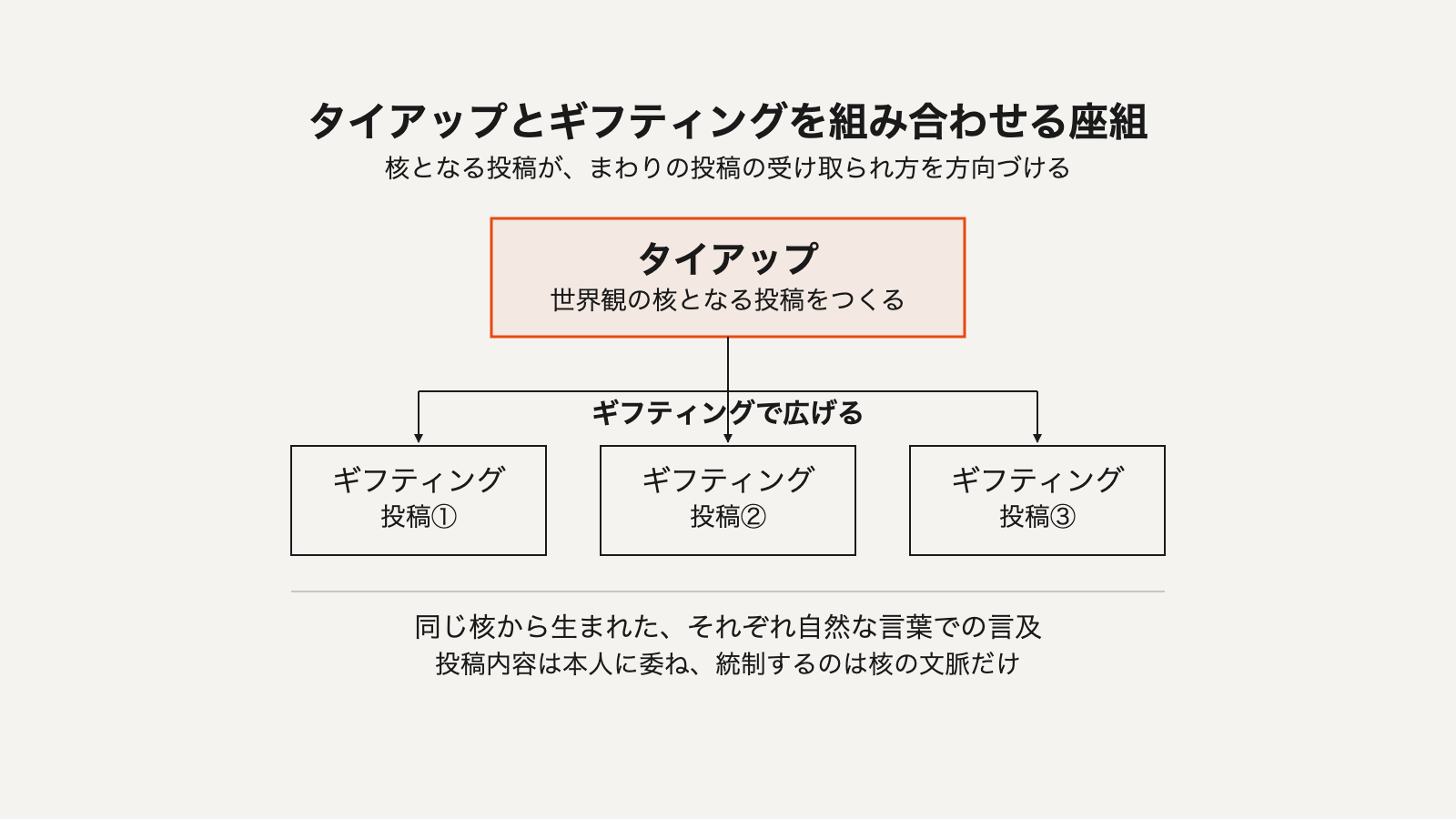
Figure 2: The overall structure of building a core with sponsored collaboration and expanding with gifting
Whether to adopt this framework, too, ultimately comes back to a judgment based on the same three axes. It's worth considering the combination of whether you need to establish a core worldview first (expression control) and whether you also want to achieve reach on top of that (objective).
One point worth noting: this framework is not the same idea as a budget-adjustment approach where you "reduce the number of sponsored collaborations and make up the numbers with gifting instead." Without a core post, the posts spread through gifting will scatter without any context. If you skip the step of establishing the core, the combination itself loses its purpose.
Scope of This Article
This article focused narrowly on the judgment axes for choosing between gifting and sponsored collaboration. It does not cover actual product selection, the specific design of shipping and request timing, or the concrete process of follow-up after posting. Legal considerations, such as PR disclosure requirements for compensated posts, are also outside the scope of this article. It is written on the premise that the design of any individual campaign should be considered according to the objective and circumstances specific to each case.
Conclusion
Gifting and sponsored collaboration are not a matter of one being superior to the other—they are two means that promise different things. If you return to the three axes of objective, certainty, and expression control, in most cases the method you should choose will become clear on its own. When in doubt, we recommend starting by revisiting these three questions in order.