Influencer Marketing in the Food & Beverage Industry: Tasting Events, Gifting, and Labeling in Practice
This article was automatically translated from the Japanese original. Read the original in Japanese
When planning influencer campaigns in the food and beverage industry, you need to address the constraints specific to this sector up front: shipping with expiration dates and temperature control, tasting event design, the timing of seasonal products, and care with labeling and wording.
| Campaign type | Best suited for | Not suited for |
|---|---|---|
| Sampling (product shipping) | Products that can be stored at room temperature and that recipients can try over several days after shipment | Products with a short shelf life, or those that require refrigeration and therefore have strict shipping conditions |
| Tasting events / experience events | Products with features that are hard to explain in words, such as taste or aroma | Products for which serving conditions at the venue (temperature, cooking facilities) are hard to arrange |
| Ongoing sponsored collaboration posts | Seasonal or staple products where you want to build awareness over a certain period | Seasonal items with a very short sales window, where posts cannot go live in time |
Why Do Shipping and Storage Conditions Shape Campaign Choices?
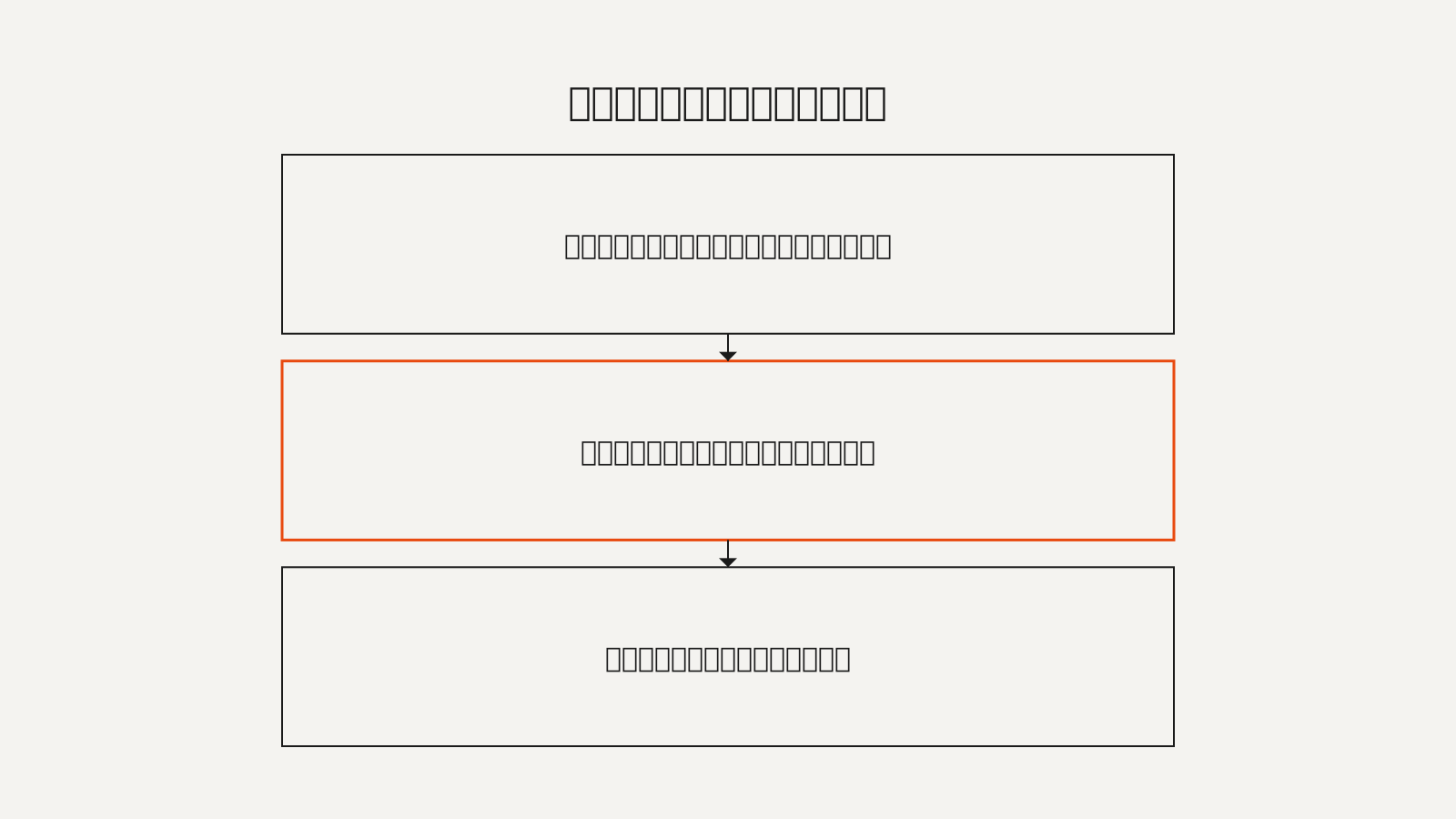
Food and beverage products come with constraints that other industries do not have: expiration dates and temperature control. If a product can be stored at room temperature and has a reasonable amount of shelf life remaining, it is easy to design a sampling campaign in which the product is shipped and the recipient tries it at their own pace. By contrast, products that require refrigeration or freezing, or that have a short shelf life, require careful coordination between the shipping date and the delivery date, and are not suited to sampling. For example, when shipping fresh confectionery with a shelf life of about one week, if you do not check in advance whether the recipient will be home and how they will store it, the product may be tried in a deteriorated state. Likewise, for products that need frozen delivery, you may need to confirm that the recipient has enough freezer space, an adjustment that ordinary sampling does not require. If you put off checking shipping conditions and send products by standard methods, the quality may already have dropped by the time they arrive, and the resulting posts tend to fail to convey the product's appeal. Confirmation before shipping should be treated as the first step that determines the quality of the posts.
What Should You Watch for at Tasting and Experience Events?
Taste and aroma are hard to convey in words alone. Experience events where guests actually try the product are well suited to communicating such characteristics. However, serving at a venue adds conditions that room-temperature products do not have. For example, when serving a dish whose serving temperature is critical, you need to check the serving timing and the availability of cooking facilities at the venue selection stage. Likewise, when using ingredients that require allergen labeling, it is essential to prepare both advance notice to attendees and labeling at the venue. If these conditions are checked only after the experience has been designed, you may be forced to change venues. The larger the event, the harder it becomes to synchronize serving times, so operational measures are also needed, such as serving in smaller groups or deciding the order of service in advance.
How Should You Time Seasonal Products?
Seasonal limited-edition products often have a short sales period, making it a challenge to fit in the preparation time for sampling or events. Working backward from the release date, you need to build a schedule that defines when to start preparing shipments and venues. When combining ongoing sponsored collaboration posts, staple products make it easier than seasonal ones to secure a period in which to build awareness. If you aim for ongoing posts with a seasonal product, a practical approach is to request posts earlier than usual, on the assumption that the sales period is short. If you start preparing shipments or events just before launch, there may not be enough time to coordinate with the influencers' schedules, and as a result posts may end up concentrated near the end of the sales period.
What Should You Watch for in Labeling and Wording?
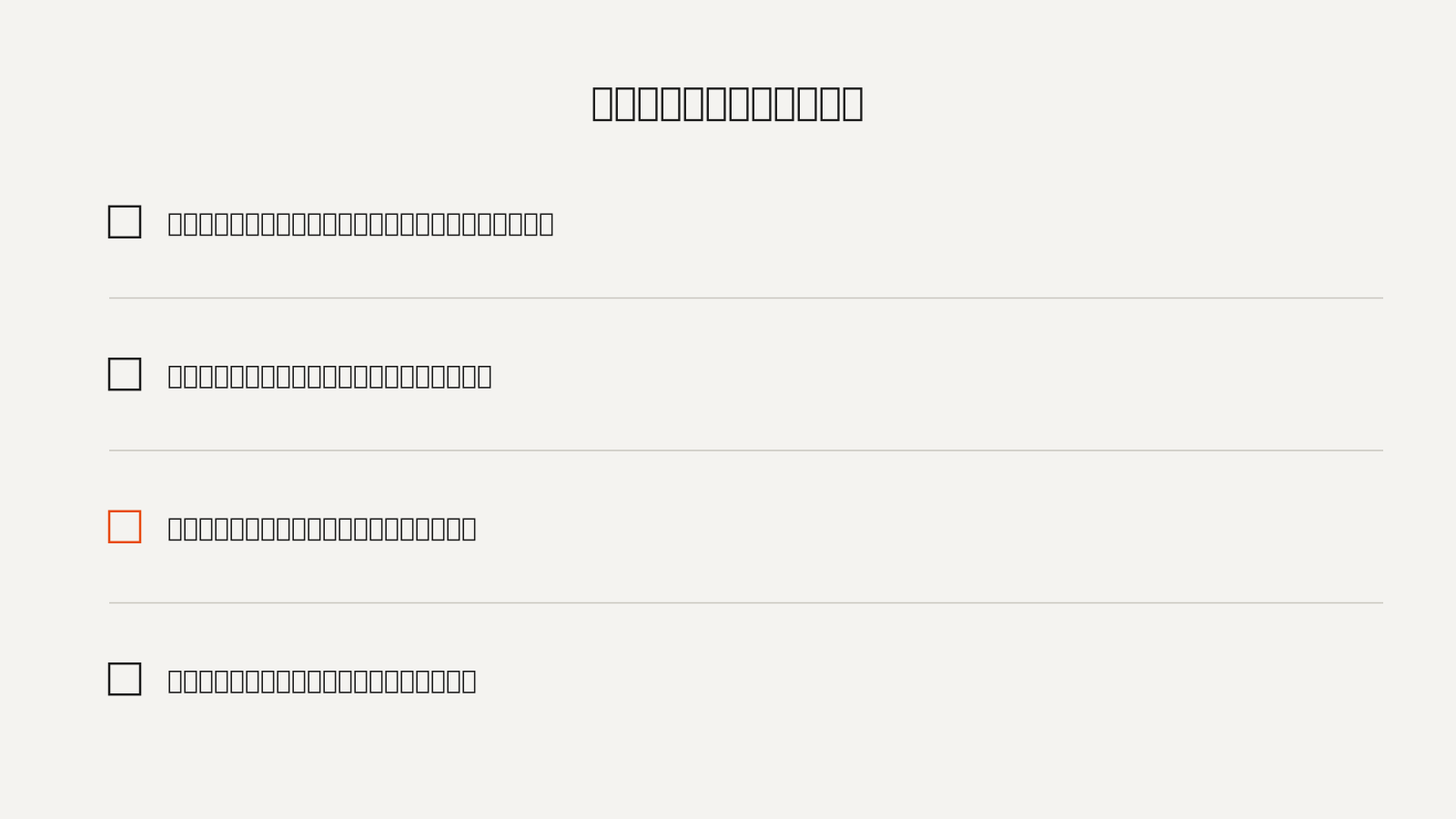
In food and beverage posts, expressions that guarantee efficacy or health benefits, and expressions that excessively assert taste or quality, tend to become problematic. For products with health-food-style appeals in particular, you need to check wording against the Pharmaceuticals and Medical Devices Act, the Health Promotion Act, and the Act against Unjustifiable Premiums and Misleading Representations. When commissioning influencers, share in advance the range of what can be written as their actual impressions after trying the product, and proceed on the premise that they will avoid definitive statements guaranteeing results. Even when it is the individual's own impression, definitive statements such as "you will definitely lose weight" or "it's sure to work" can be judged by the same standards as the product's own labeling. Sharing examples of phrases to avoid at the briefing stage can reduce correction requests after posting. For trends in the situations that have led to backlash in the past, see 食・飲料業界でインフルエンサー起用が炎上しやすいのはどんな場面か. Details of practical considerations by genre are compiled on the 食品・飲料のジャンルページ.
Scope of This Article
This article covers the constraints unique to planning influencer campaigns in the food and beverage industry, the suitability of each campaign type, and how to schedule seasonal products. It does not make judgments on the shipping conditions of individual products or on whether specific expressions are acceptable.
Conclusion
In the food and beverage industry, shipping and storage conditions and seasonality are the first factors that determine which campaign type to choose. We believe that confirming these two points first lays the groundwork for smoothly designing the experience and requesting posts.