Instagram, TikTok, or YouTube — How to Choose the Right Platform for Your Goals
This article was automatically translated from the Japanese original. Read the original in Japanese

We sometimes receive inquiries asking "Which of Instagram, TikTok, or YouTube should we start with?" before we've even discussed the client's objectives or products. We understand the impulse. Because these three platforms have completely different characters and require separate approaches to both team structure and content planning, it's natural to want to know "the one right answer" upfront.
However, there is no single fixed answer to this question. What determines the answer isn't platform popularity, but rather what objective you're pursuing and what kind of reception your product tends to receive. This article organizes the distinct characteristics of each of the three platforms, explains how to assess fit by objective, and covers practical considerations for combining multiple platforms. We won't go into platform specifications or user numbers, since these change quickly and are likely to be outdated by the time you read this.
Before Choosing "Which Platform," Decide "For What Purpose"
The objectives of PR initiatives can be broadly organized into three categories. The first is awareness building—introducing your brand or product to audiences who don't yet know it. The second is supporting name-search intent and understanding—conveying reasons to choose your brand to audiences who recognize the name but don't know much about it. The third is supporting purchase decisions and UGC—giving a final push to audiences who are already considering a purchase, and creating conditions where their posts spread the message to others.
In actual campaigns, it's tempting to pursue all three objectives at once, but each platform has its own strengths. If you try to cram everything into a single platform and a single post, the result tends to be a post that falls short on every objective. The less clear-cut your priorities are, the more important it becomes to rank your objectives before choosing a platform.
Instagram: Building a Brand World and Pushing Toward Purchase
Instagram's strength lies in its ability to build up a brand's world over time within the ongoing relationship created by follows. Through the Feed, Stories, and the save function, followers gradually come to understand a brand's atmosphere. Stories in particular tend to convey closeness with followers, allowing brands to show everyday usage scenes or behind-the-scenes content that creates a sense of familiarity the Feed alone can't achieve.
This character suits scenarios focused on deepening understanding around name-search intent and pushing audiences toward purchase just before they decide. This is because it aligns well with "research" behaviors—people who are already interested saving posts for comparison, or scrolling back through an account's past posts to check details. On the other hand, Instagram's power to help audiences who don't yet know the brand discover it for the first time tends to be weaker than TikTok's, which we'll cover next. This is because the platform is fundamentally designed to reach people who are already following an account, making it harder to reach non-followers.
TikTok: A Platform for Being Discovered by People Who Don't Know You
TikTok's strength is its discoverability—content reaches people who aren't even following the account. Through the recommended feed, posts flow to people who don't know the brand or account at all. Because content is designed to grab attention within a short time frame centered on sound and pacing, TikTok is better suited to helping people first become aware of something's existence than to encouraging careful, deliberate consideration.
This character suits scenarios focused on generating initial momentum for awareness building. It's particularly effective when launching a new product or aiming for exposure among audiences with no prior connection to the brand. Conversely, it's not well suited to building up a brand world over time or delivering detailed information to people already considering a purchase. Within a fast-moving feed, it's difficult to prompt the kind of careful comparison behavior needed for that.
YouTube: A Platform for Ongoing Search and Deeper Understanding
YouTube's strength lies in its asset-like quality—content continues to be searched even after publication—and its ability to deliver deeper understanding through longer-form video. While Instagram and TikTok posts flow through a timeline, YouTube videos can be discovered well after publication through search and recommendations. YouTube is also well suited to information-dense content, such as usage explanations or comparison-focused material.
This character suits scenarios focused on supporting name-search intent and understanding, as well as appealing to audiences who want to research carefully. It serves as a resource for people who already recognize the brand name and want to learn more before making a purchase. On the other hand, its power to help people who don't yet know the brand discover it by chance isn't as strong as TikTok's. In most cases, viewers arrive at YouTube content already having some interest that prompted them to search.
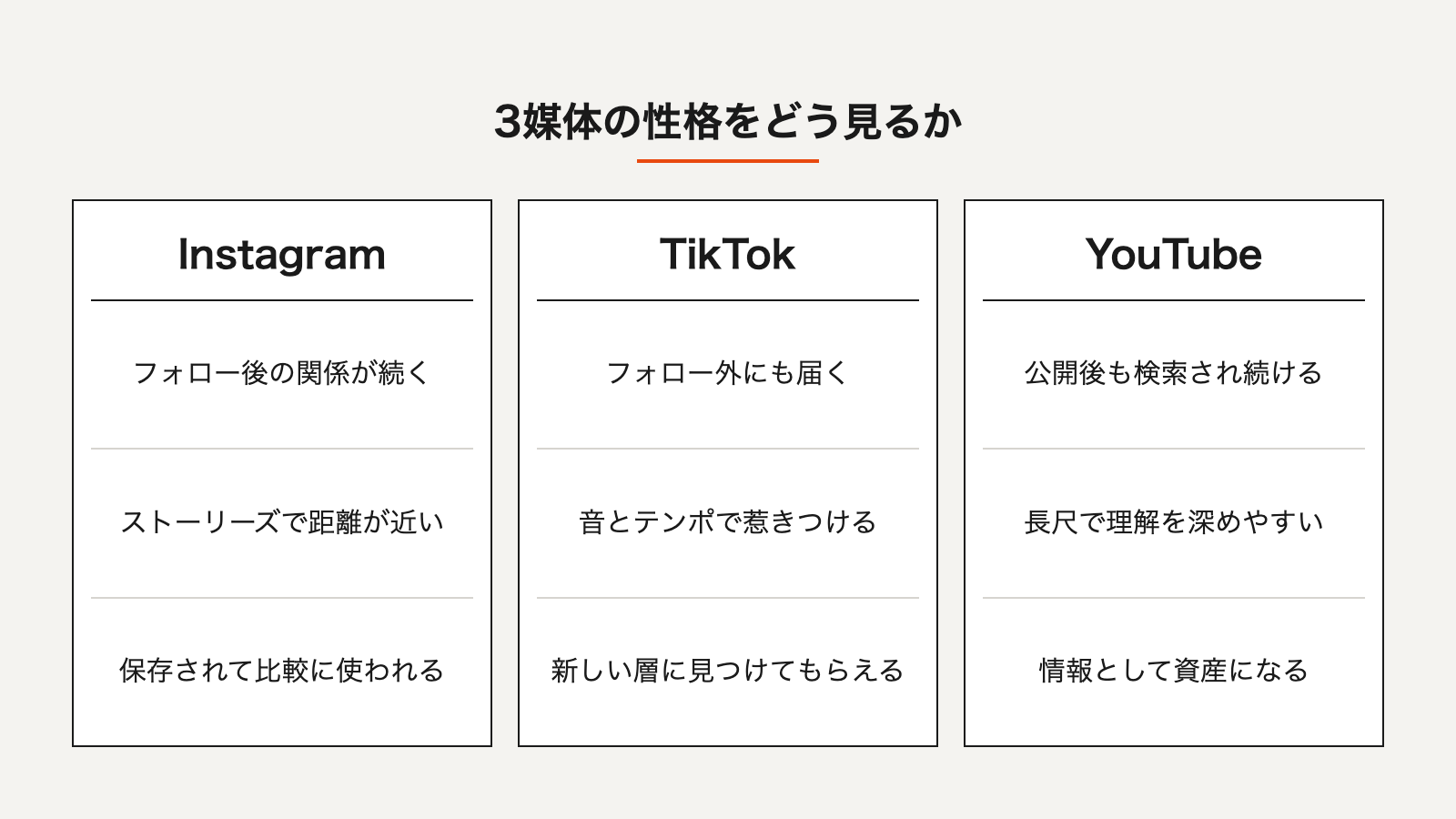
Figure 1: Comparing the characteristics of the three platforms (discoverability, relationship closeness, search-asset value)
Matching Objectives with Platforms Reveals the Right Choice
When you reorganize the points above along the axis of objectives, clear tendencies emerge. When the priority is accelerating awareness building, TikTok's discoverability tends to be effective. When the priority is deepening name-search intent and understanding, YouTube's search-asset value tends to be effective. And when the priority is pushing audiences toward purchase or cultivating a brand world, Instagram's closeness tends to be effective.
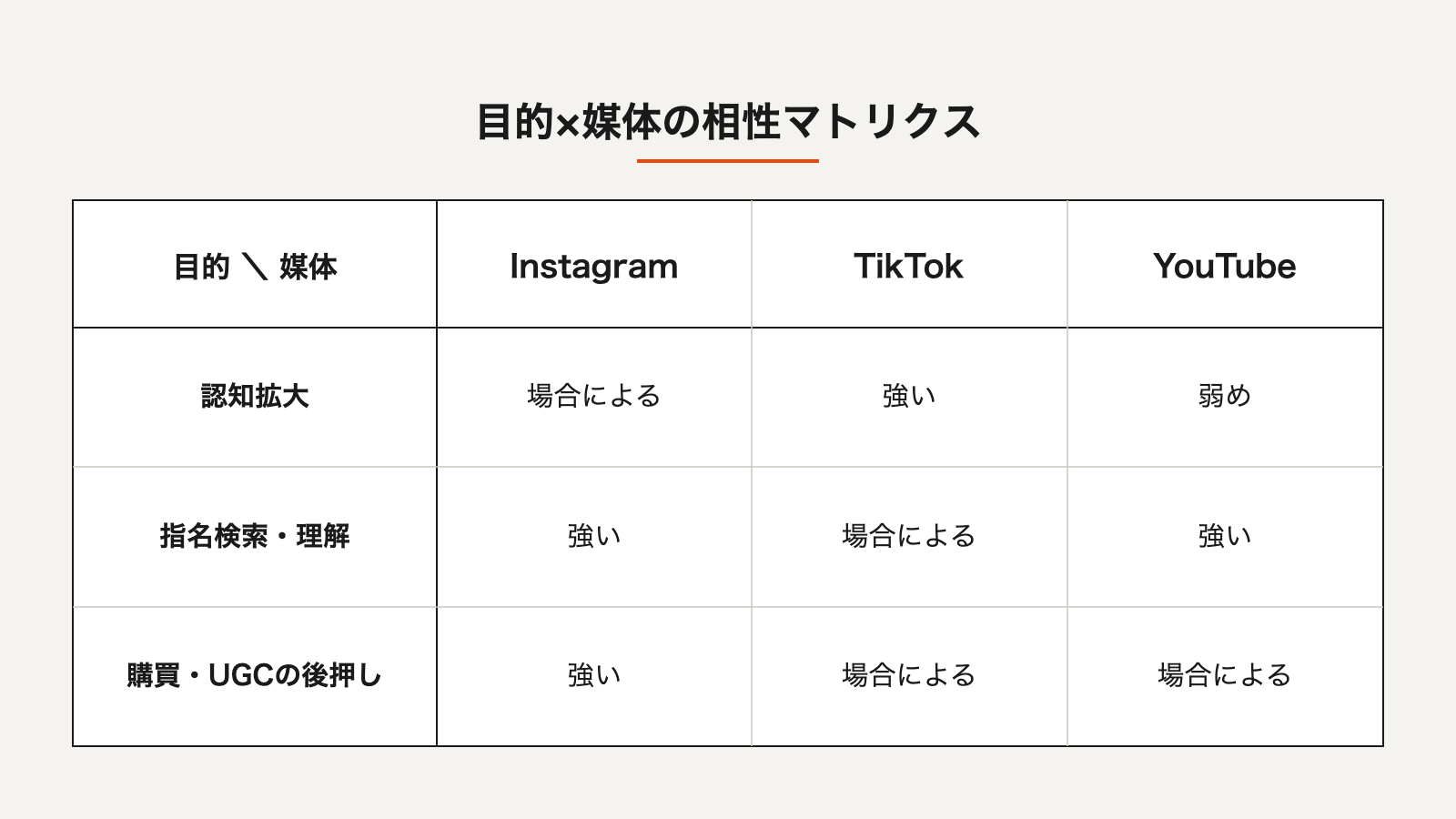
Figure 2: Objective × platform fit matrix
However, this is a tendency, not an absolute rule. How well it applies depends on the nature of the product. For example, for a product where visual appeal directly drives the purchase decision, Instagram's visual strength might be effective even at the awareness stage. Or for a product where explaining how to use it is a barrier to purchase, YouTube's explanatory content might be effective even at the awareness stage. You need to consider not just the objective, but also how the product is likely to be received in a way that motivates action.
Influencer marketing includes multiple approaches beyond these three platforms, each with a different role (we've organized the full picture of these approaches in What Is Influencer Marketing?). It becomes easier to make decisions if you think of platform selection as the process of determining "which approach to use for which objective" within that broader picture.
Why It's Sometimes Better Not to Assign One Person to Multiple Platforms
When combining multiple platforms in a campaign, there's often a temptation to ask a single influencer to handle posts across all of them. This appears to simplify coordination and reduce the burden on the client, since there's only one point of contact. However, in our experience, this doesn't necessarily lead to good results.
The kind of content that builds a brand world on Instagram over time and the kind of content that stops a stranger mid-scroll on TikTok require fundamentally different presentation styles. Some creators can naturally handle both formats well, but when they can't, one of the two platforms ends up underperforming. If you force a single person to cover multiple platforms, the result can be a post that fails to fully leverage the strengths of either platform. This isn't a matter of the creator's skill—it's a matter of how the casting structure itself is designed. Assigning platforms with different objectives to a single person tends to produce mismatched results. We've also covered this kind of structural mismatch in When Sponsored Collaboration Results Don't Add Up.
A useful gauge is whether the creator in question naturally posts across multiple platforms in their everyday activity, using presentation styles suited to each one. If a creator already switches naturally between platforms on their own, there's no problem asking them to handle multiple platforms for your campaign. If not, it's better to cast different creators suited to each platform, which makes it easier to draw out the strengths of each.
Key Questions to Consider
Before deciding on a platform, it's worth clarifying the following three questions:
- Which objective takes priority in this campaign (awareness building / name-search intent and understanding / support for purchase and UGC)? If you want to pursue multiple objectives at once, how should you rank them?
- Is your product something that drives action through momentary interest, or something that drives action through careful, time-consuming comparison?
- Does the creator you want to cast have strength in a single platform, or do they naturally operate across multiple platforms?
Only once you have answers to all three can you design something concrete—which platform to build your strategy around, and how to divide roles if you're combining multiple platforms. Conversely, if you choose a platform before settling on your objective, you risk ending up with completed posts that never generate the response you were aiming for. We also cover points worth checking when considering who to consult about casting design beyond platform selection in How to Choose a Casting Company.
Scope of This Article
This article covered the characteristics of each platform, their fit with different objectives, and considerations for combining multiple platforms. It did not address budget allocation, the design of post volume or frequency, operations combined with paid advertising, or specific case studies by product category. The optimal approach to these varies significantly depending on the premises of each individual project, so we believe writing about them in general terms would actually distance the discussion from reality.
Conclusion
"Which platform works best" is, in fact, a question with no answer. Whether something works depends on the combination of objective, product, and the creator you cast. Starting by narrowing down to a single objective will make your platform choice far clearer.