Broad, Shallow Reach vs. Narrow, Deep Engagement: Which Should You Choose?
This article was automatically translated from the Japanese original. Read the original in Japanese

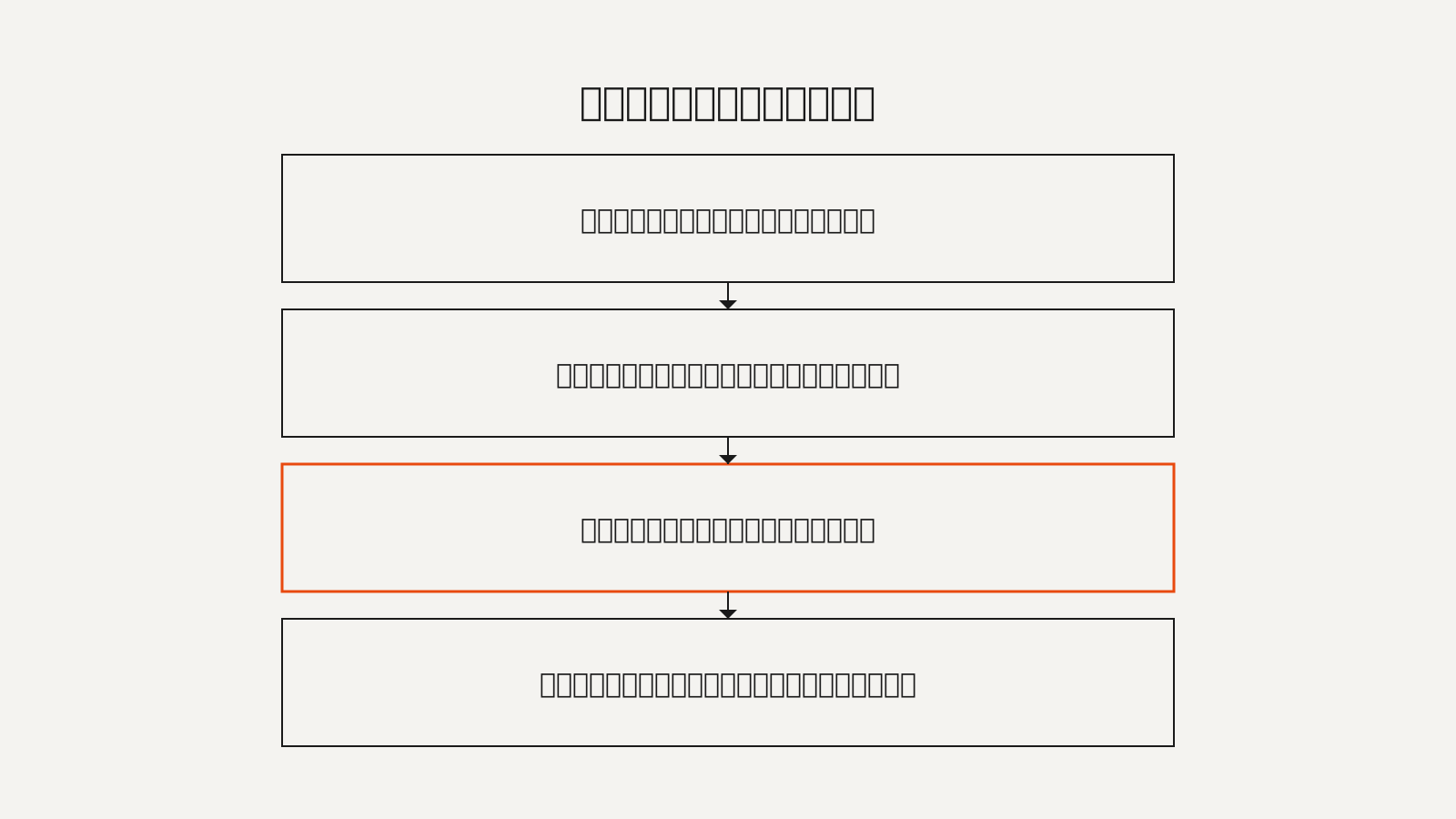
Rather than casting a wide net with high-reach influencers, narrowing down to a small number of influencers whose worldview and communication tone closely match the brand—and engaging deeply with them—makes it easier to achieve both awareness and protection of brand image. A broad, shallow approach can secure a larger reach, but the risk that a post with mismatched tone gets widely shared increases proportionally. Narrowing down to a small number and engaging deeply means the reach itself is smaller, but it allows for careful confirmation of alignment with the brand's worldview, making it easier to obtain high-quality content while keeping the risk of damaging brand image in check.
Why Does Selecting Based on Reach Alone Increase the Risk of Worldview Mismatch?
When candidates are gathered broadly based on reach as the criterion, filtering tends to rely solely on numbers like follower count and engagement rate, and the step of checking each individual's feed atmosphere and communication temperature tends to be skipped. As touched on in Casting Success or Failure Is Largely Determined at the List Stage, lists narrowed down by numbers alone tend to include candidates who meet the criteria numerically but don't fit the brand's worldview. As the number of requested influencers increases, the depth of confirmation that can be given to each candidate tends to decrease.
What Changes When You Narrow Down to a Small Number and Engage Deeply?
When the number of candidates is small, sufficient time can be secured per person for explaining the request details and exchanging communication. As touched on in Turning "Searching" into "Comparing"—The Effect of Sequence in Casting, which addresses why casting is a two-stage process, it is precisely because the pool is narrowed down that deeper engagement with each individual becomes possible, creating room to confirm worldview alignment as the process moves forward.
Which Should Be Prioritized: Breadth or Depth?
In situations where gaining broad awareness quickly is itself the objective—such as immediately after a new product launch—prioritizing reach is a reasonable judgment. On the other hand, for initiatives focused on long-term brand image building or where precision of worldview alignment matters, narrowing down to a small number and engaging deeply is more suitable. The question isn't which approach is superior, but rather that the decision should be based on whether the initiative's purpose is short-term reach or long-term worldview formation.
What Should You Be Careful About When Narrowing Down to a Small Number?
Narrowing down to a small number increases the effort invested per person, while overall reach becomes smaller. If this trade-off isn't shared with stakeholders in advance, the initiative may end up being evaluated afterward as "not reaching as many people as expected." When deciding to narrow down to a small number, it's necessary to align beforehand—before the initiative begins—that the success metric will be degree of worldview alignment rather than reach.
We believe that reach and worldview alignment are not something to always choose one over the other, but rather something to be used differently depending on the purpose of the initiative.