Same Product, Different Results: How Brief Granularity Shapes the Outcome — A Practical Guide to Briefing Design
This article was automatically translated from the Japanese original. Read the original in Japanese

Even when the same product is requested from influencers with similarly sized follower bases, the quality of the resulting posts can differ wildly from one campaign to the next—this is a concern we sometimes hear from agency and brand representatives. The candidate selection wasn't wrong, yet somehow the finished posts just don't align. In most cases, the biggest factor behind this gap isn't the influencer's own skill, but rather what was written—and how much—in the request itself (the brief).
In What's Really Happening When Sponsored Collaboration Results Fall Flat — A Study in the Failures of Casting Design, we listed insufficient brief granularity as one type of failure. In this article, we isolate that granularity issue and dig deeper into it. After sorting out what breaks down at each extreme—briefs that are too vague, and instructions that are too detailed—we present a design framework: "leave the creative voice to the influencer, and state clearly only what cannot be compromised." By the end, you should be able to see which extreme the briefs you typically write tend toward, and where you need to make adjustments.
A Brief Contains Three Layers with Distinct Characteristics
A brief is the collection of information that the client side conveys to the influencer for the purpose of directing the post. We believe that the core work of briefing design is deciding what to write and what to leave out.
The information in a brief can be divided into three layers, each with a different nature. The first is what must not change—non-negotiable conditions such as brand guidelines, contractual constraints, or expressions to avoid. The second is what you'd like them to do—the single point you want to communicate in this particular post, and the reason you're asking this specific person. The third is what should be left to the individual—the expression itself, such as word choice, composition, and how they speak to their followers.
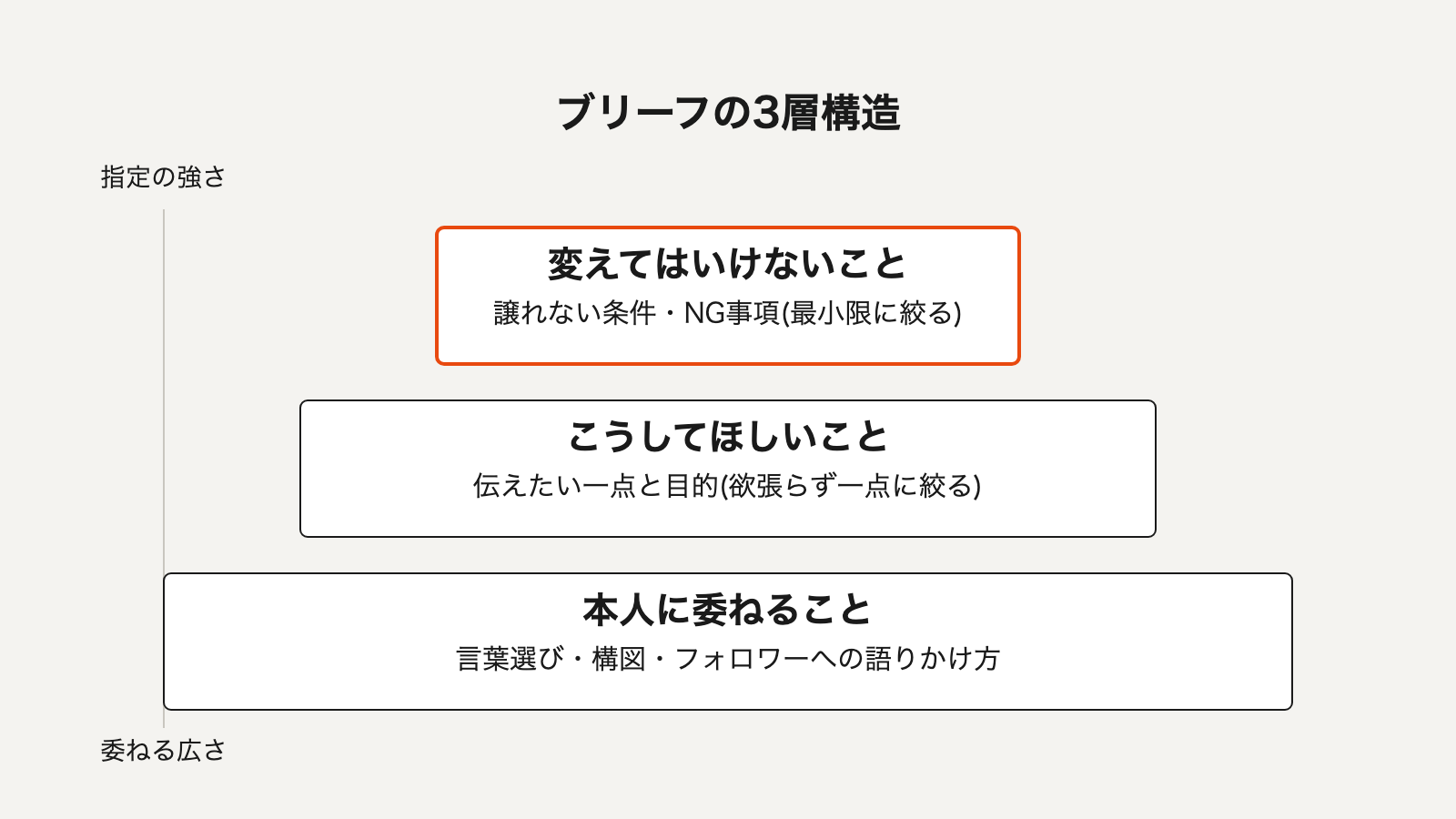
Figure 1: The Three-Layer Structure of a Brief
Most brief failures occur when these three layers are written without any awareness of their distinctions. Overly vague requests leave the second layer (what you'd like them to do) blank. Overly detailed instructions bring the same level of rigidity found in the first and second layers into the third layer (what should be left to the individual). In the next two sections, we'll look at what happens in each case.
An Overly Vague Request Forces the Recipient to Search for a Reason to Post
"We're sending you the product, so we'd appreciate it if you could introduce it whenever convenient"—a request like this is polite in tone, but the layer of what you'd like them to do is left blank. If what aspect of the brand you want conveyed, and in what context, hasn't been put into words, the recipient has to start by figuring out for themselves why they should even post about it.
This kind of blank spot tends to occur especially often in projects involving multiple departments. Someone may have the single key message in their head, but if no one is assigned the role of translating that into the actual request, the request ends up drifting on its own. The recipient has no way of reading what the sender truly values.
The result, even if a post does get made, is that it ends up framed from an angle different from the single point the brand actually wanted to convey. This isn't a matter of the recipient's comprehension. It's a design failure on the client's side—sending out a request without ever putting the intended message into words. When we draft a brief, the first thing we check—before even the quality of candidate selection—is whether we ourselves can state this "single point we want to convey" clearly, in our own words.
Overly Detailed Instructions Strip the Naturalness from the Influencer's Own Words
At the opposite extreme are requests that dictate exact wording, specify composition down to the smallest detail, or even instruct what time of day to post. At first glance, this looks like a thorough, careful way to ensure the brand's intent gets through. In reality, though, it invites a different kind of failure.
When detailed specifications intrude into the layer that should be left to the individual, the post ends up feeling disconnected from that person's usual voice. Followers follow someone because they already know that person's everyday tone and interests. When borrowed-sounding phrasing gets mixed in, it comes across to followers as a sense that the influencer was "made to say this." And the more trust followers place in that person, the more that dissonance stands out.
There's another effect of overly detailed instructions that's easy to overlook: it can come across as a message that you don't trust the influencer's own judgment in word choice or composition. We see influencers not merely as parties to hire, but as professional collaborators in expression. That's precisely why we believe over-specifying isn't a "safe choice"—it's a decision that narrows the room for the person to exercise the expressive skill they've built over time. If a post doesn't turn out well, it's not a reflection of that person's skill, but the result of a design choice by the campaign team that over-specified even the layer that should have been left to them.
A Good Brief Works by Not Conflating the Three Layers
Both overly vague requests and overly detailed instructions stem from the same root cause: writing the request without drawing boundaries between the three layers. A good brief comes together by varying the intensity of what's written for each layer.
What must not change should be kept to as few items as possible. If this layer is written too thickly, it crowds out the next layer, ultimately causing the same failure as over-specification. Narrow it down to only the truly non-negotiable conditions—expressions to avoid, or points that cannot be waived under brand guidelines.
What you'd like them to do should be narrowed to a single point without greed. Cramming two or three things you want conveyed in a single post ends up meaning none of them come through sufficiently. Stating just one point clearly, paired with the reason you're making this particular request, is the condition that makes this layer function.
What should be left to the individual needs to be explicitly stated in words. This is the part most easily dropped in practice. For anything left unwritten, the recipient can't distinguish whether it's "intentionally left to my discretion" or "simply undecided." By deliberately putting the scope of discretion into words, the recipient can use that latitude with confidence.
A Good Brief Has Five Components
Translating the three-layer concept into an actual request document breaks down into the following five elements.
- Purpose — Why is this particular post being requested? This is the background of who you want to reach and what you want to convey. When the purpose is shared, the intent behind the other elements becomes easier to understand.
- The single point to convey — Choose just one message that's essential for this post. If there are multiple candidates, prioritize and narrow it down to one.
- Prohibited items — Communicate expressions to avoid, along with the reasons. Including the reason lets the individual choose an alternative expression on their own.
- How reference materials are presented — When sharing past post examples or images, make clear whether they represent "do it exactly like this" or "aim for this kind of feel." If this is ambiguous, something handed over as a reference will be received as a directive instead.
- Timing of confirmation — Communicate in advance at what stage before posting, and what exactly, you'll need to check. Whether you're asking for a full draft review or just confirmation of key points changes the burden placed on the individual.
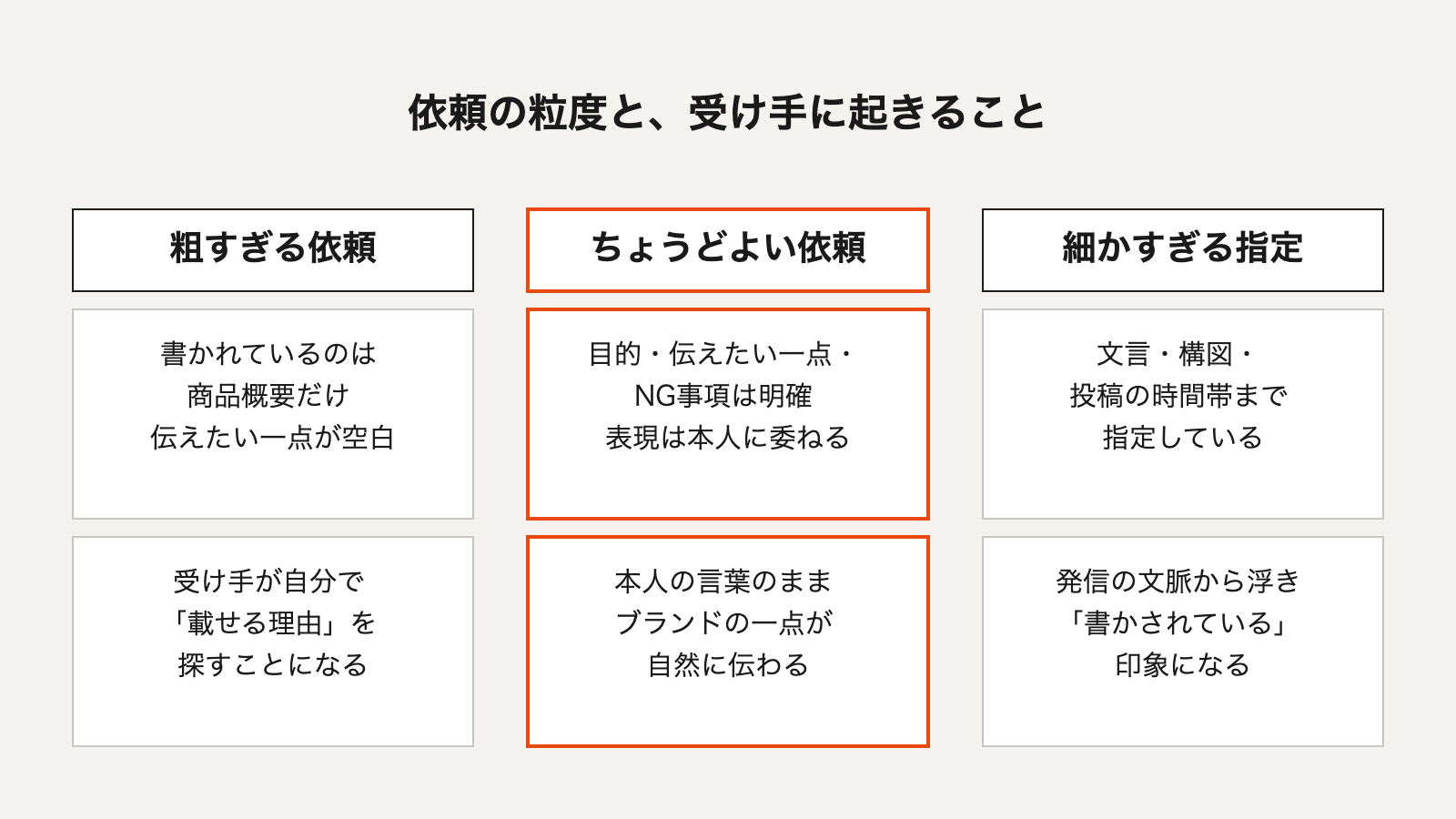
Figure 2: Comparison of overly vague requests / well-balanced requests / overly detailed instructions
None of these five elements is about writing more. Communicate the purpose, the single point to convey, and the prohibited items without excess or deficiency, and make the presentation of reference materials and the timing of confirmation clear. That alone is enough to avoid both overly vague requests and overly detailed instructions.
How Much to Leave to the Individual Depends on the Nature of the Project and the Depth of the Relationship
The balance among the three layers isn't fixed at the same ratio across every project. There are mainly two factors that determine where the balance should shift.
One is how clearly the context you want to convey has already been decided. For campaigns tied to a new product launch, or where the selling point to communicate has already been set in advance, the layer of what you'd like them to do needs to be written somewhat more specifically. Conversely, for campaigns aimed at broadly introducing the brand's overall world and values, lightening this layer and widening the scope left to the individual tends to produce more natural posts.
The other factor is how much of a relationship you've already built with that person. For someone you're working with for the first time, it helps to write the single point you want conveyed a bit more carefully, to prevent any misalignment of intent. On the other hand, for someone you've repeatedly worked with, since the brand's world and values are already shared, you can widen the layer left to their discretion without it drifting off target.
Neither of these judgments is decided solely at the stage of writing the brief. The precision of candidate selection—deciding who to ask in the first place—determines just how much needs to be spelled out in the brief to begin with. As discussed in Turning "Searching" into "Comparing" — The Effect of Sequence in Casting, if you carefully assess the overlap with the brand at the candidate-narrowing stage, posts that naturally align with the brand's world are more likely to emerge even without spelling everything out in the brief. Selection and briefing are separate processes, but they share the burden between them.
The Scope of This Article
This article focused specifically on the design thinking behind what to write in a request and at what level of granularity. It doesn't cover specific text templates, the wording used when incorporating terms into contracts, or the legal rules themselves governing PR disclosure labeling. Adjustments in granularity for overseas projects or cases involving multiple languages, as well as how to approach requesting revisions after a post has gone live, are also outside the scope of this article. This piece is written on the premise that, for individual projects, the balance among the three layers should be reconsidered each time, according to the brand's situation and the depth of the relationship.
Closing Thoughts
Designing a brief isn't about increasing the volume of what you write—it's about deciding what to fix in place and what to leave open. Narrow down what must not change, state clearly in a single point what you'd like them to do, and deliberately put into words what should be left to the individual. We believe that not conflating these three layers is the most reliable path to avoiding both overly vague requests and overly detailed instructions—while making the most of the influencer's own expressive skill and still protecting the one non-negotiable point that matters to the brand.