Who Should Ultimately Be Responsible for Reviewing Sponsored Collaboration Post Content?
This article was automatically translated from the Japanese original. Read the original in Japanese
Reviewing the content of sponsored collaboration posts shouldn't be something a brand handles alone—it should be done in partnership with the casting company. Influencers create posts based on the request they receive, but confirming whether that expression matches the intended message only works properly when both the brand's perspective and the casting company's day-to-day operational knowledge are brought together. If this review is left to only one side, oversights are likely to occur.
Why shouldn't the brand handle content review on its own?
While the brand understands its own intent most precisely, there are practical considerations—such as individual influencers' posting tendencies and the conventions of PR labeling—that a casting company, which oversees many projects daily, is often better positioned to notice. As mentioned in How Far Can You Specify the Copy and Shot Composition of a Sponsored Collaboration Post?, deciding how much creative freedom to allow is something both parties should discuss together. The same applies to content review: relying on only one perspective will always leave certain blind spots.
Which part of the review should the casting company handle?
Points that become apparent through day-to-day operations—such as whether PR labeling is present and in the correct format, or whether the content deviates from the influencer's usual tone—are well suited to the casting company's role. The case discussed in What Should You Do If a Sponsored Collaboration Post Goes Live Without a PR Label? is a strong example of a situation that likely could have been prevented had a casting company with this kind of practical expertise been involved in the pre-publication review.
Which part of the review should the brand handle?
On the other hand, whether the facts about the product or service are accurate, and whether the nuance diverges from the brand's intent, are areas the brand is better positioned to detect. Rather than having each side handle these responsibilities separately, having both sides review the same draft post allows one party to catch what the other may have missed.
When should this collaborative review take place?
As a general rule, the review should happen on the final version of the post, right before it goes live. Reviewing only at the planning stage cannot account for the possibility that the expression may change during the post creation process. By having both the casting company and the brand agree in advance on when and at what stage the review will take place, the final check before publication is less likely to become a mere formality.
What should be decided in advance so the review step isn't skipped?
One reason collaboration becomes a mere formality is proceeding without clarity on who checks what. As mentioned in How Far Can You Go When Requesting Corrections from Influencers?, sharing in advance the scope of requestable corrections, along with each party's respective review responsibilities between the casting company and the brand, helps prevent the collaboration from becoming hollow.
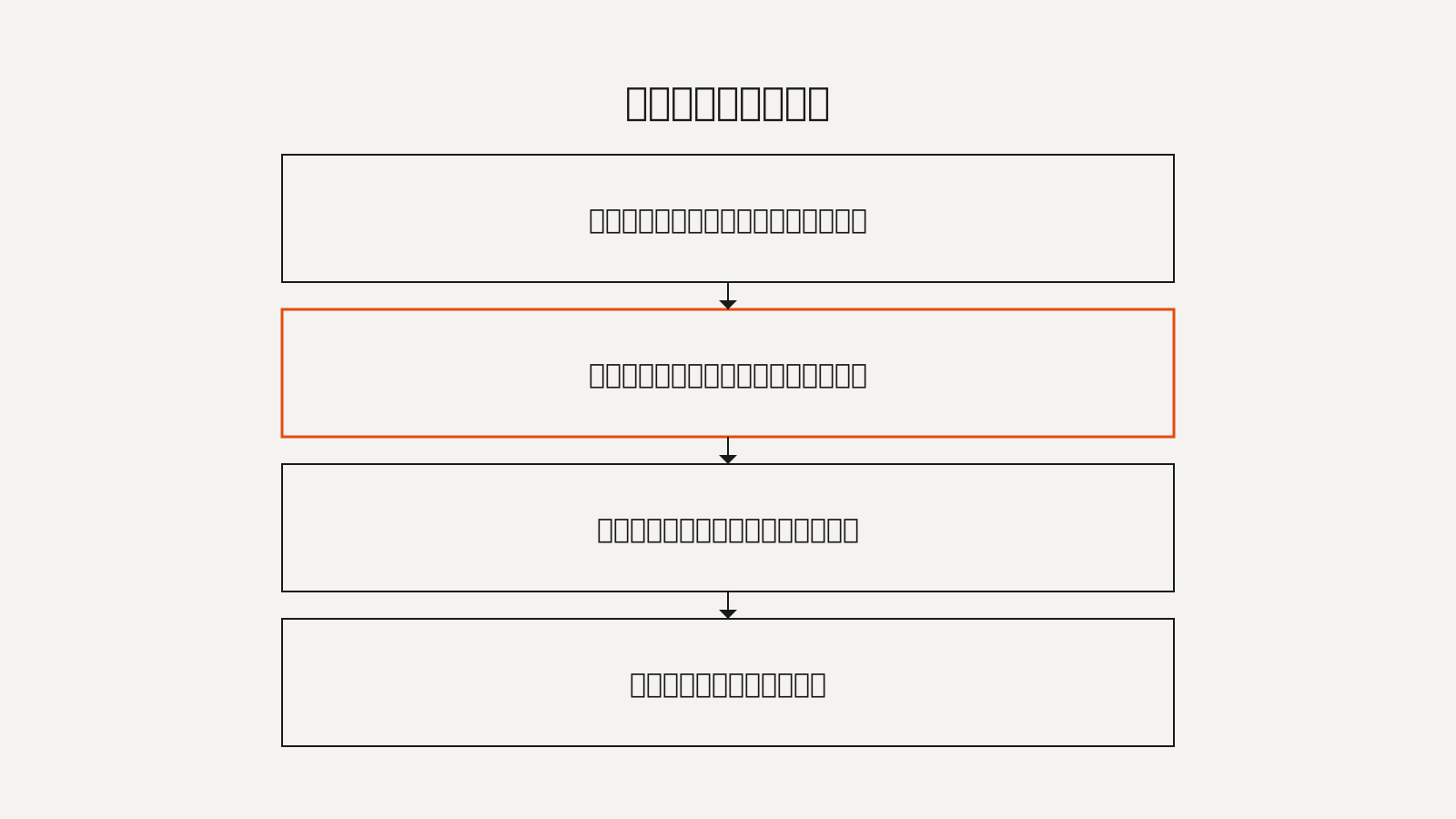
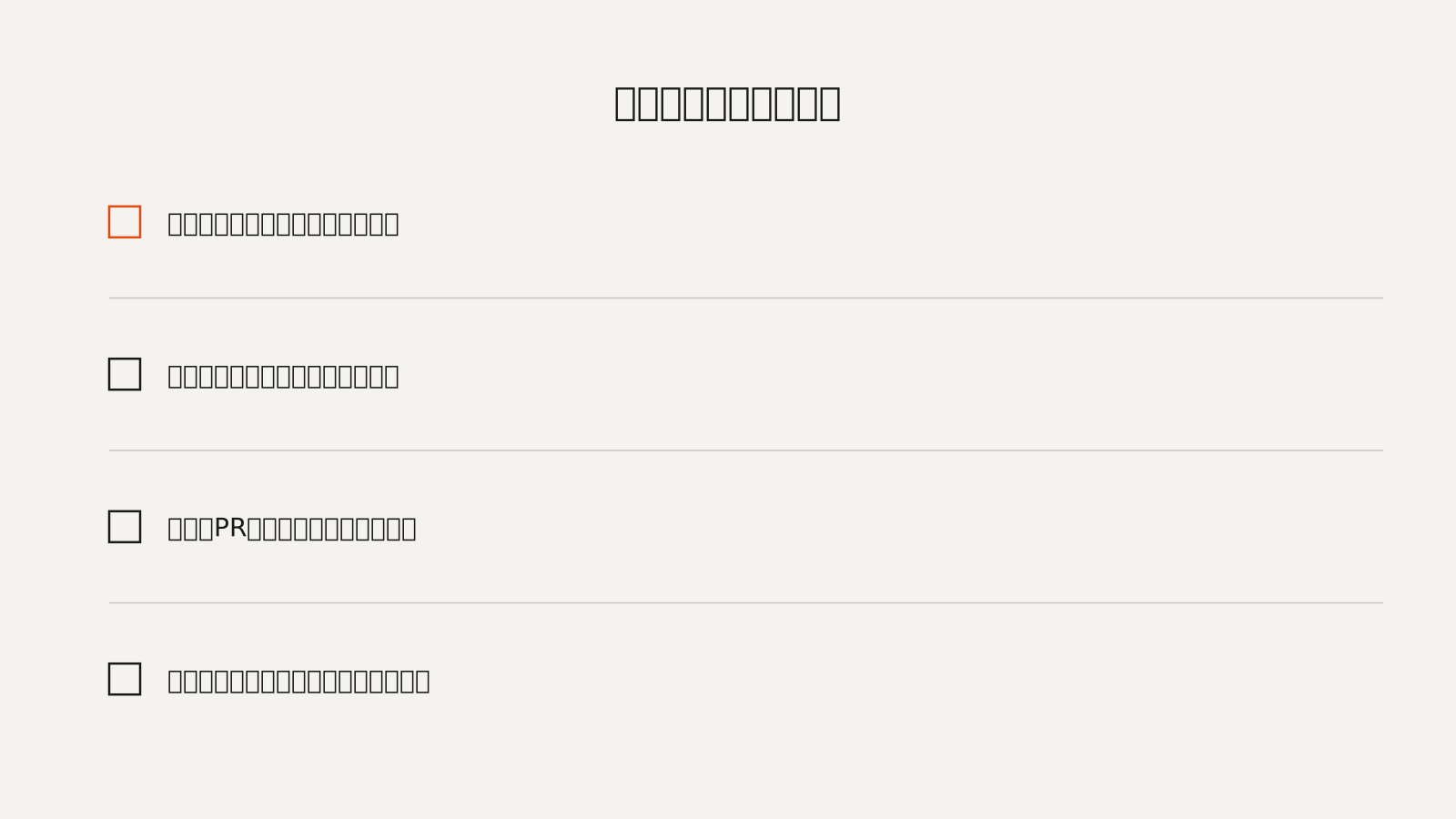
Content review is neither something the brand should handle unilaterally, nor something that can simply be left entirely to the casting company. We believe that each party taking responsibility for the areas they can see most clearly, and building a system where both sides check each other's work, is the best way to reduce oversights.