Why Casting Decisions and Campaign Evaluation Should Use Different Metrics
This article was automatically translated from the Japanese original. Read the original in Japanese

Per-post figures for individual influencers and the overall reach or total UGC volume of a campaign are metrics serving different purposes and should be viewed separately. The former is material for deciding whether to cast that person again, while the latter is material for evaluating how much impact the campaign as a whole generated this time. If you lump both together under the same category of "numbers," the precision of both your casting decisions and your campaign evaluation will suffer.
What Should Individual Influencer Figures Be Used to Judge?
Per-post reach and engagement rate indicate how much response a given person's content can draw. As discussed in Designing KPIs for Influencer Campaigns — How to Combine Reach, Engagement, and Branded Search, these figures are individual data points that can be used directly for future casting decisions. They connect directly to judgments such as whether it's worth casting the same person again or whether you should look for other candidates with a similar audience profile.
What Should Overall Campaign Figures Be Used to Judge?
The overall reach and total UGC volume of a campaign are metrics that show the scale of the campaign as a whole, combining multiple casted influencers. As discussed in The Difference Between Reach and Impressions — How to Read the Numbers in an SNS PR Report, these overall metrics serve as material for reviewing whether this round's budget allocation and campaign design were appropriate. They are figures for grasping the scale of the campaign as a whole—something you can't see by looking at individual influencers separately.
What Happens If the Two Are Confused?
If you make individual casting decisions based on a campaign's overall reach, you risk overvaluing someone whose individual response was actually low, simply because they participated in a campaign with good overall numbers. As also discussed in Why High Engagement Rates Don't Always Translate Into Results, mistaking one type of metric for another lowers the precision of both your next casting decision and your evaluation of the current campaign.
How Should These Be Separated When Reporting?
In campaign reports, the practical approach is to present "overall results" and "individual performance" as separate tables. As also discussed in How to Explain the Results of an Influencer Campaign Beyond Sales, when explaining metrics other than sales, clearly stating the purpose behind each figure and what it represents helps prevent misunderstandings on the reader's part.
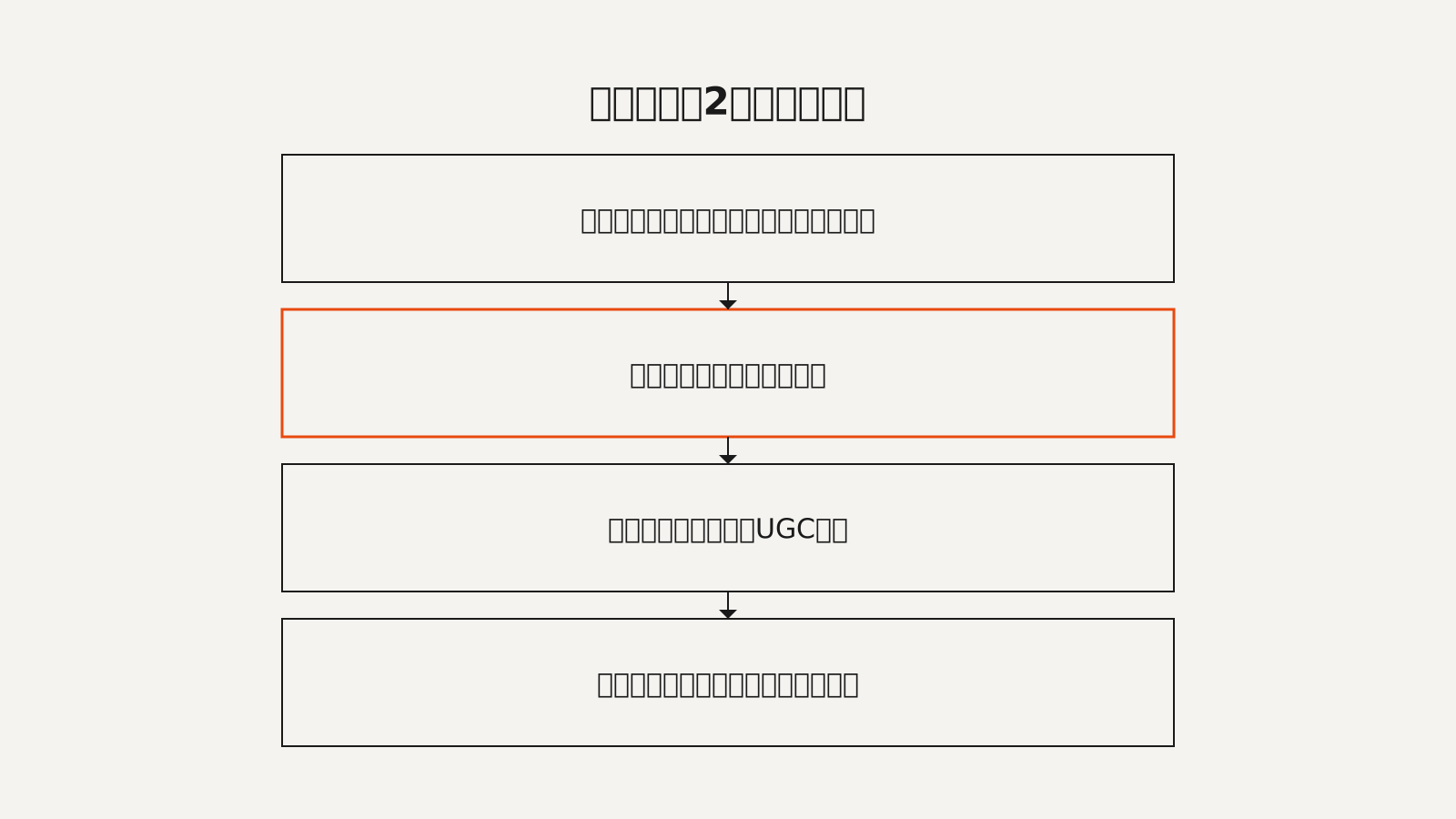

The question isn't which of the two metrics is superior—it's that they serve different purposes in terms of what decision they inform. We believe that simply being conscious of this distinction can reduce misreadings in campaign reporting.