What to Adjust When Reusing the Same Video Across Instagram, TikTok, and YouTube
This article was automatically translated from the Japanese original. Read the original in Japanese
When distributing the same sponsored collaboration video across Instagram, TikTok, and YouTube, there's no need to recreate the material itself. That said, our practical experience shows that simply reusing it as-is across platforms tends to underperform. Each platform has its own editing conventions that viewers are accustomed to—caption placement, how the opening seconds are presented, and video length—and even light adjustments to these details can significantly change engagement. Our operational conclusion is that reuse itself isn't the problem; it's reusing content without any adjustment that leads to missed opportunities.
What Parts Can Be Used As-Is When Posting a Video Across Multiple Platforms?
The core message of the campaign, the talent's spoken content, and the product presentation itself don't need to be recreated when switching platforms. As discussed in Which Platform Should You Choose for PR: Instagram, TikTok, or YouTube?, each platform has its own strengths and weaknesses to begin with, so there's room to reconsider the premise of forcing the same video onto every platform in the first place. However, for projects where multi-platform distribution is already decided, the core structure of the material can remain common. What should change is the editing—how that core structure is presented.
Why Do Caption Placement and Framing Need Platform-Specific Adjustments?
On TikTok, UI elements are concentrated at the bottom of the screen, so posts with captions placed closer to the center have become the norm. YouTube tends to assume horizontal viewing in many scenarios, placing more emphasis on delivering a hook at the opening than on caption placement. Instagram Reels falls somewhere in between, though its conventions lean closer to TikTok's vertical UI format. If you post with the same caption placement across all platforms, captions may overlap with the UI on one platform and become hard to read, or viewers on that platform may feel something is off simply because it deviates from the format they're used to. It's worth noting that deviating from a familiar format can become a reason for viewers to drop off—regardless of whether the content itself is good—simply because it "feels somehow off."
How Much Should Video Length Be Changed?
As discussed in How Should Brand Messaging Be Incorporated Given TikTok's Short Format?, TikTok in particular requires designing the length around a single, focused message. When posting the same video to YouTube Shorts or Instagram Reels, there's no need to drastically change the length itself, but light editing—such as cutting slow-paced segments and tightening the opening pace—is worth doing to match each platform's viewing conventions. Conversely, when releasing the same campaign as a standard-length YouTube video, you'll need to keep the full-length version intact while adding more contextual explanation in the description and intro—a different way of supplementing information compared to the short-form version.
How Much Adjustment Is Actually Enough?
Trying to optimize for every single platform causes the workload to balloon without limit. In our practice, we draw the line at focusing adjustments on three things: caption placement, opening presentation, and length. These three areas are where friction with viewer conventions is most likely to occur. Conversely, since caption copy and hashtag variations can be handled with relatively light effort, we always rewrite those for each platform. If multi-platform distribution is decided from the filming stage, leaving extra margin/space when shooting the material makes it easier to adjust caption placement later in the process.
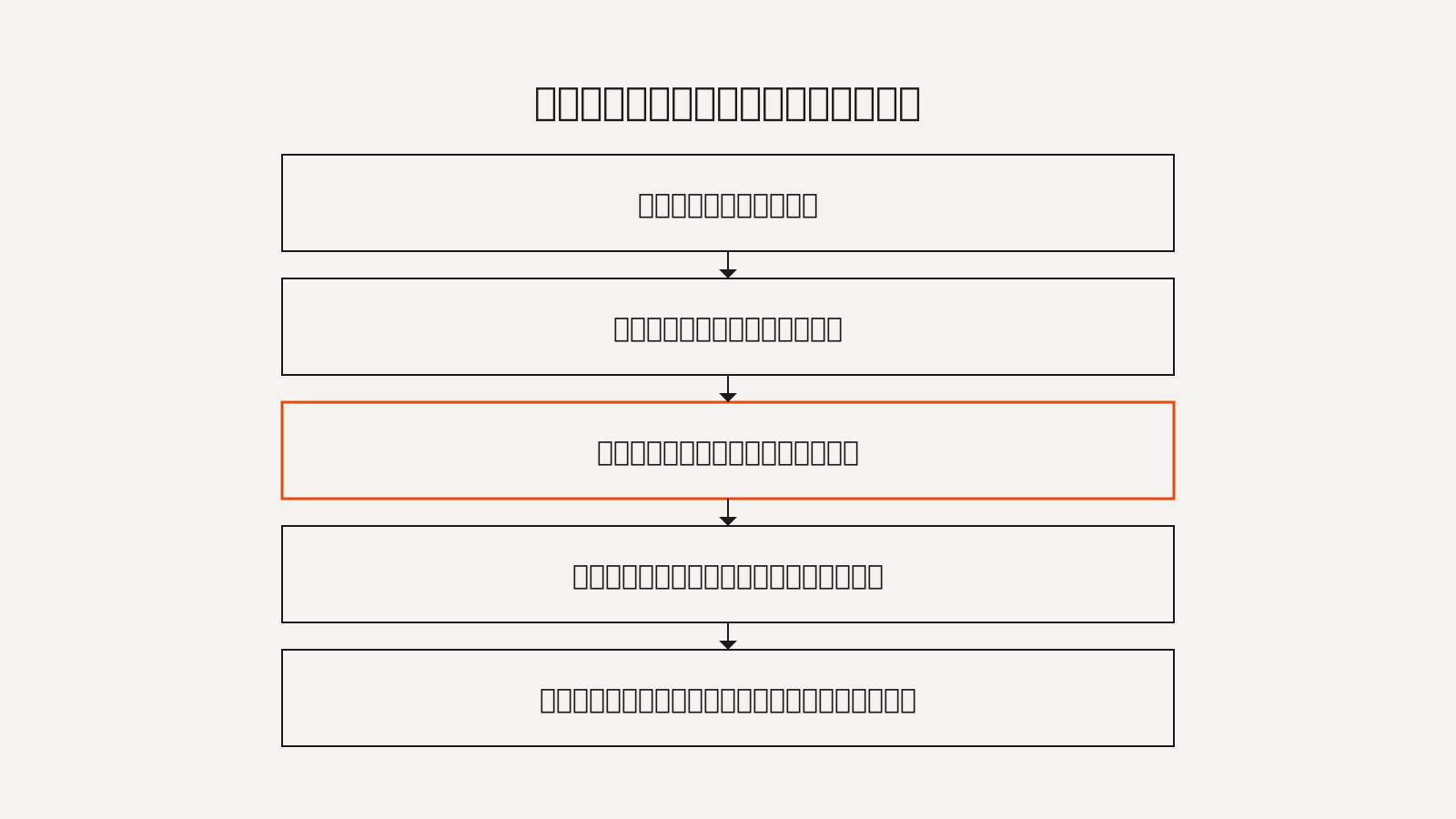
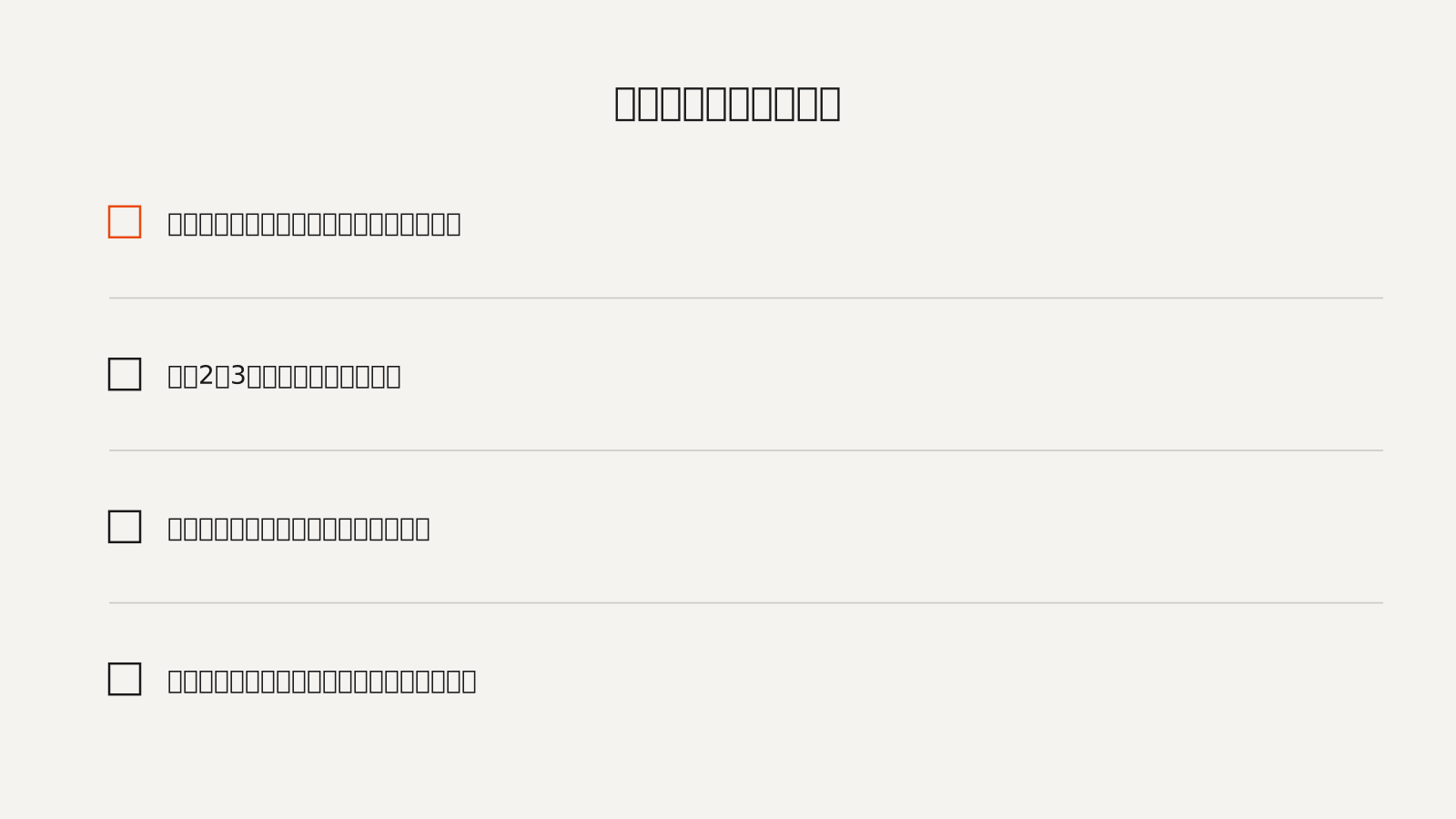
Multi-platform distribution isn't a binary choice of whether to reuse material or not—it's a design question of what to keep common and what to adjust. By separating out the parts that can remain unchanged in structure from the parts that should be adjusted to match each platform's conventions, we believe it's possible to distribute content across platforms without unnecessary strain while still maintaining strong engagement.