When Should You Separate Photo-Taking Walkways at Events?
This article was automatically translated from the Japanese original. Read the original in Japanese
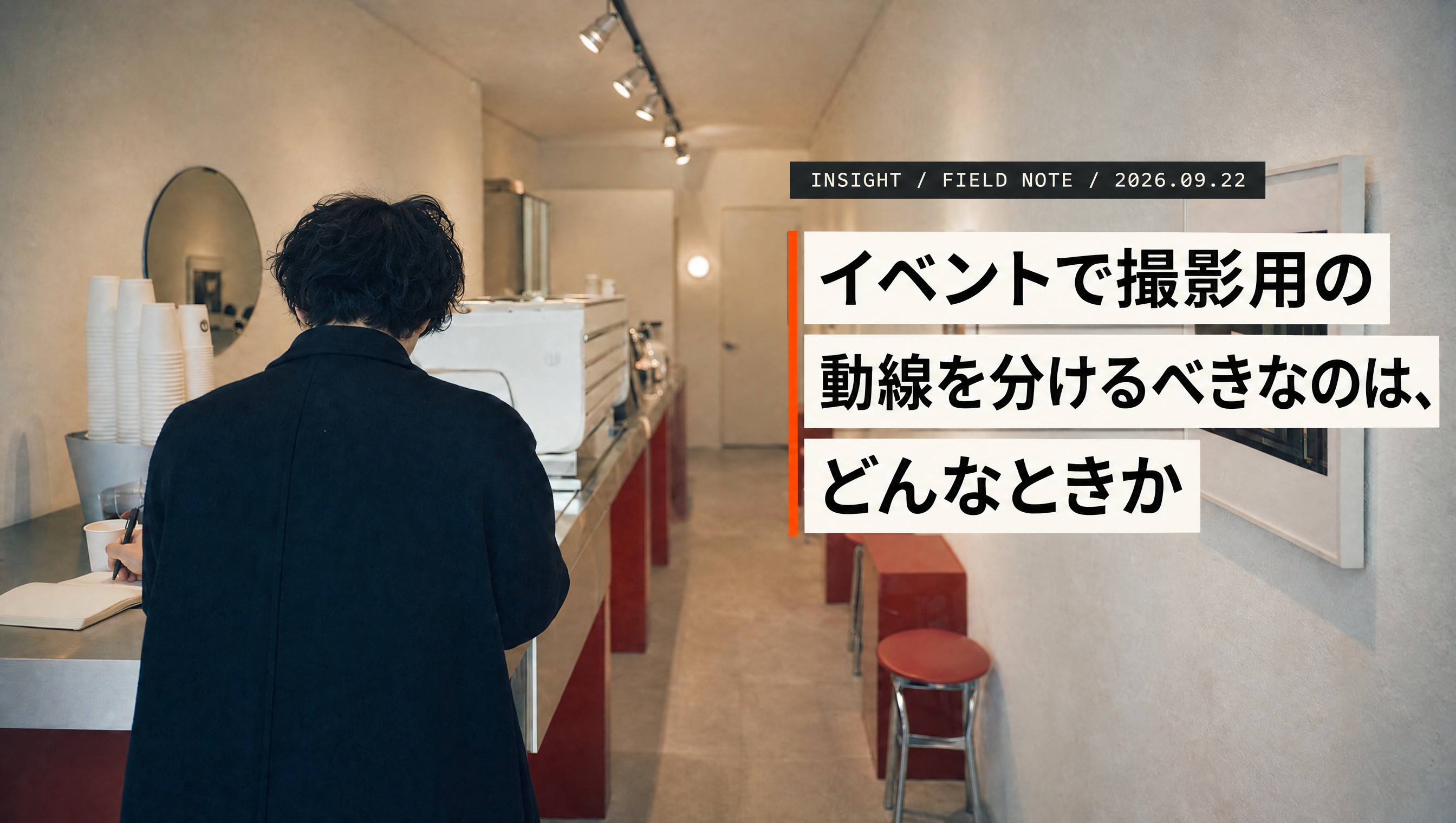
If the goal is to secure wait times and angles for photography, it's best to separate walkways only during congested periods. Permanently separating them can make a particular person appear to receive special treatment, which may undermine the overall atmosphere of the event. The standard practice is to judge the need for separation not by asking "is this always necessary?" but by asking "is this necessary only during congested periods?"
Why Time-Limited Separation Is Preferable to Permanent Separation
A permanently separated dedicated walkway remains visible to general attendees at all times. When an event's atmosphere is built on the premise that "all participants share the same experience," a permanently present dedicated walkway contradicts that premise. As noted in A Guide to Reception Design for Invitation-Only Events — Avoiding Lines Right After Opening, congestion tends to concentrate in specific periods, such as right after opening. By separating the walkway only during that period, you can secure the wait time and angles needed for photography while minimizing the impact on the event's atmosphere.
What Determines Whether Walkways Should Be Separated?
There are two main criteria for this judgment. The first is the degree of congestion. If congestion is severe enough to impede the flow of general attendees, separation becomes an operational necessity. The second is scale. At smaller events with a limited number of invited guests, a dedicated walkway tends to stand out as it accounts for a visible portion of the whole. Conversely, at larger events where it naturally blends in as a small part of the whole, permanent separation is less likely to feel out of place.
What to Be Careful of When Separating Walkways
When using a photo spot, it's important to keep the boundary with the area available to general attendees from becoming ambiguous. As noted in What Is a Photo Spot, and Why Is It Necessary in Event Design?, a photo spot is originally meant to be part of the experience design that includes general attendees as well. When creating a separated walkway, designing it around limiting the time period during which it exists—rather than making the spot itself exclusive—helps avoid undermining the experience for general attendees.
What to Do When You Don't Separate Walkways
If congestion is only temporary, simply shifting the timing may be enough without separating the walkways at all. Adjustments such as scheduling photography sessions in the middle of the event rather than right after opening, or shifting them to a less busy period before closing, can sometimes resolve wait-time issues on their own. Physically separating walkways isn't the only solution—adjusting along the time axis is also worth keeping as an option.
Separating walkways is not an end in itself, but one means of balancing photo quality with the experience of general attendees. Assessing the degree of congestion and scale, then making small, targeted adjustments only during the periods when they're needed, is what protects the event's atmosphere.